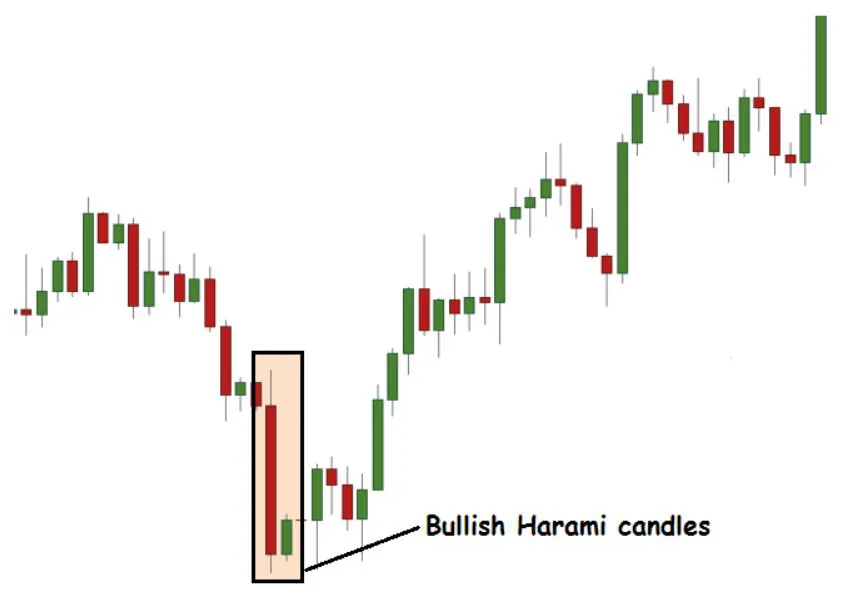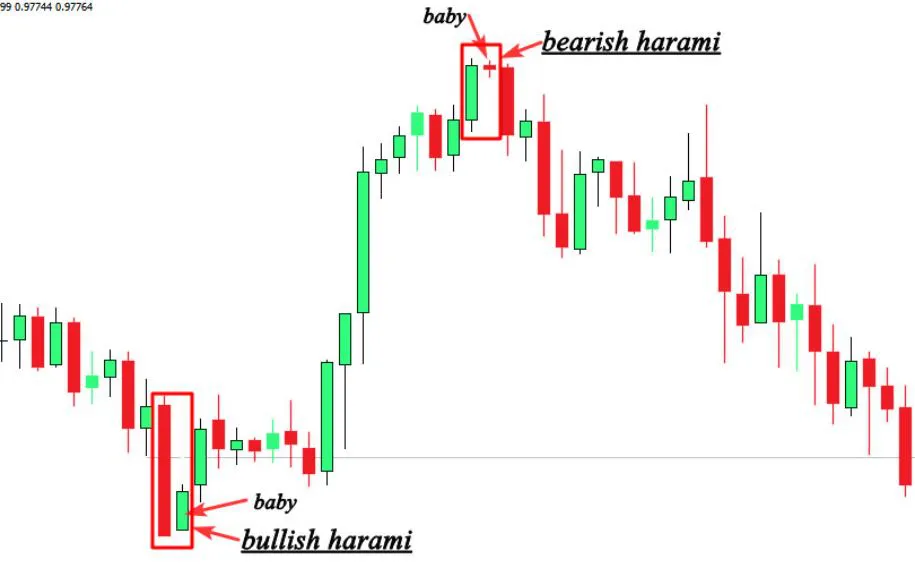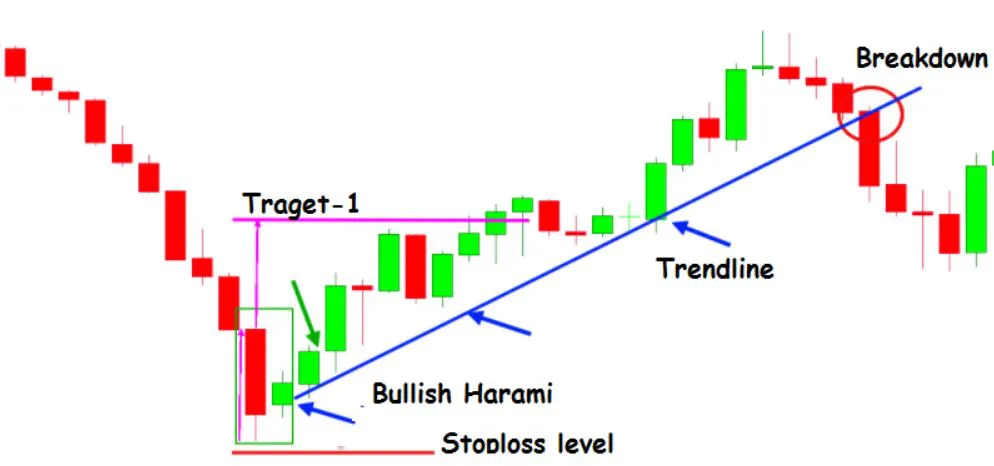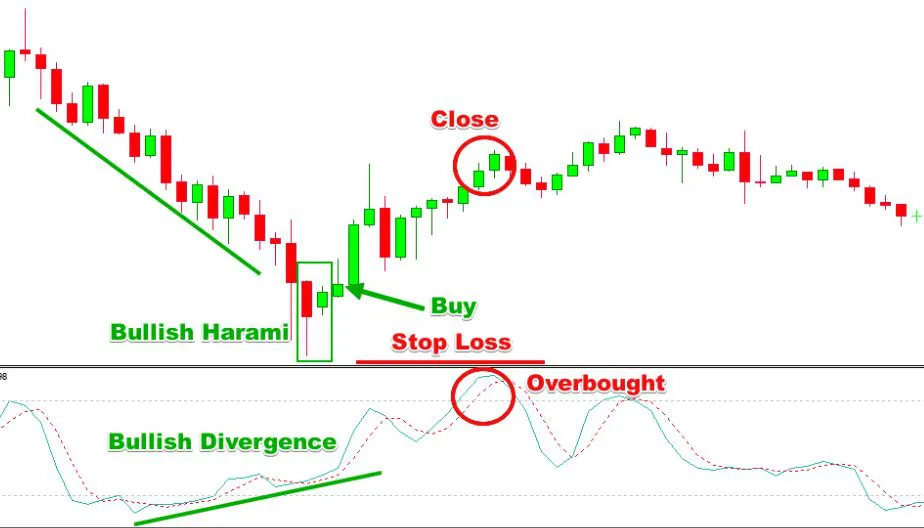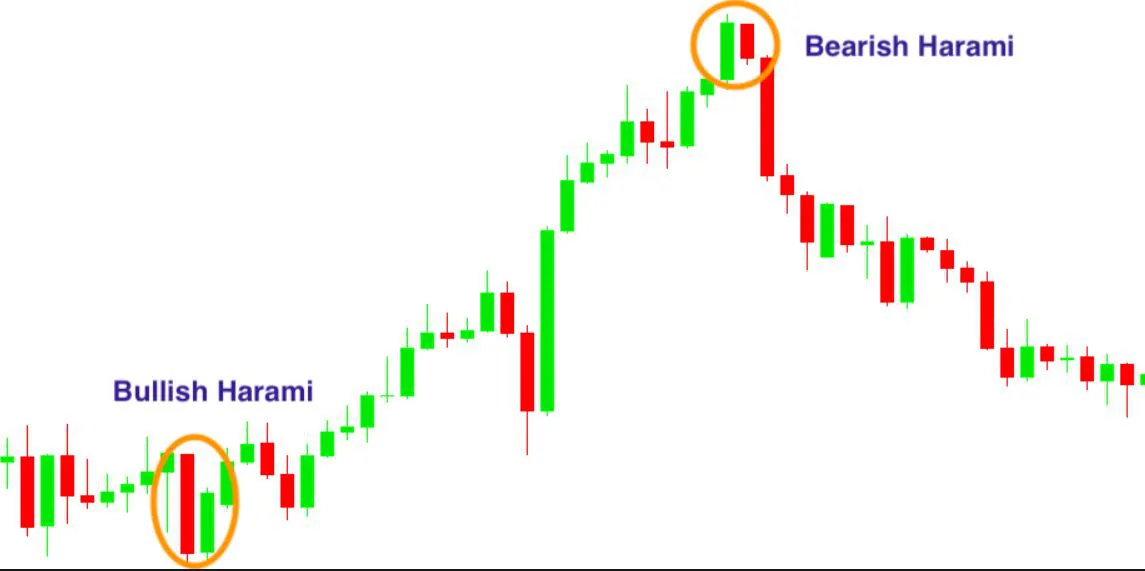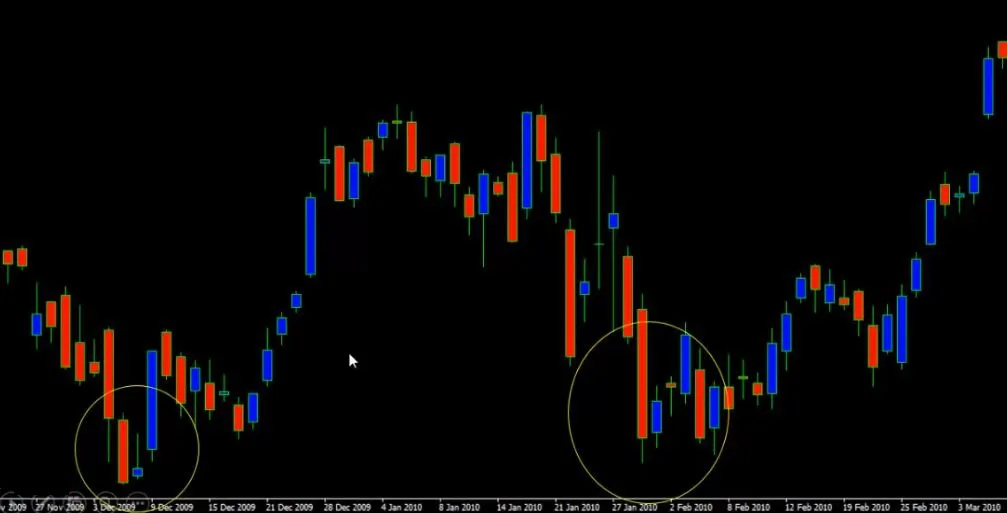
- Bullish Harami pattern
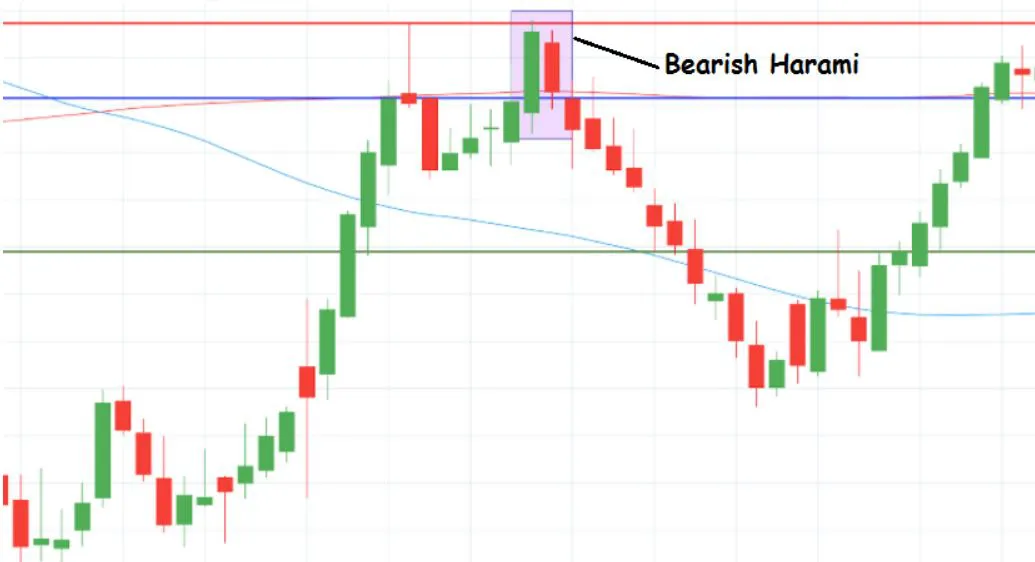
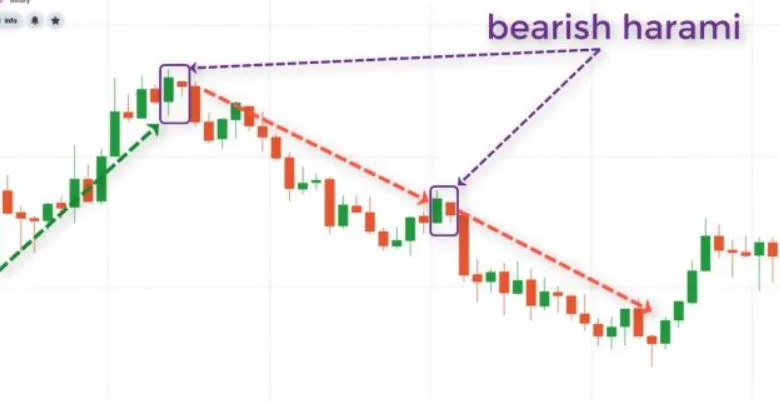
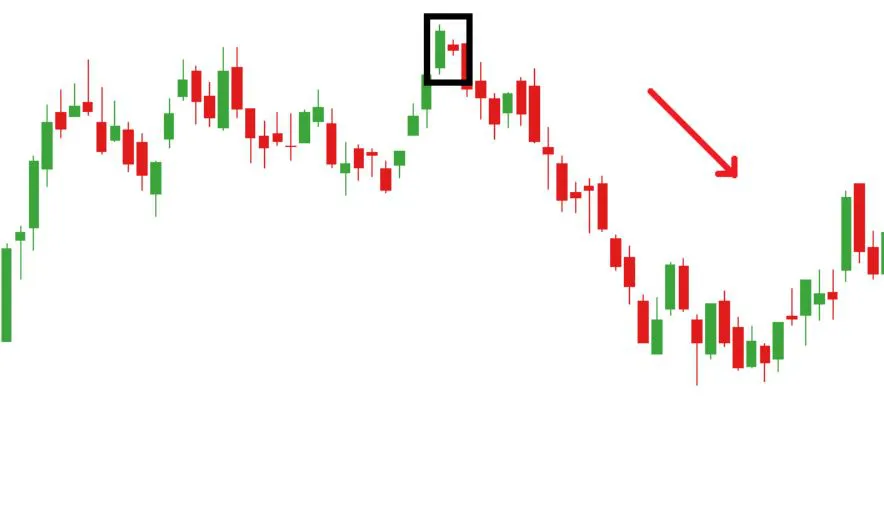
- Bearish Harami pattern
HARAMI
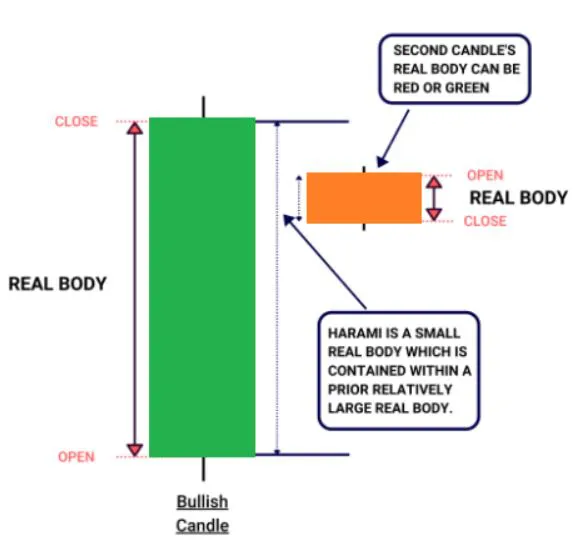
Harami is a Japanese candlestick pattern that indicates a potential trend reversal. The pattern consists of two candlesticks, where the first candlestick is larger and has a long body, and the second candlestick is smaller and has a short body, which is completely engulfed within the body of the first candlestick.
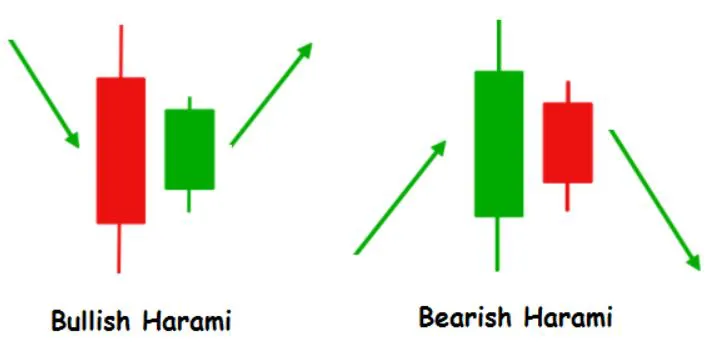
The second candle will have a Gaps at higher or lower. This gap makes different while compare to other candlesticks.
In stock markets, it's common to see candlesticks opening with a gap up or down, where the opening price is significantly different from the previous day's closing price.
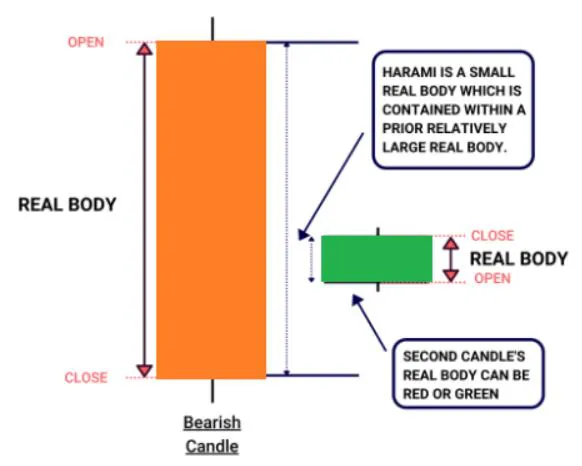
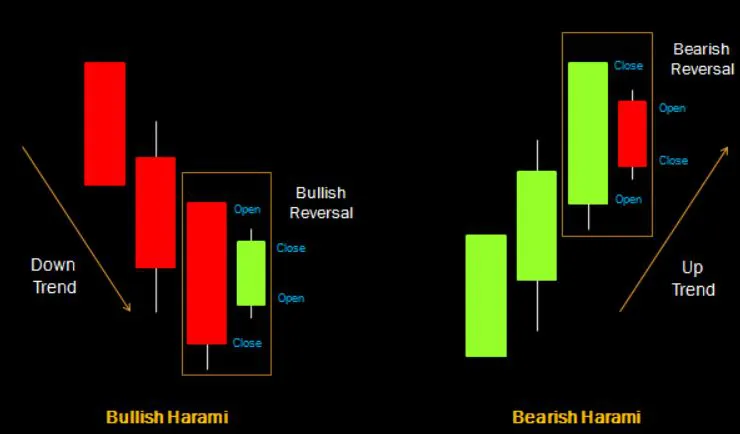
A bullish harami pattern occurs when the first candlestick is a long bearish candlestick, and the second candlestick is a small bullish candlestick that is entirely contained within the range of the first candlestick.
A bullish harami pattern can form during a downtrend in the market when sellers are in control. The first candle is a big red candle that makes a new low, reinforcing the sellers' position.
The second candle opens higher than the previous candle's close, which surprises the sellers who expected a lower opening price. However, the market eventually closes below the previous candle's high, forming a small bullish candlestick.
This small bullish candlestick signals that buyers may be gaining strength, and we can expect the next candle to be a bullish candlestick. This suggests a potential trend reversal from bearish to bullish.
The Bearish Harami pattern is the opposite of the Bullish Harami pattern, formed at the top of the uptrend.
A bearish harami pattern occurs when the first candlestick is a long bullish candlestick, and the second candlestick is a small bearish candlestick that is completely engulfed within the range of the first candlestick.
A bearish Harami pattern can form during an uptrend when buyers are in control. The first candle is a large green candlestick, indicating buyers' strength.
The second candle opens lower than the previous candle's close, which surprises the buyers who expected a higher opening price. However, the market eventually closes above the previous candle's open, forming a small bearish candlestick.
This small bearish candlestick suggests that buyers may be losing strength and taking a pause in adding stocks. Sellers may be gaining strength, and we can expect the next candle to be a bearish candlestick
While Harami patterns can indicate a potential trend reversal, they are not always reliable, and traders should look for confirmation from other indicators before entering a trade.