CUP AND HANDLE

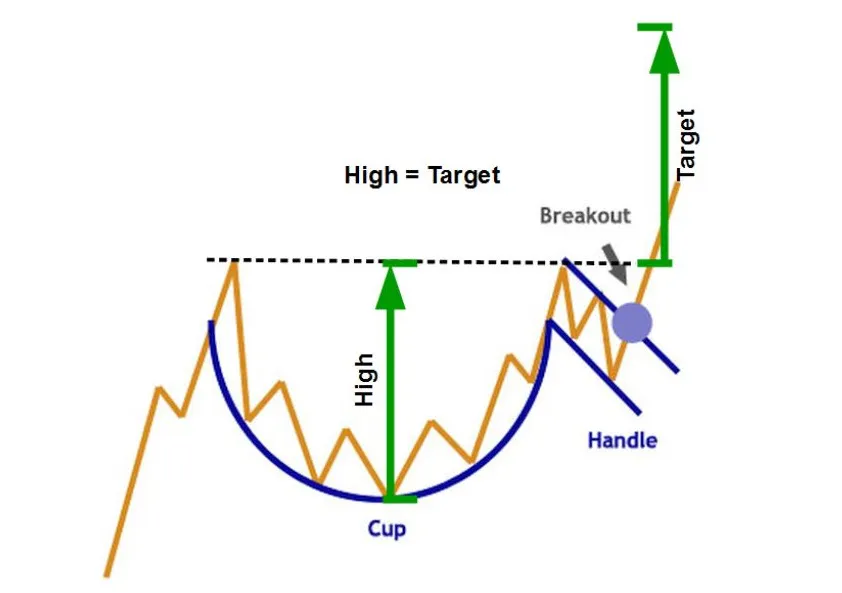
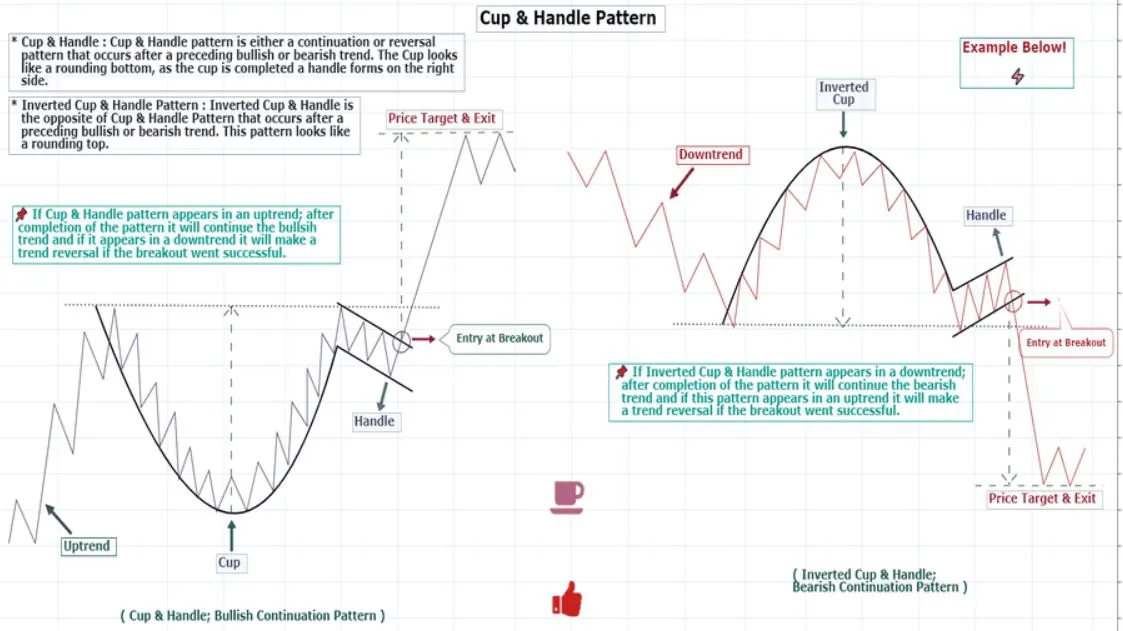
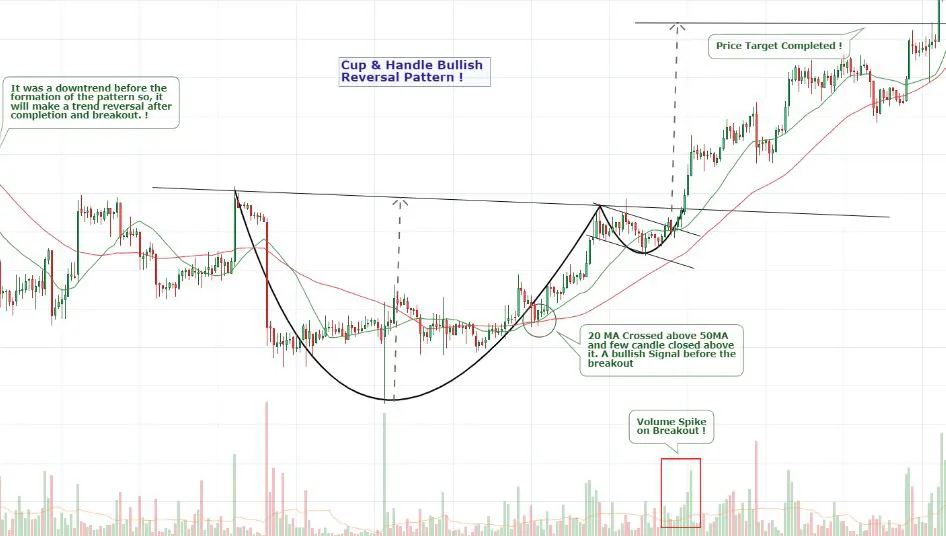
The cup and handle is potential bullish trend reversals pattern.

The pattern resembles a cup with a handle on the right side, hence its name.

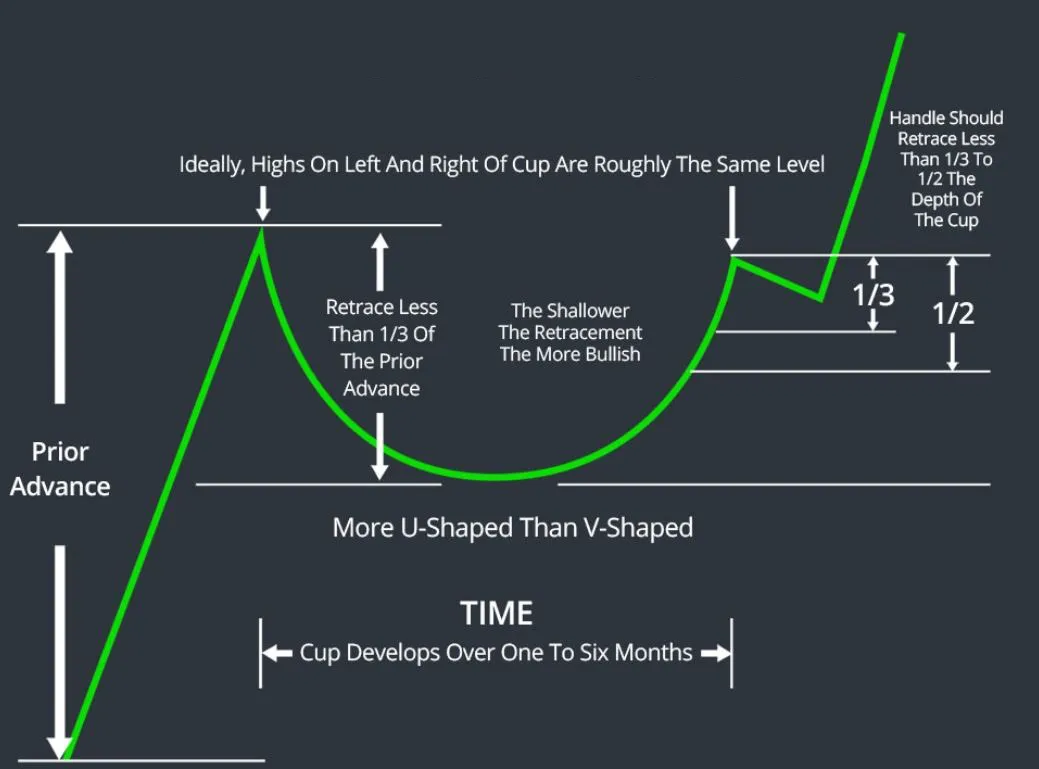
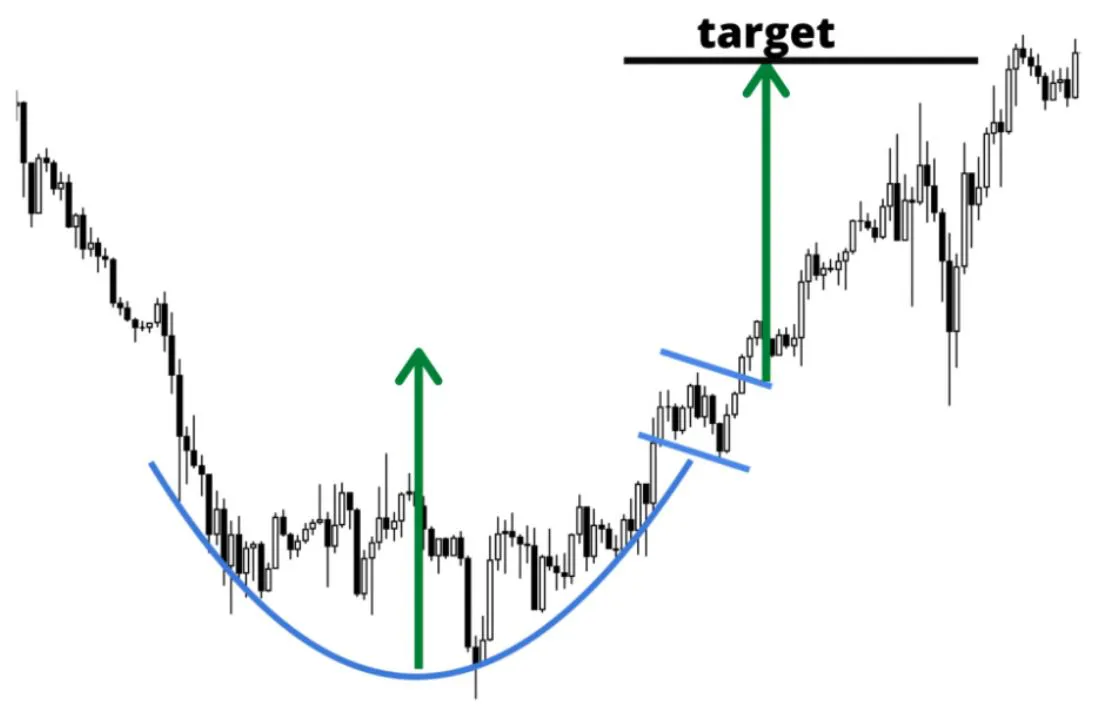
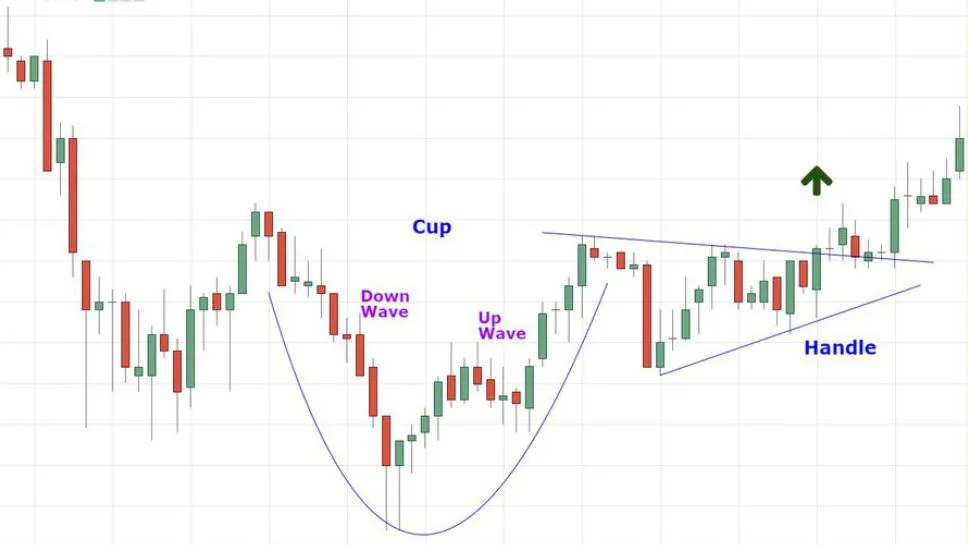
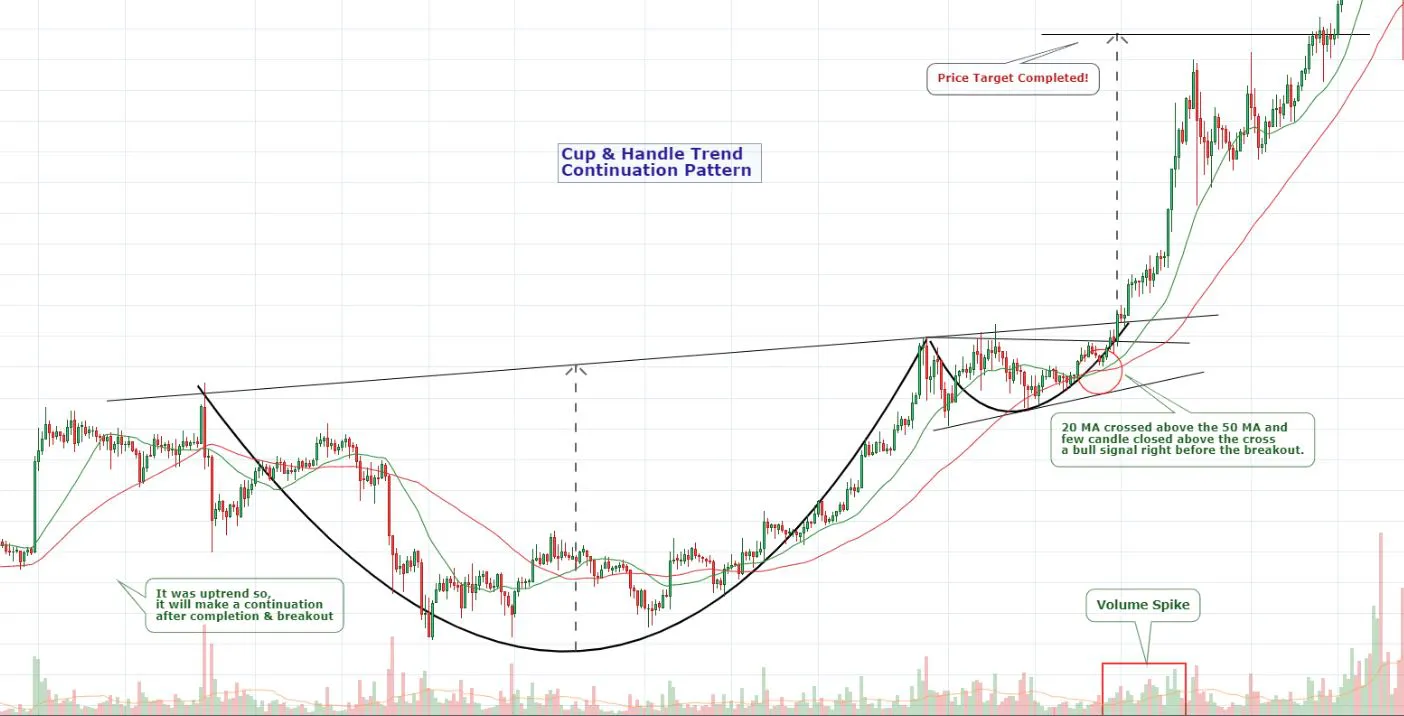
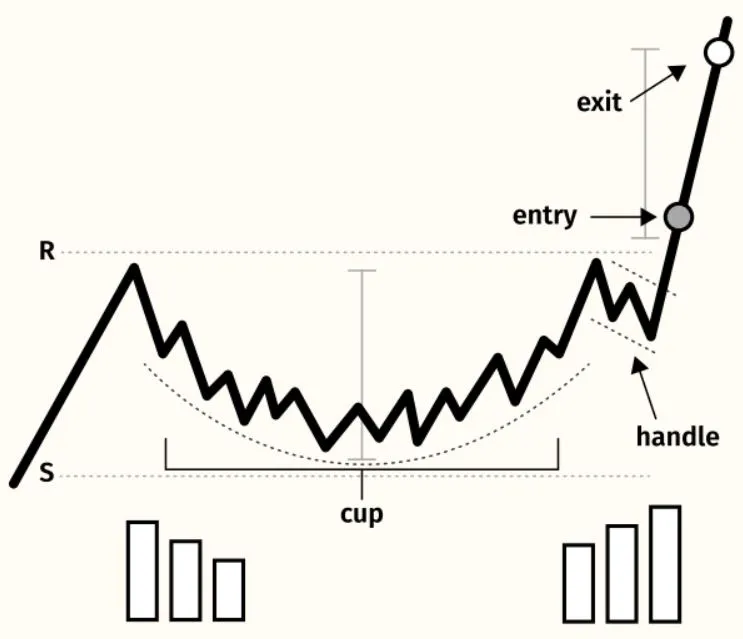
The cup portion of the pattern forms when an asset's price drops sharply, then rises slowly and steadily, forming a rounded bottom over long time.
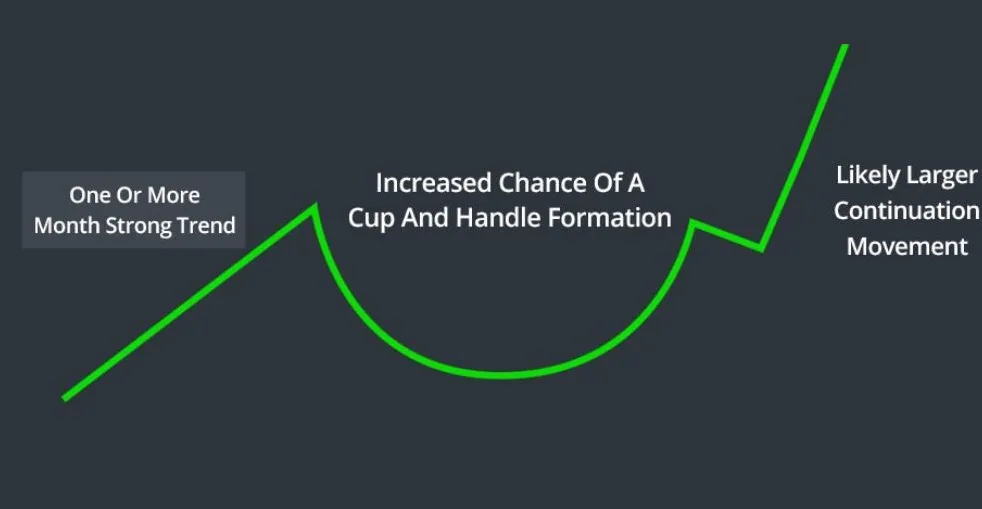
The handle portion of the pattern forms when the price of the asset drops slightly, forming a small dip or consolidation, followed by a smaller price increase, forming a smaller rounded top.

breakout above the handle portion of the pattern, which can be a bullish signal.
There are mainly two type based on trend and formation,
  1. Cup & Handle

    • These are common type, as the cup has a U-shaped bottom and the handle is a short consolidation or pullback period that forms a smaller rounded top.
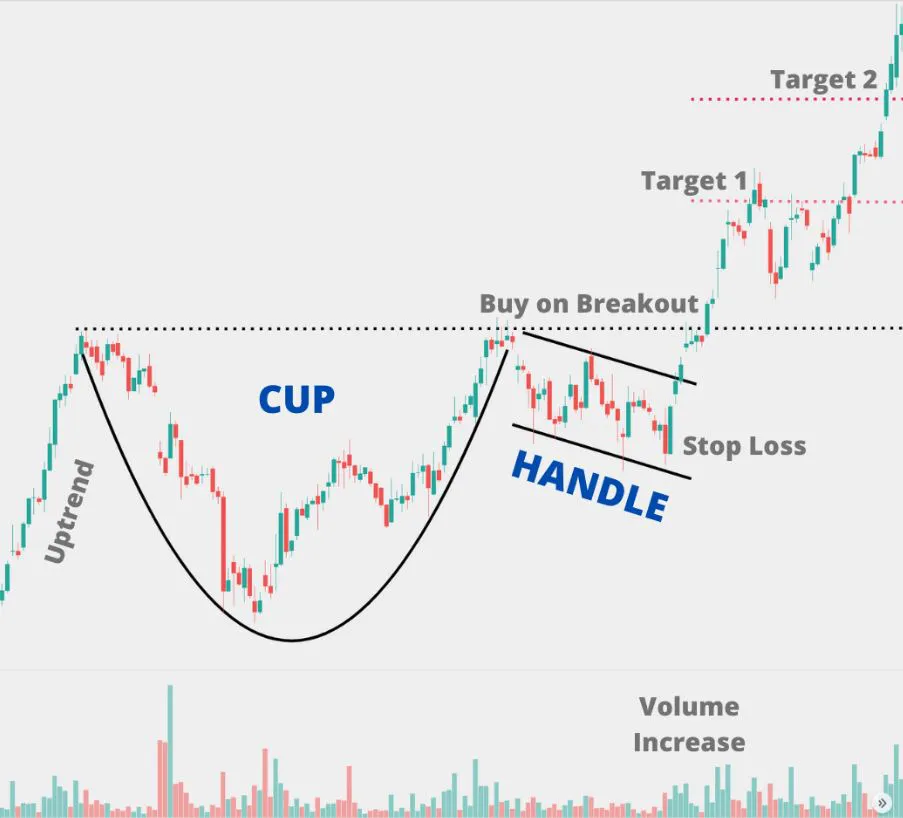
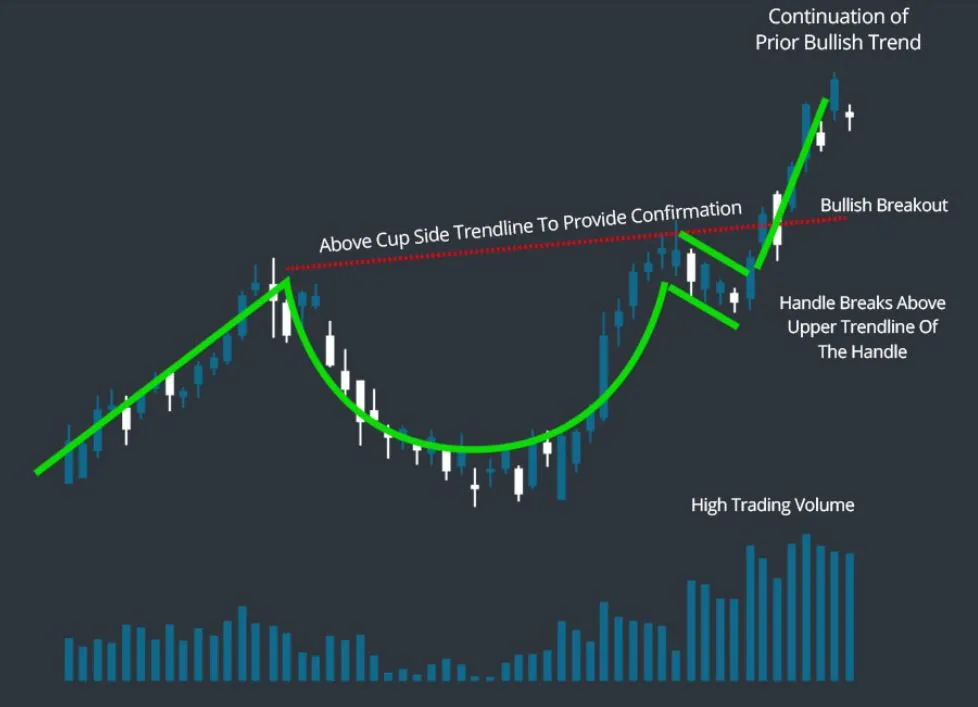
    • The breakout from the handle is usually accompanied by high volume, signaling a potential up trend reversal.
    • In these patterns, price gradually switches from bearish to bullish
  2. Inverted Cup & Handle

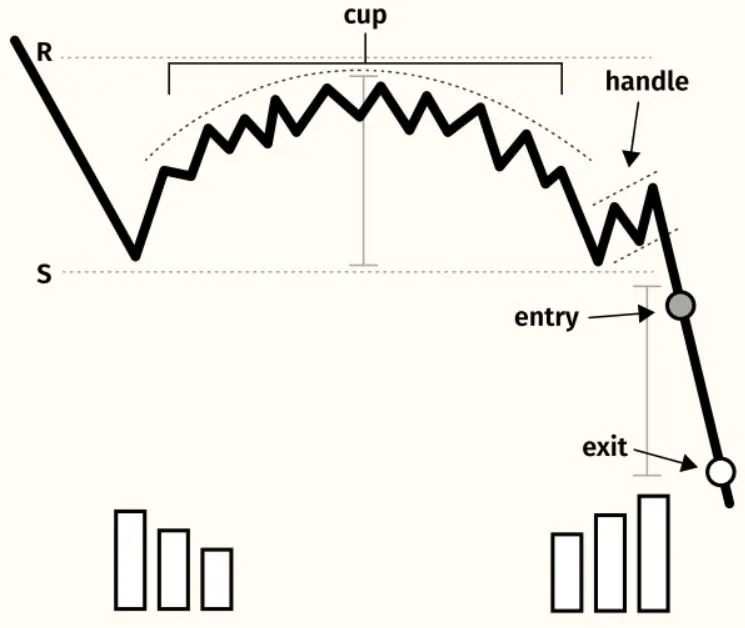
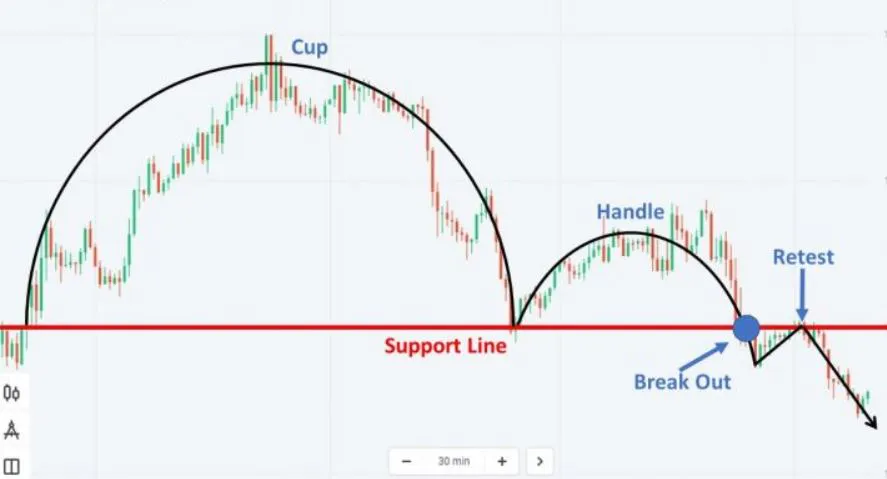
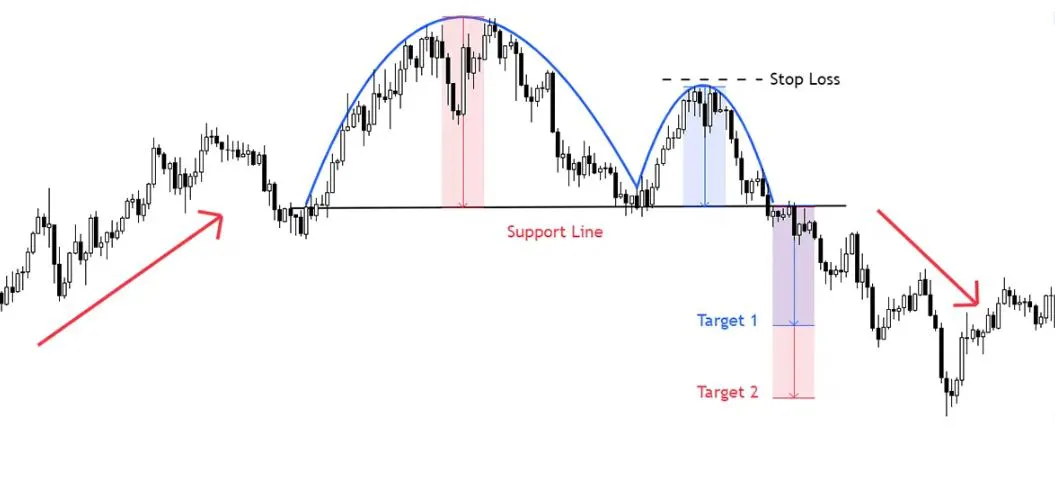
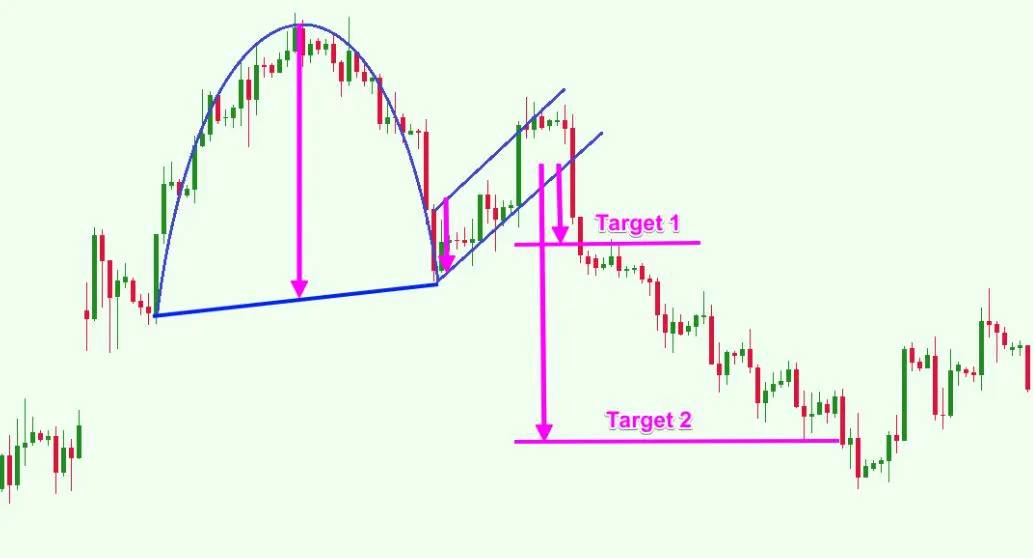
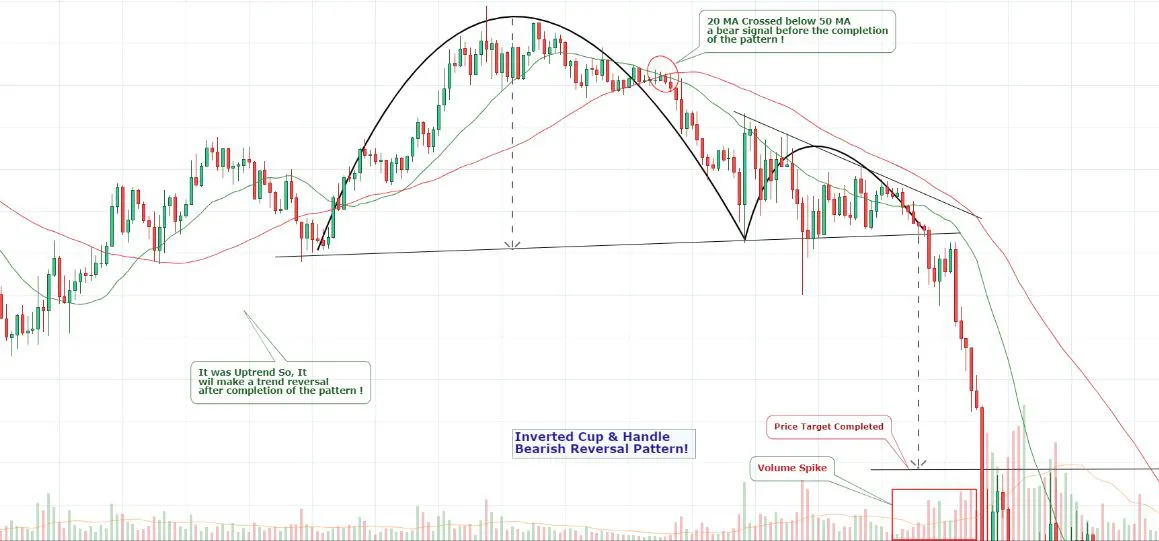
    • This is a bearish variation of the cup and handle pattern, where the cup has an inverted U-shape, and the handle is a small consolidation or pullback period that forms a smaller rounded bottom.
    • The breakout from the handle is usually accompanied by high volume, signaling a potential downtrend continuation

How to take position in the market?
- Depending on trading psychology and individual risk, some Traders follow below rules to enter into positions.

  1. Entry

    • Identify the cup like pattern in the chart
    • The cup should be U-shaped, not V-shaped.
    • The cup must have a handle on the right.
    • Draw a horizontal line (Neck Line) across the top of the bearish and bullish sides of the round bottom or U pattern.
    • To identify the Handle, draw support and resistance for the series of higher low and lower low for the symmetrical structure.
    • As the close price crosses both the Neck Line and the resistance line of the Handle with a large candle and increased volume new position can be taken.
  2. Target

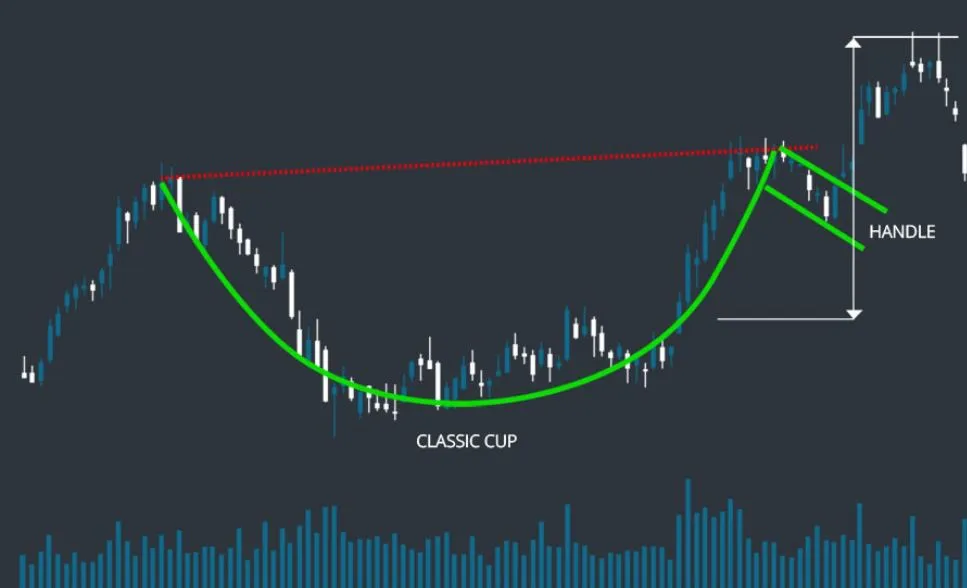
    • Minimum target can be the height of the Handle
    • Measure the distance between the neck line and the lowest/highest point of the Handle pattern and then apply the same distance to the downside/upside starting from the Neck Line respectively. This would be the common target.
  3. Stop Loss

    • Stop level should be slightly above/below of the Handle's support line.

To identifying this pattern, different traders may interpret differently. Some traders may identify a pattern where others do not, leading to conflicting trading signals.

Example-1 : Regular and Inverted Cup & Handle


Example-2 : Cup & Handle with increased volume giving confirmation


Example-3 : Regular Cup & Handle


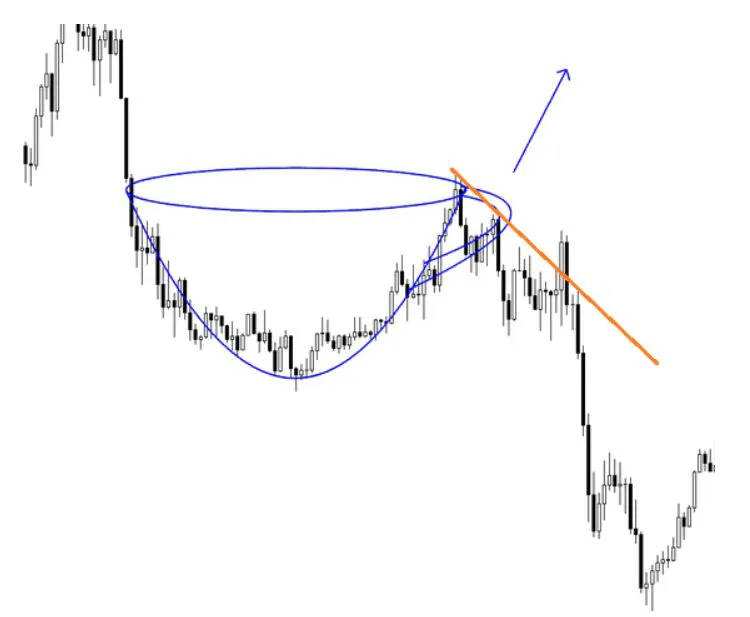
Example-4 : Failure of Cup & Handle pattern. Could not able to break the line


Example-5 : Cup & Handle with target


Example-6 : Inverse Cup & Handle pattern with price Retest


Example-7 : Inverse Cup & Handle pattern with Target


Example-8 : Inverse Cup & Handle pattern


Example-9 : Inverse Cup & Handle pattern


Example-10 : Inverse Cup & Handle pattern


Example-11 : Regular Cup & Handle pattern with Moving Average


Example-12 : Regular Cup & Handle pattern with Moving Average


Share the App - Share Alpha