FLAGS

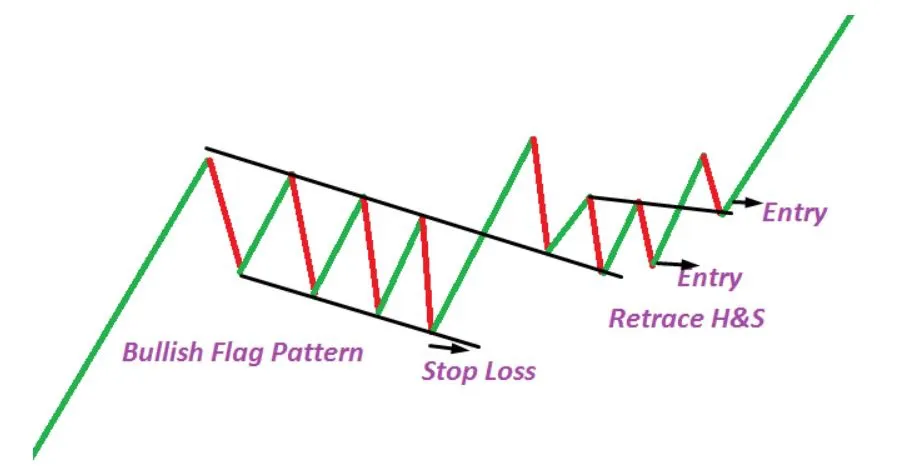
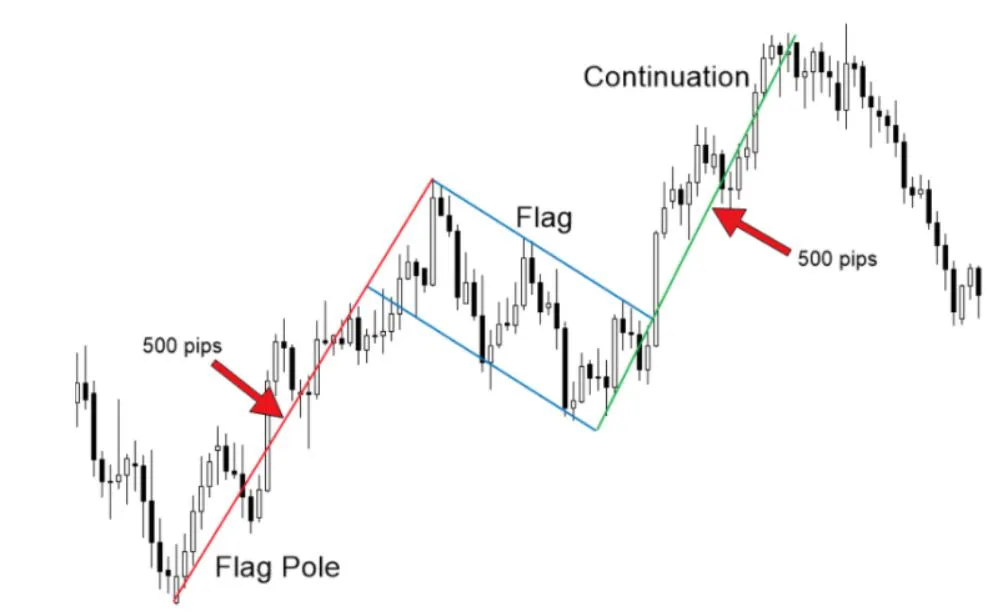
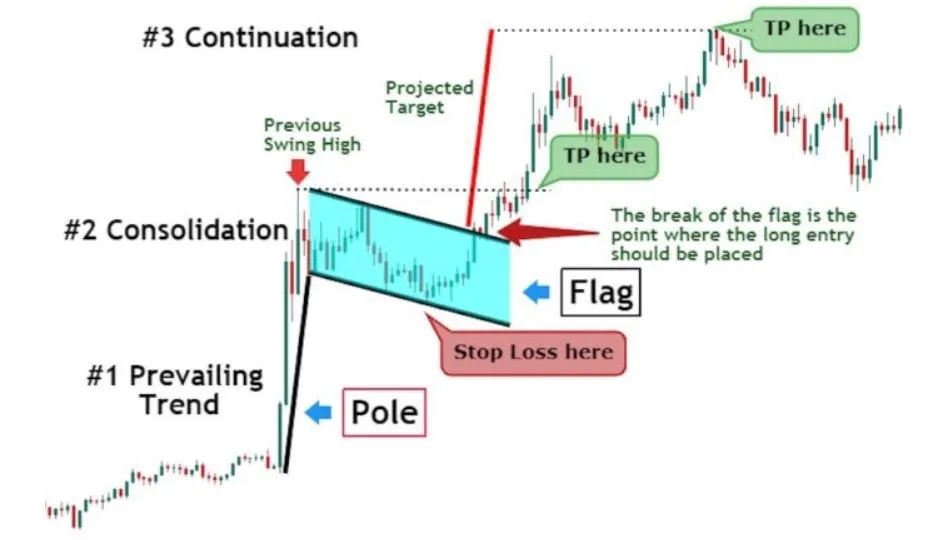
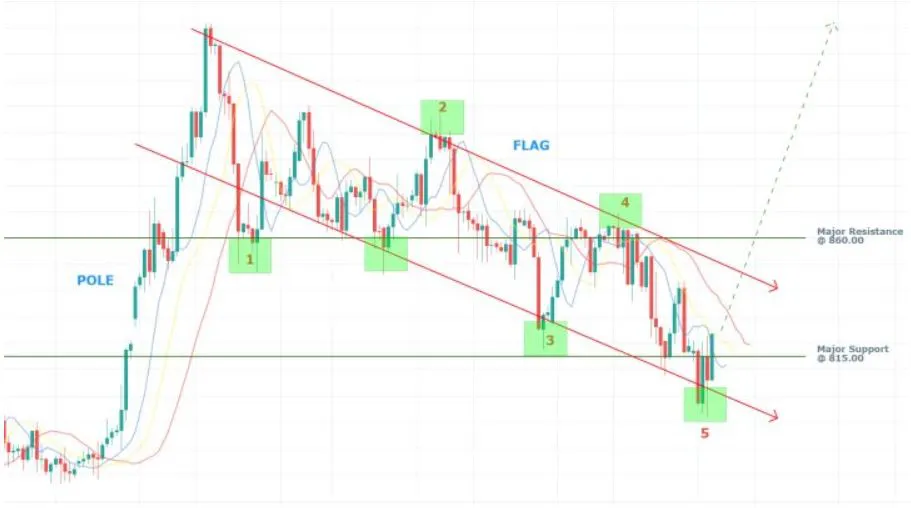
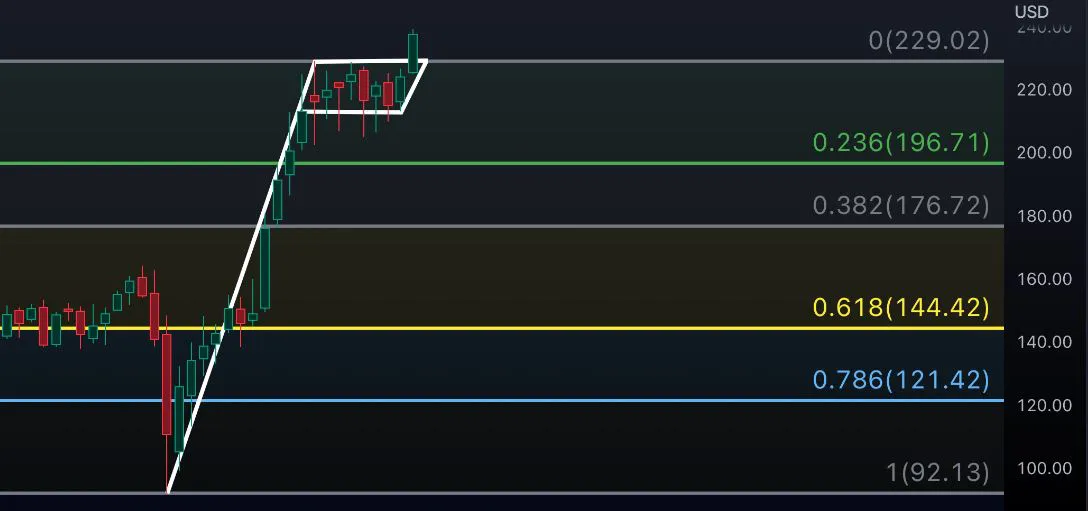
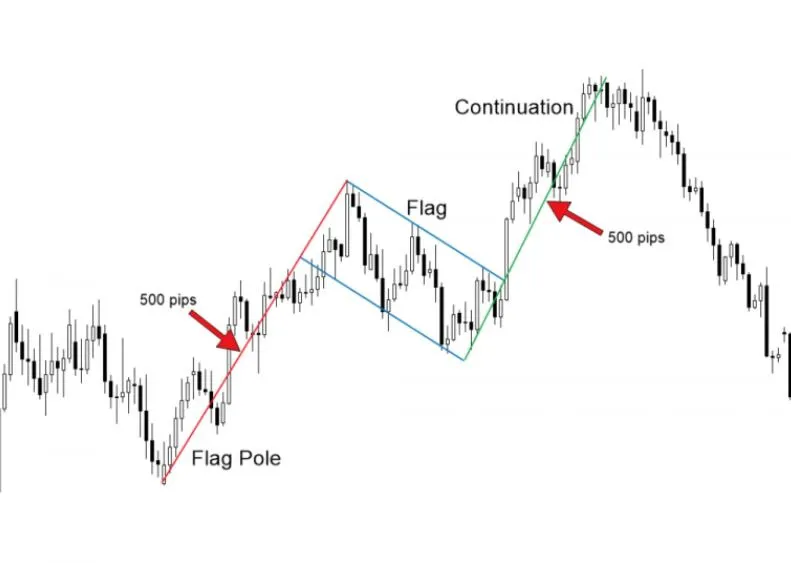
A flag is a pattern that forms when the market takes a breather (i.e, consolidation) after a big move, and trades within a tight narrow range.

The pattern looks like a rectangle or a parallelogram, and is usually tilted in the same direction as the current trend

Traders see the flag pattern as a sign that the original trend is likely to continue, and will look for a breakout in the same direction as the original move.

The key is that the flag must be confined between two parallel lines.
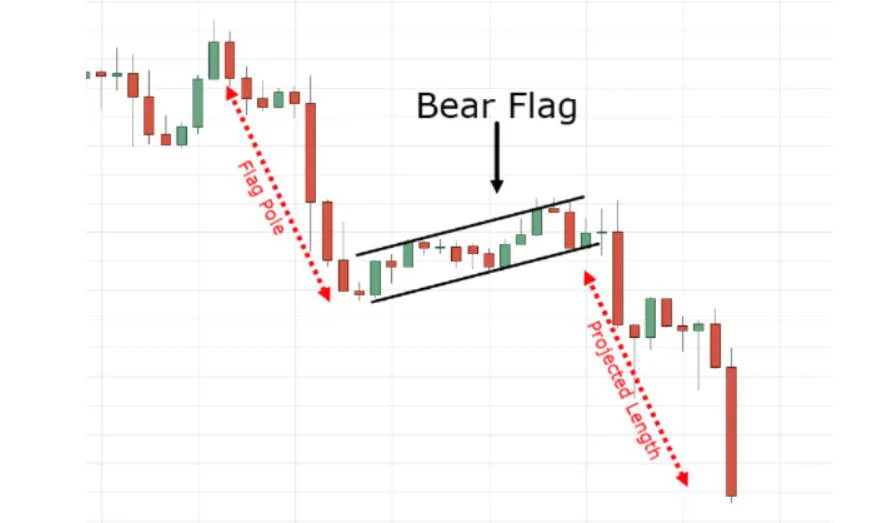
Depending on trend direction, there are two types in Flags
  1. Bullish Flag

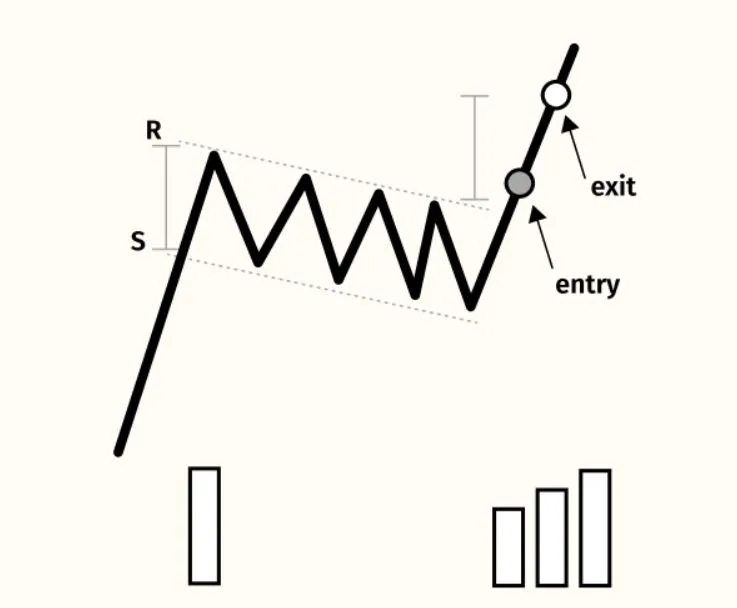
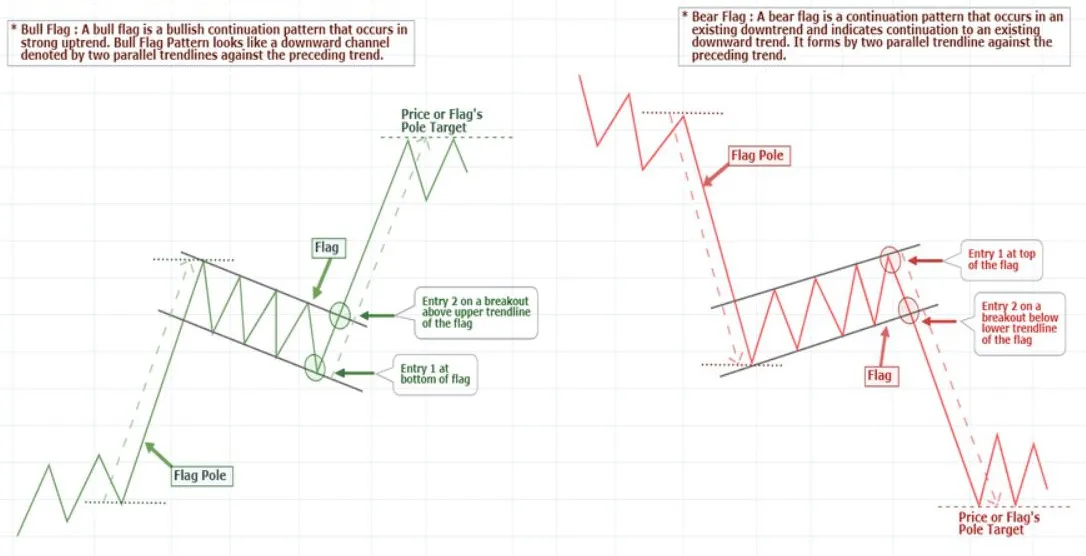
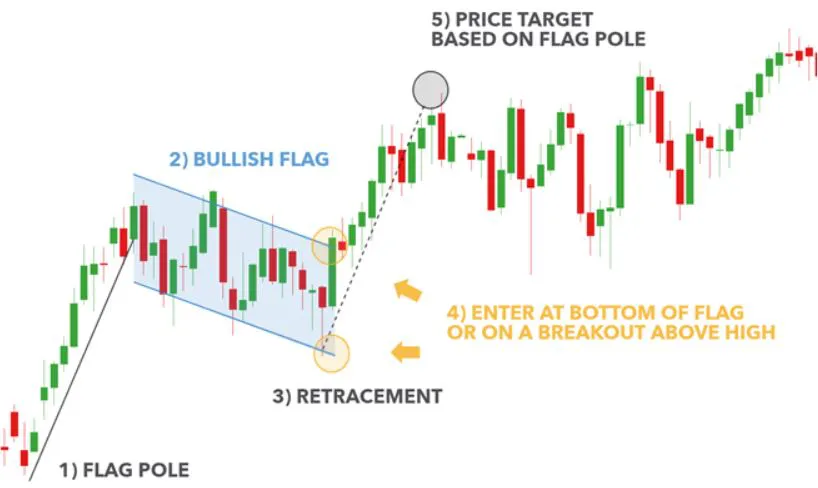
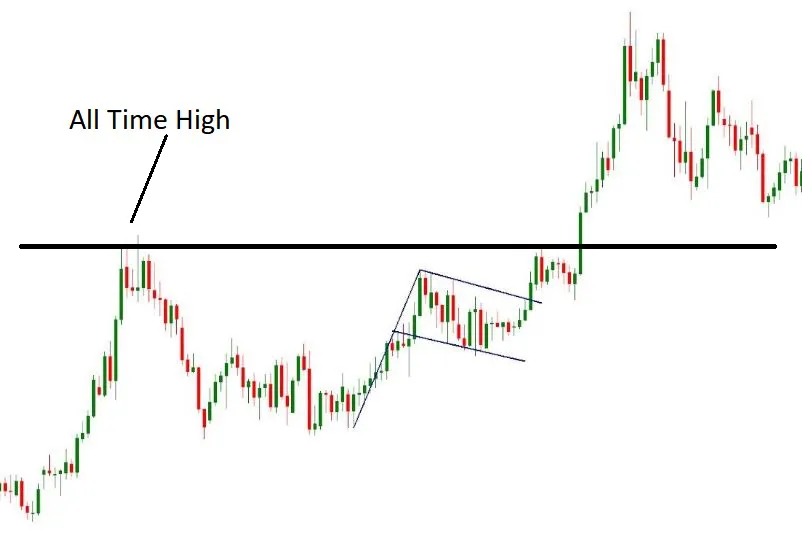
    • A bullish flag pattern forms when there is an upward trend, followed by a period of consolidation or sideways movement.
    • Consolidation looks like rectangular or parallelogram pattern with a support and resistance line
    • Breakout above the upper resistance line signals to enter a long position.
  2. Bearish Flag

    • This is opposite to Bullish Flag.
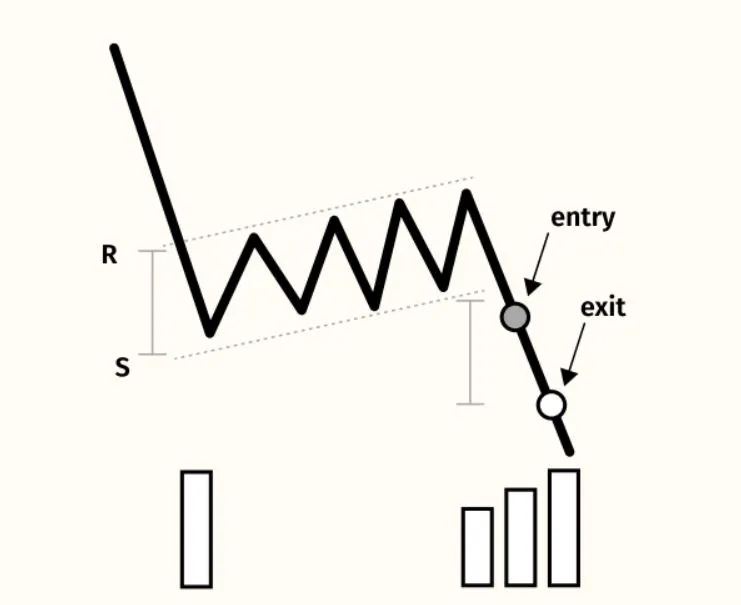
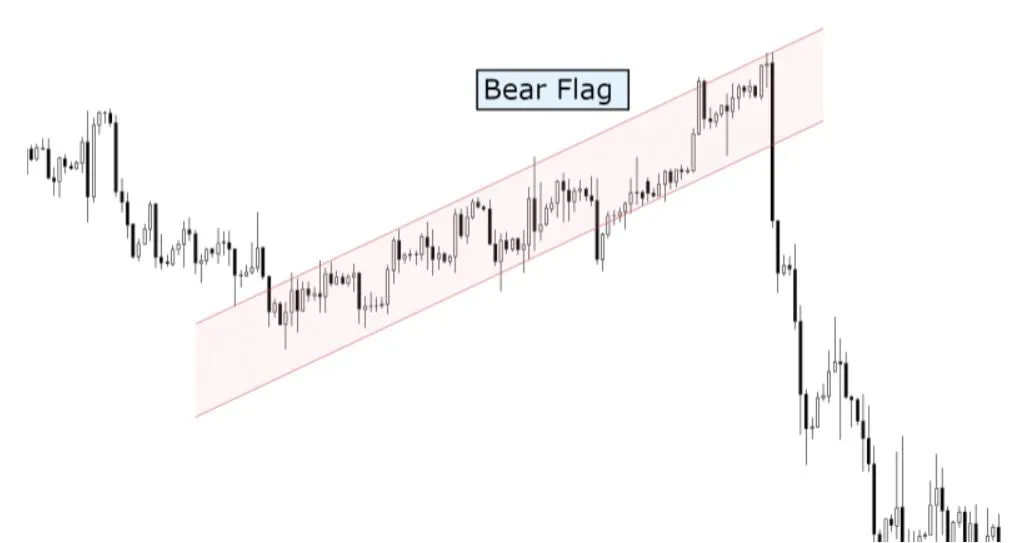
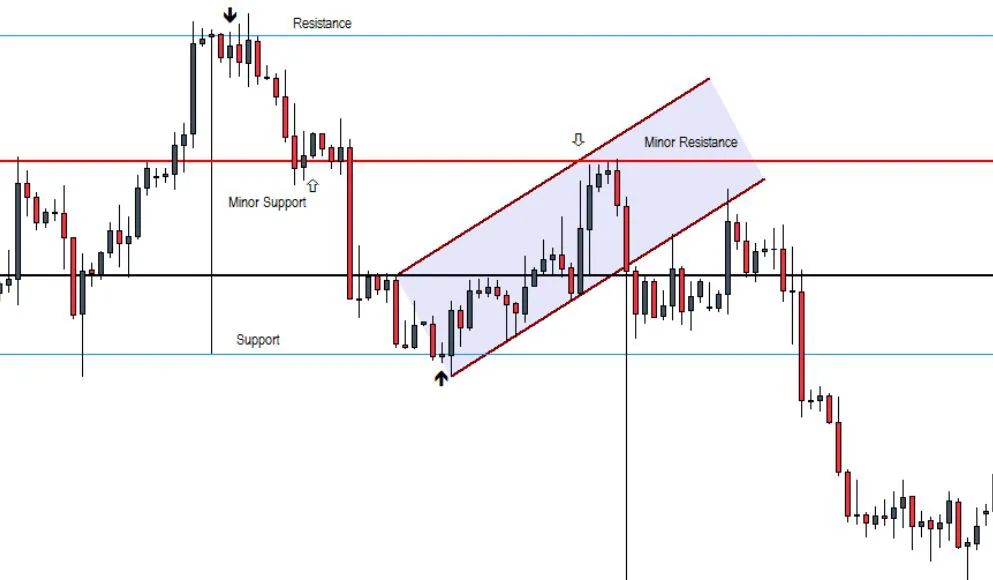
    • A bullish flag pattern forms when there is an downward trend, followed by a period of consolidation or sideways movement.
    • Consolidation looks like rectangular or parallelogram pattern with a support and resistance line
    • Breakout above the lower support line signals to enter a short position.

How to take position in the market?
- Depending on trading psychology and individual risk, some Traders follow below rules to enter into positions.

  1. Entry

    • Look for a pattern that has a downward/upward sloping price consolidation (Flag structure) along with a long Pole structure in bullish/bearish movement.
    • Draw a trend line on a series of highs followed by a series of lows to form Support and Resistance lines of the Flag.
    • Wait for the breakout of rectangle or parallel lines.
    • For a Bullish Flag, if the closing price crosses the Resistance line with a big candlestick, this confirms the breakout and the uptrend continues.
    • For a Bearish Flag, if the closing price crosses the Support line with a big candlestick, this confirms the breakout and the downtrend continues.
    • Take position after a perfect breakout.
  2. Target

    • The target price for a Flag pattern can be estimated by measuring the height of the flagpole and adding it to the breakout point.
    • list_1
  3. Stop Loss

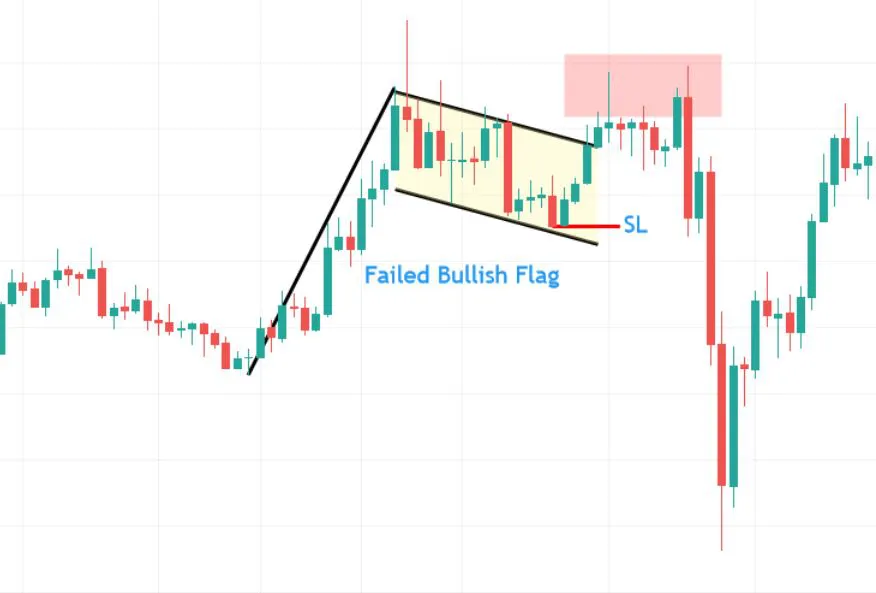
    • Set a stop-loss order below the lower end of the channel (for a long trade) or above the upper end of the channel (for a short trade).
    • This will help you exit the trade if the price moves in the opposite direction.

The flag pattern is most effective in short-term trading scenarios. In longer-term scenarios, the pattern may not be as useful.

Example-1 : Bullish & Bearish Flag


Example-2 : Bearish Flag


Example-3 : Failure of Bullish Flag as Sellers rush to the market


Example-4 : Expecting a Long Bullish Flag to break the Flag


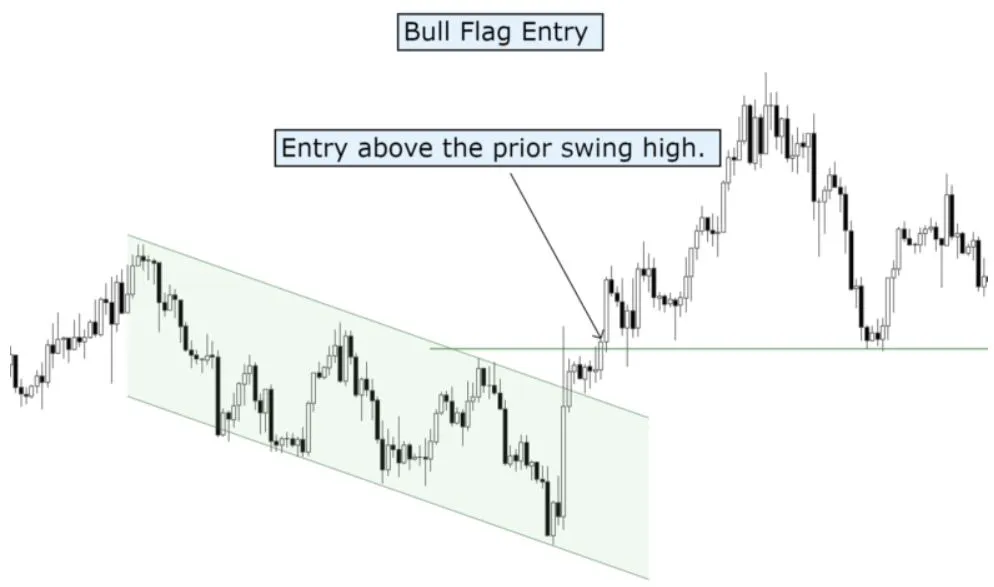
Example-5 : Bullish Flag with entry point above latest Swing High


Example-6 : Bullish Flag


Example-7 : Retracement after Bearish Flag. Great opportunity to Short the Market


Example-8 : Short term Bullish Flag pattern


Example-9 : Bullish Flag Pattern


Example-10 : Bearish Flag breaking All Time High


Share the App - Share Alpha