PENNANTS

The behavior of Pennant patterns are exactly similar to the Wedge Patterns.

The main difference between Pennant patterns and Wedge patterns is their structure. Pennant patterns are horizontal and sideways, while Wedge patterns are either sloping upwards (ascending wedge) or downwards (descending wedge).
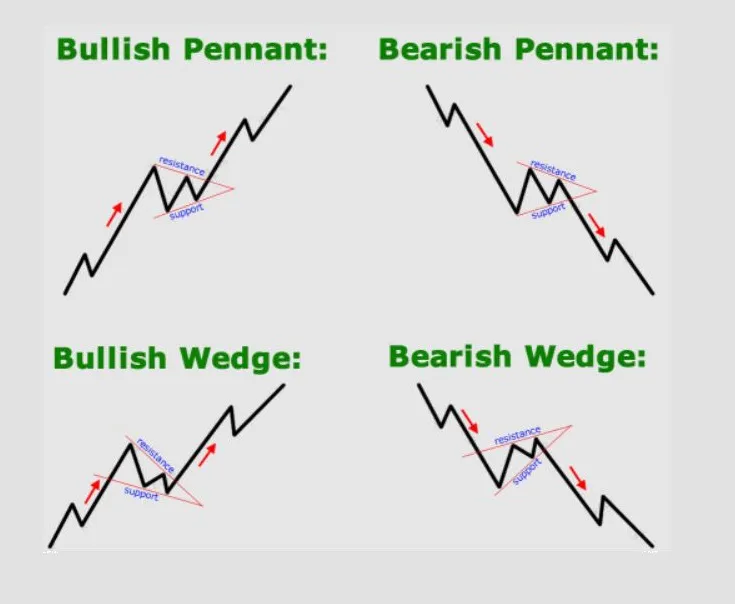
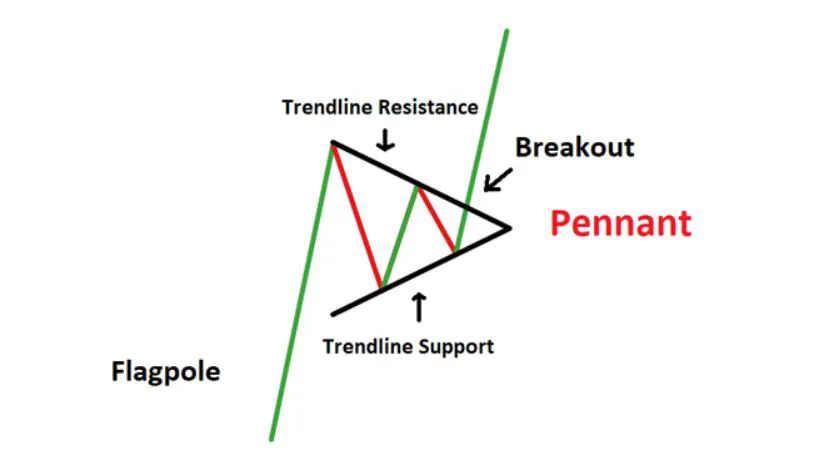
A Pennant pattern is characterized by a small symmetrical triangle that forms after a sharp price move. This pattern can be a continuation pattern depending on the direction of the preceding trend.
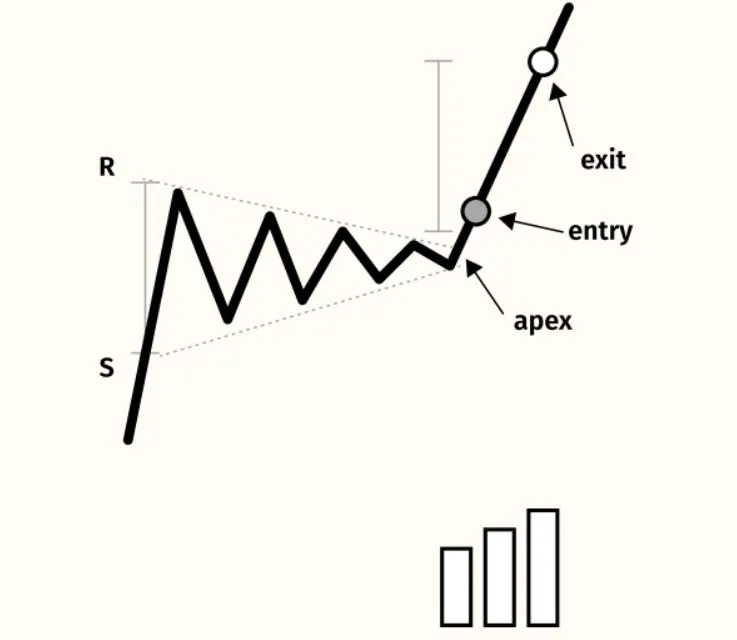
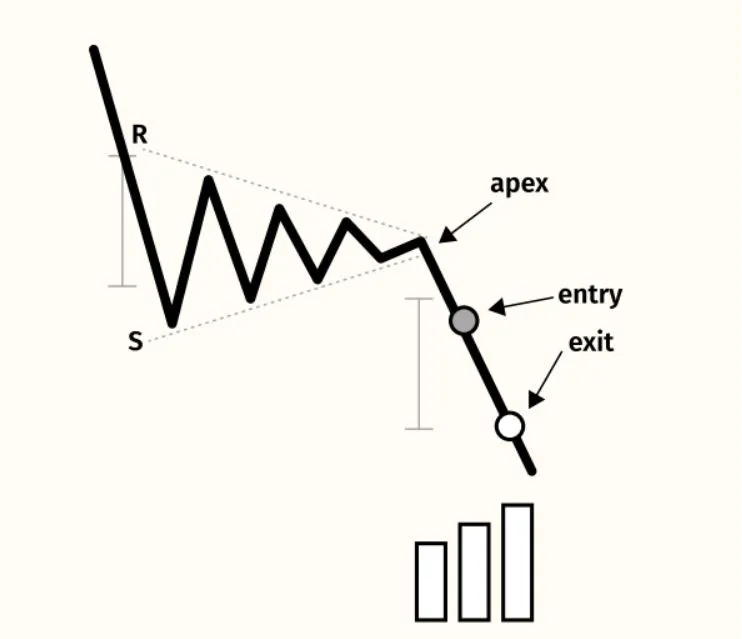
  1. Pennant Pattern

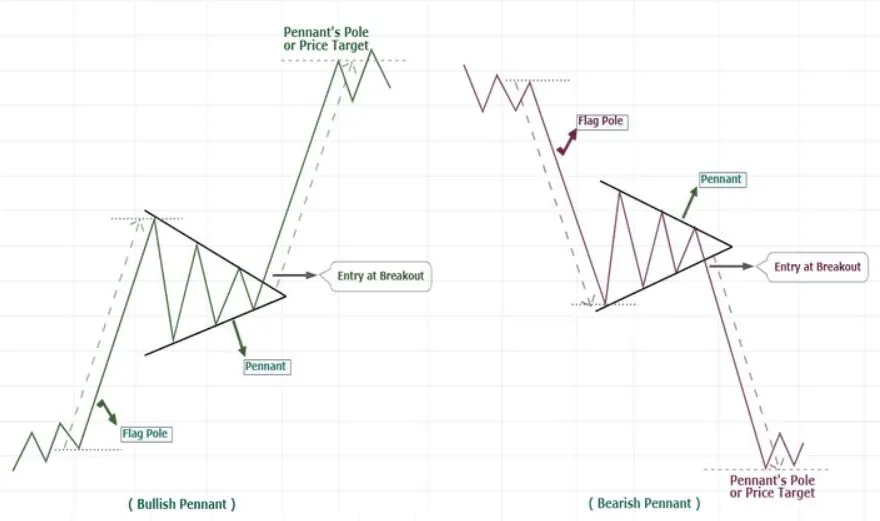
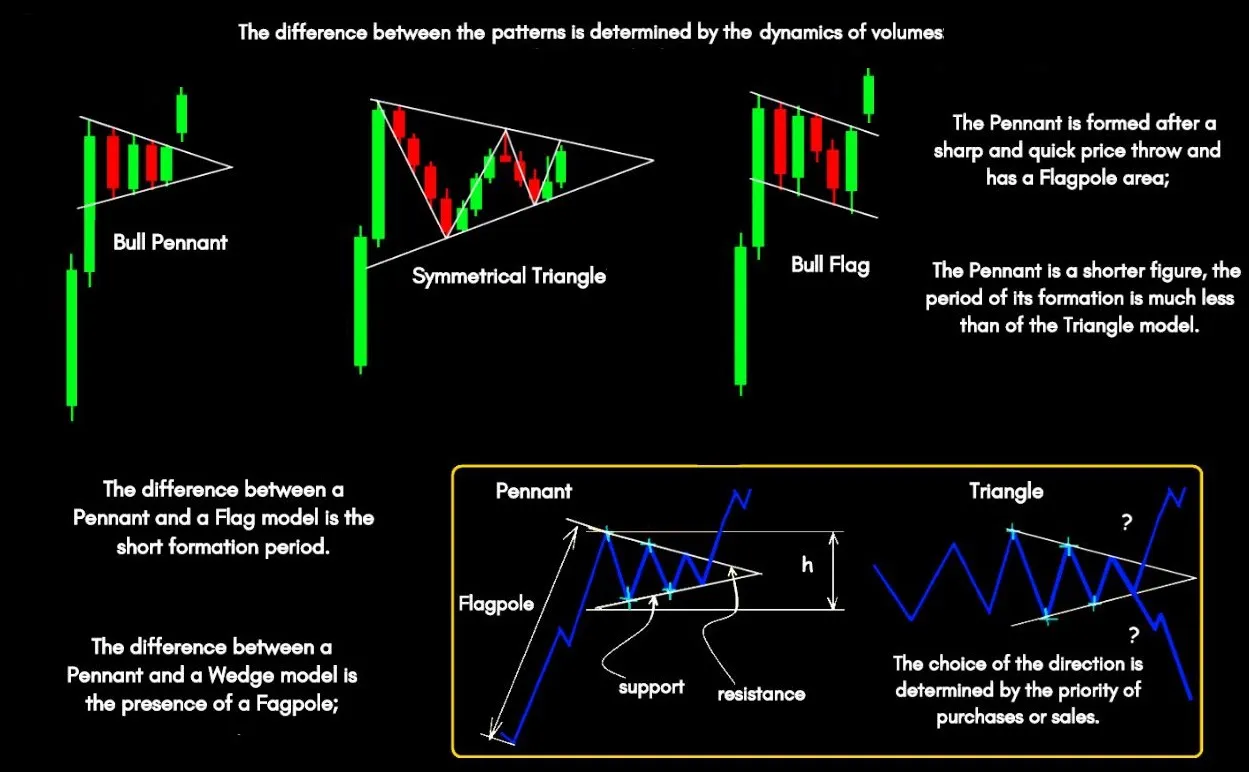
    • A Pennant pattern must be preceded by a strong up or down move that resembles a flagpole. If there is no flagpole, it's not a Pennant, but a triangle pattern.
    • A Pennant tends to form a shallow retracement, usually less than 38% of the flagpole. A deep retracement indicates a triangle pattern rather than a Pennant.
    • A Pennant pattern is characterized by the continuation of the upward or downward trend.
    • A Pennant pattern is a short-term pattern that is usually completed within 30 to 50 candles. In contrast, a triangle pattern takes much longer to form.
Depending on the direction of the preceding trend. there are 2 type:
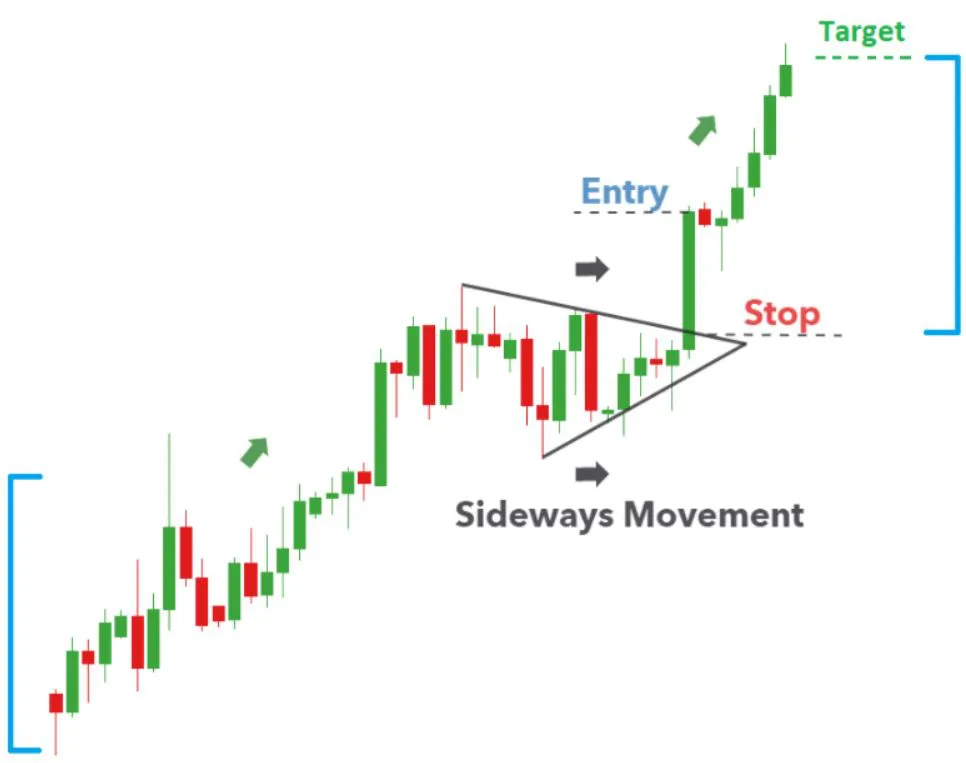
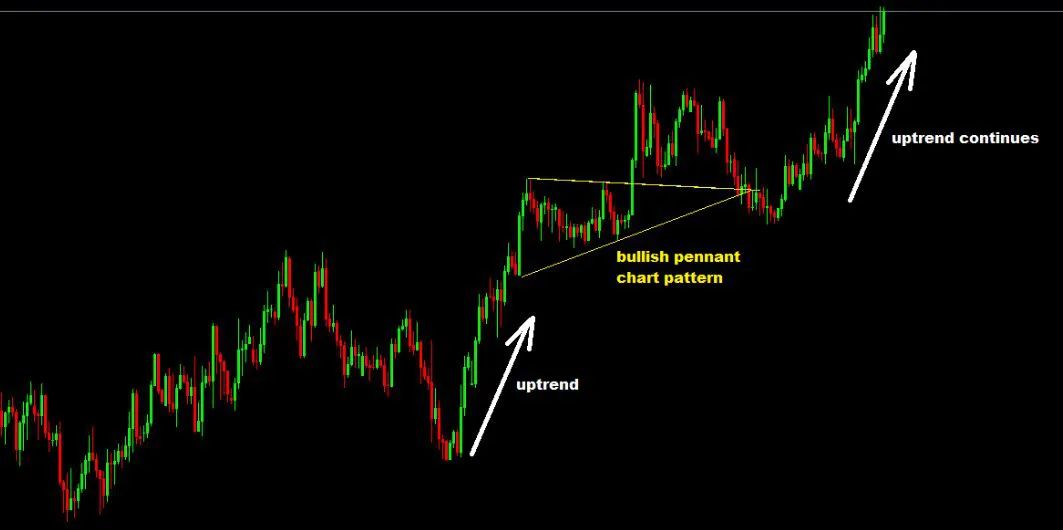
  1. Bullish Pennant

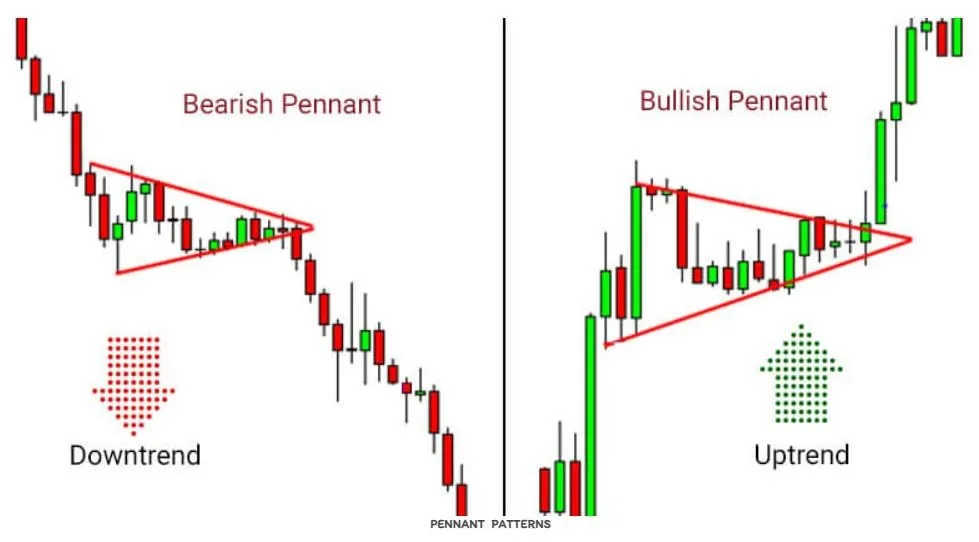
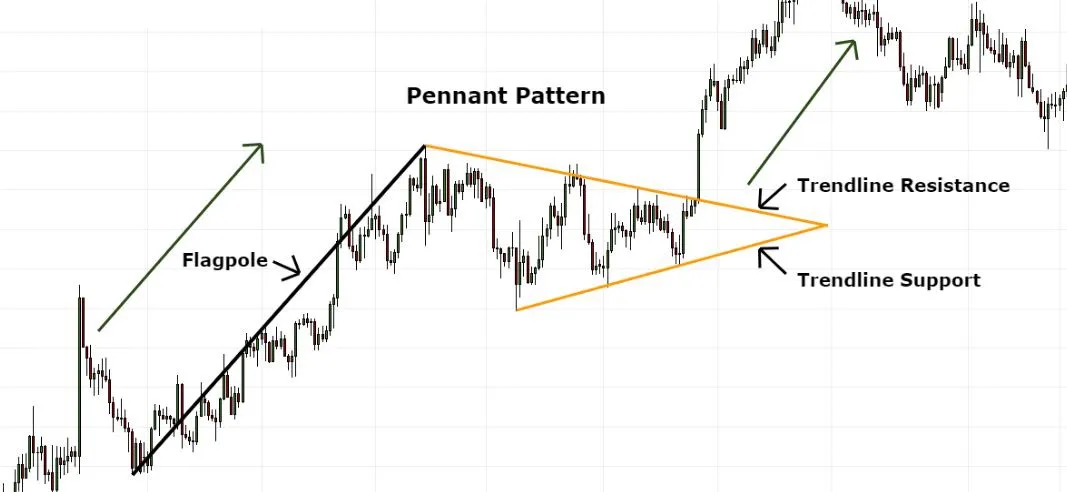
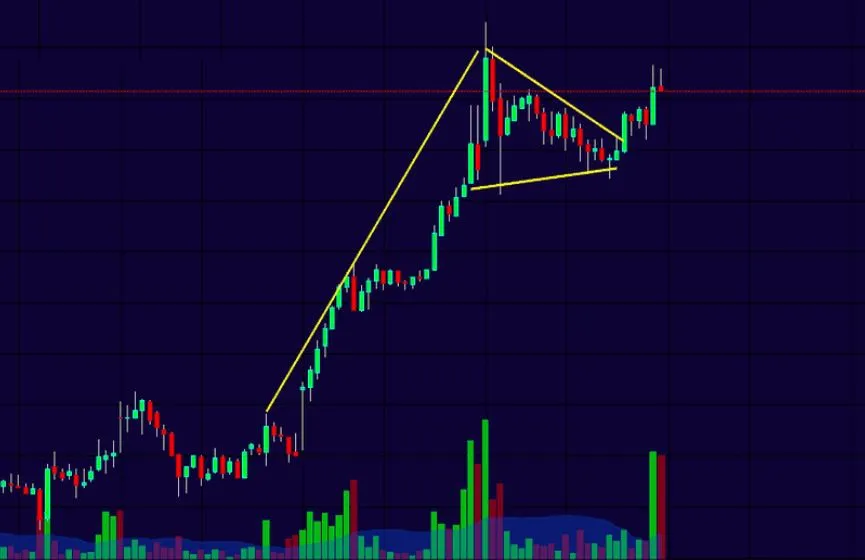
    • A Bullish Pennant is a chart pattern that forms during an uptrend.
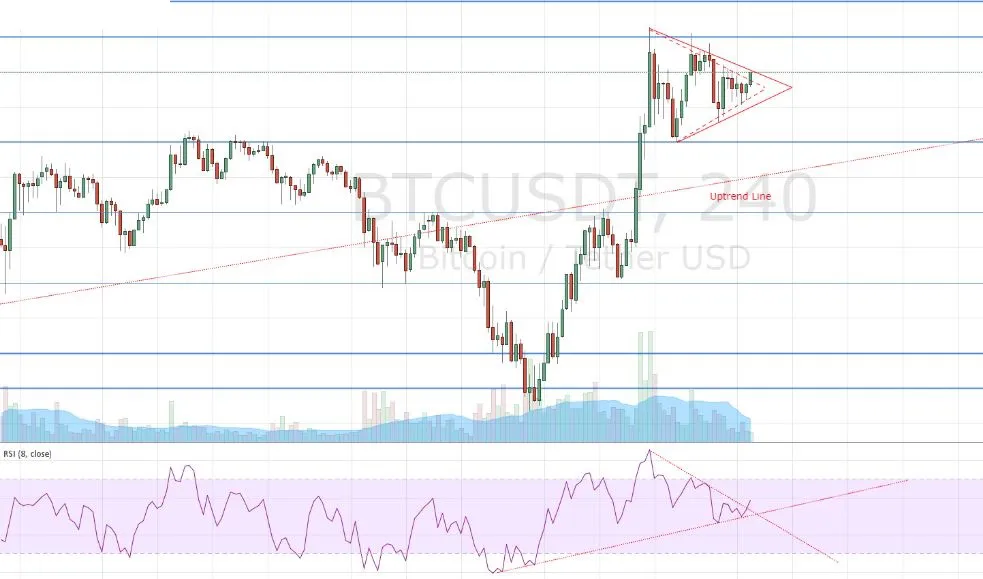
    • It is characterized by a small symmetrical triangle that forms after a sharp upward price move.
    • The Pennant pattern usually signals a continuation of the uptrend, as traders take a brief pause before continuing to buy, causing the price to consolidate in a tight range.
    • The Bullish Pennant is confirmed when the price breaks out above the resistance level of the Pennant pattern.
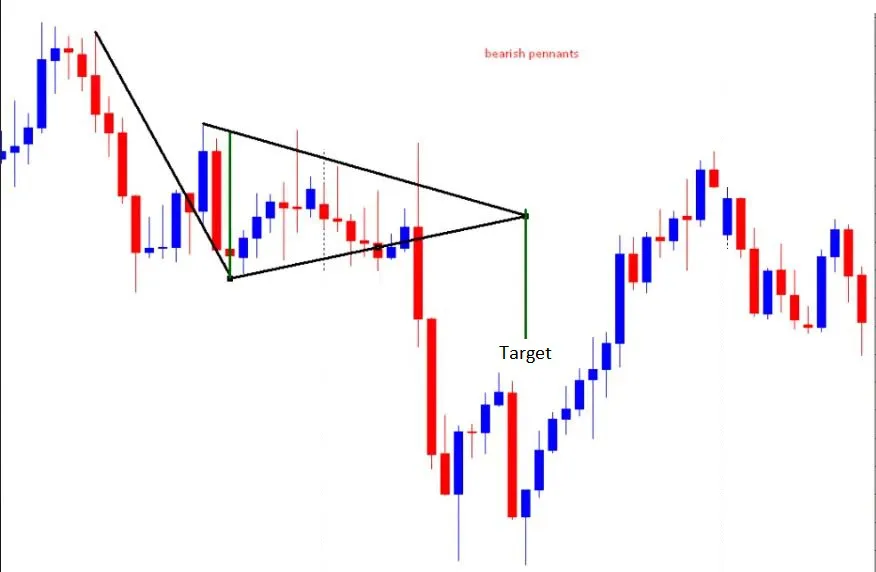
  2. Bearish Pennant

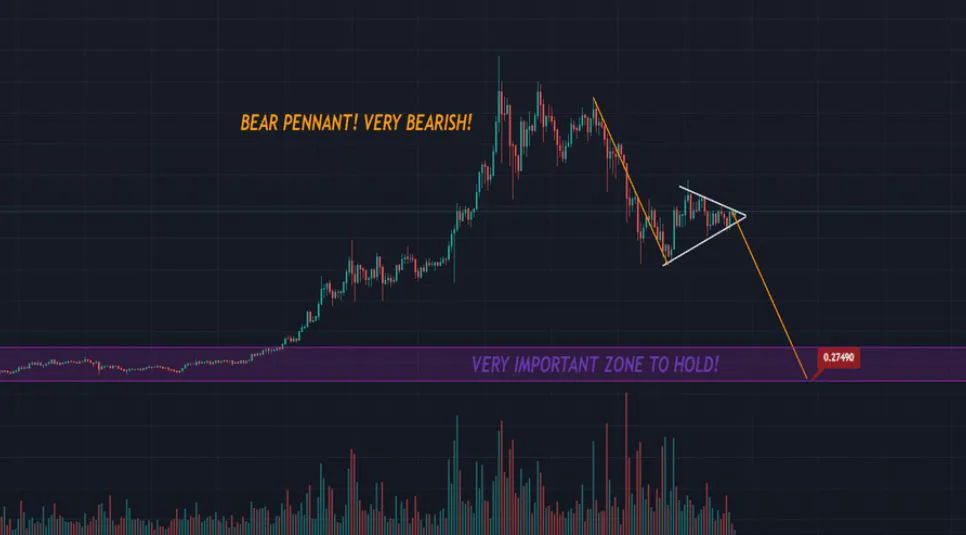
    • A Bearish Pennant is a chart pattern that forms during a downtrend.
    • It is characterized by a small symmetrical triangle that forms after a sharp downward price move.
    • The Pennant pattern usually signals a continuation of the downtrend, as traders take a brief pause before continuing to sell, causing the price to consolidate in a tight range.
    • The Bearish Pennant is confirmed when the price breaks out below the support level of the Pennant pattern.

How to take position in the market?
- Depending on trading psychology and individual risk, some Traders follow below rules to enter into positions.

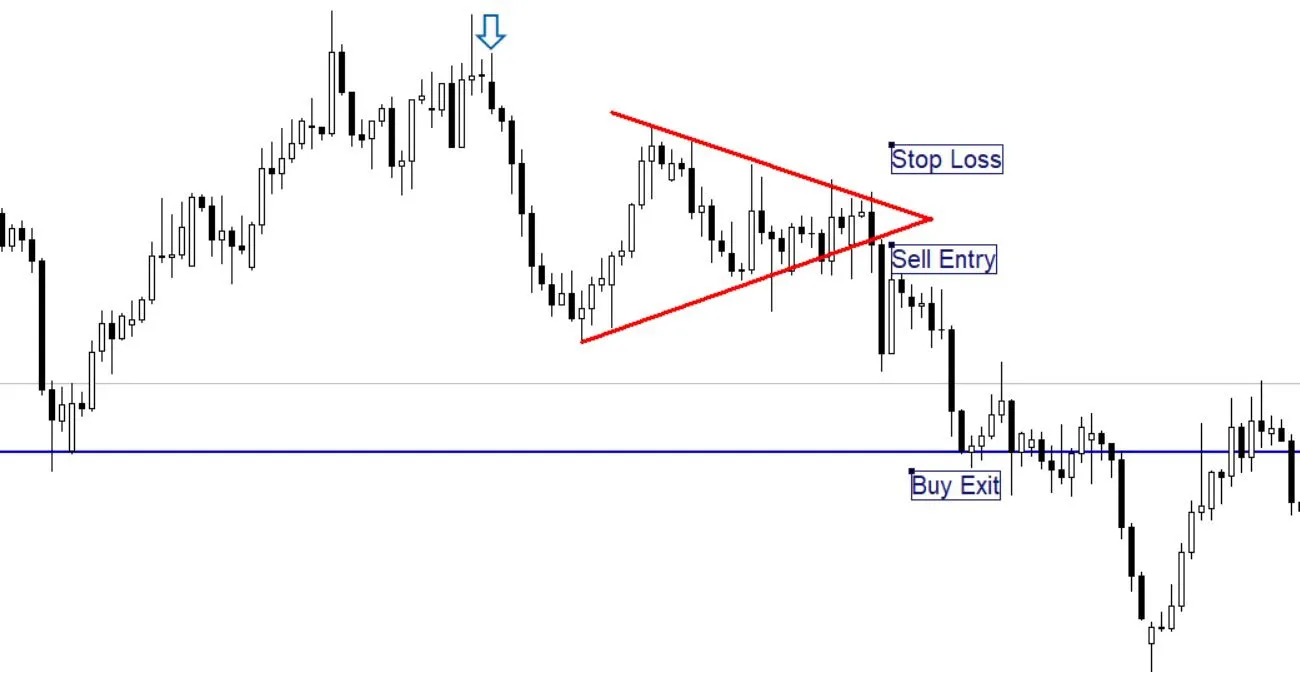
  1. Entry

    • Identify the trend before the Pennant pattern develops. It can be an uptrend or a downtrend.
    • Look for a pattern that resembles a triangle structure moving sideways and horizontally.
    • Draw a trend line on a series of lower highs followed by a series of lower lows. This forms the support and resistance levels.
    • Wait for the breakout of the support or resistance level.
    • If the close price crosses the support or resistance line with a big candlestick and increase in volume, it confirms the breakout.
    • Position can be taken after successful breakout.
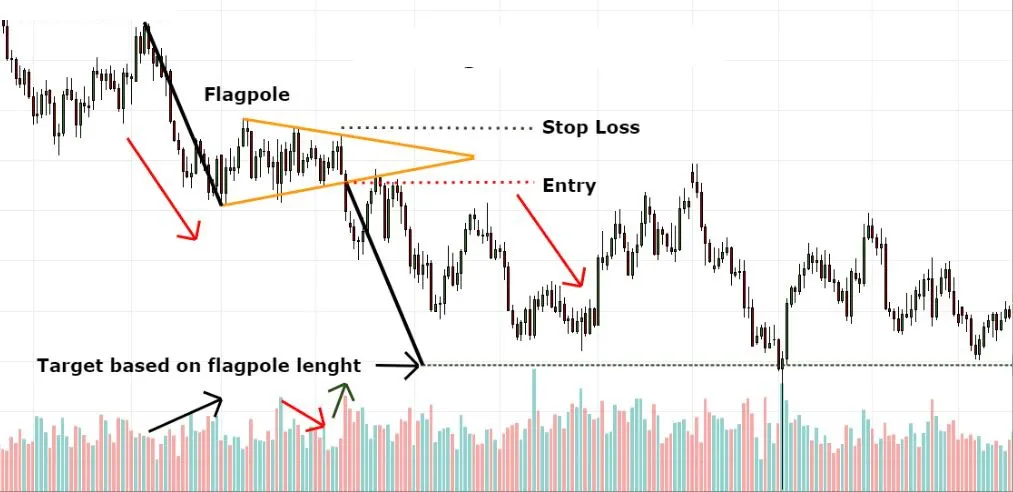
  2. Target

    • Minimum target price is typically calculated by measuring the height of the Pennant and projecting it in the direction of the breakout.
    • Few traders use length of the Pole as a target.
  3. Stop Loss

    • Place stop-loss just below Bullish Pennant support or just above Bearish Pennant resistance.

Pennant patterns can sometimes be incomplete and fail to form a clear pattern, making it difficult to identify entry and exit points.

Noisy or volatility Market can cause false signals and make it difficult to trade

  1. Flag pattern vs Pennant pattern

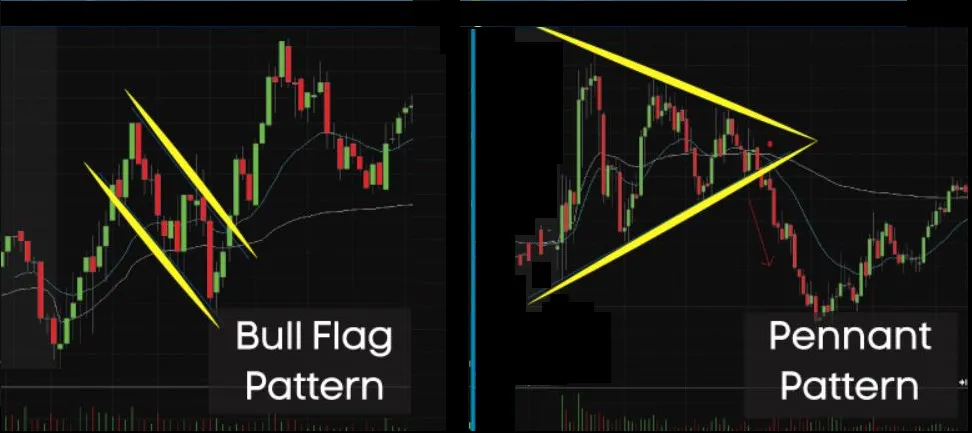
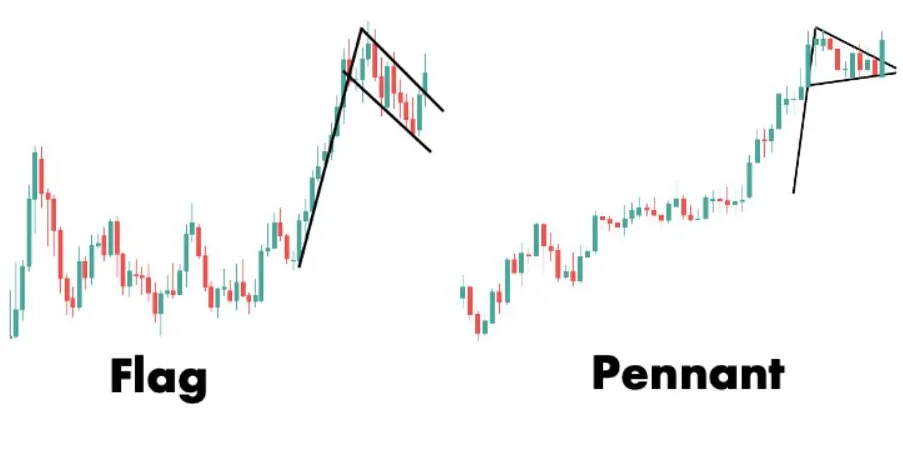
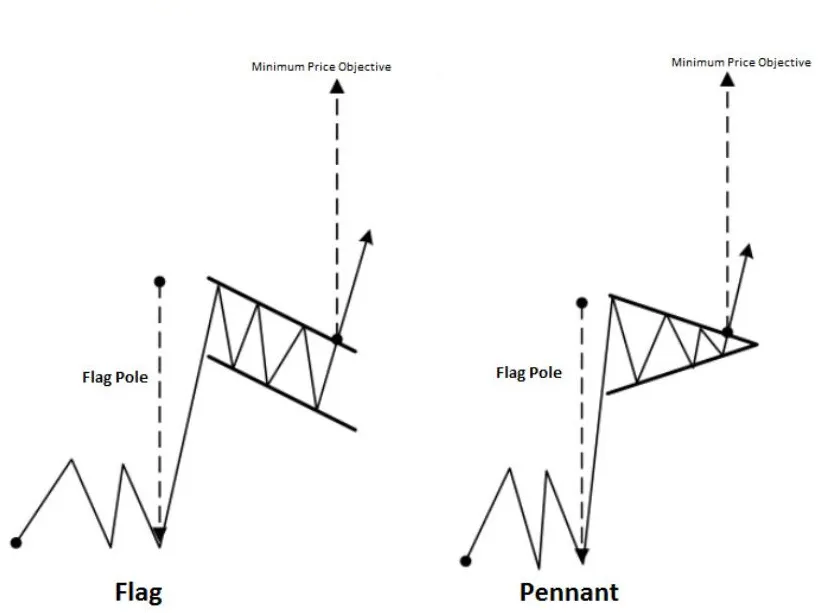
    The flag pattern and the pennant pattern are two similar technical analysis chart patterns that are often confused with one another. Here are some key differences between the two patterns:

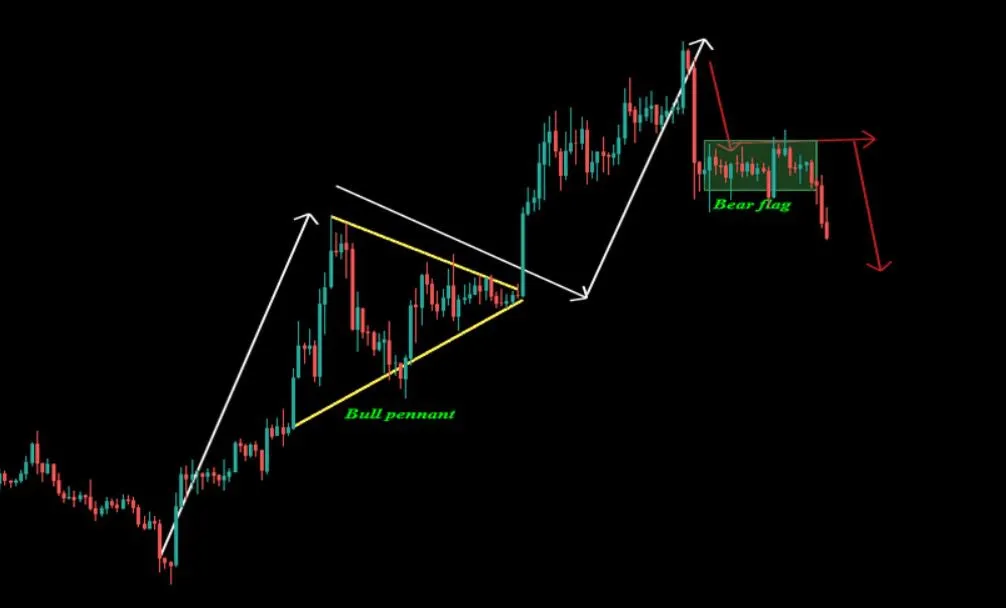
    • Shape: The flag pattern is a rectangle, while the pennant pattern is a triangle.
    • Pole length: The pole that precedes the flag pattern is usually longer and more vertical compared to the pole that precedes the pennant pattern, which is shorter and more horizontal.
    • Timeframe: Flag patterns tend to be longer-term patterns that can last for several weeks or even months, while pennant patterns are typically shorter-term patterns that last for a few days to a few weeks.
    • Volume: Flag patterns tend to show a decrease in trading volume during the consolidation period, while pennant patterns often show an increase in volume during the consolidation period.
    • Breakout direction: When a flag pattern breaks out of the consolidation phase, it usually continues in the direction of the previous trend. In contrast, when a pennant pattern breaks out, it may continue in the previous trend direction or reverse.

Example-1 : Pennant vs Triangle vs Flag Patterns


Example-2 : Bullish Pennant pattern


Example-3 : Bearish Pennant pattern with Entry, Target and Stoploss


Example-4 : Flag vs Pennant Pattern


Example-5 : Bullish Pennant Pattern


Example-6 : Expecting Bearish Pennant Pattern to come


Example-7 : Price consolidating Bullish Pennant Pattern High


Example-8 : Formation of Bullish Pennant Pattern near Pivot points


Example-9 : Strong Bullish move after market retest the Pennant Pattern High


Example-10 : Bearish Pennant Pattern


Example-11 : Bearish Pennant Pattern with Entry, Target and Stoploss


Share the App - Share Alpha