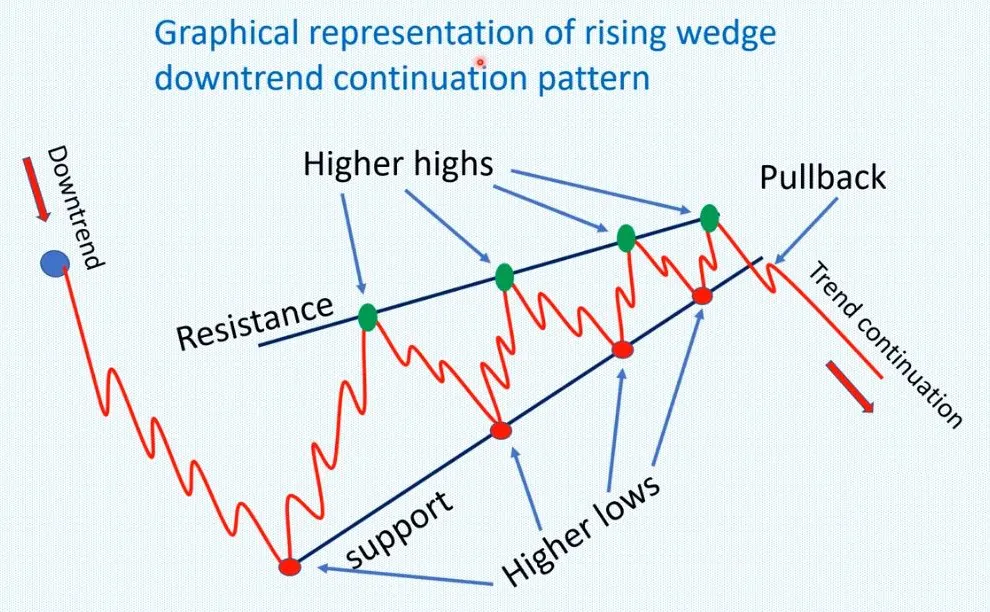
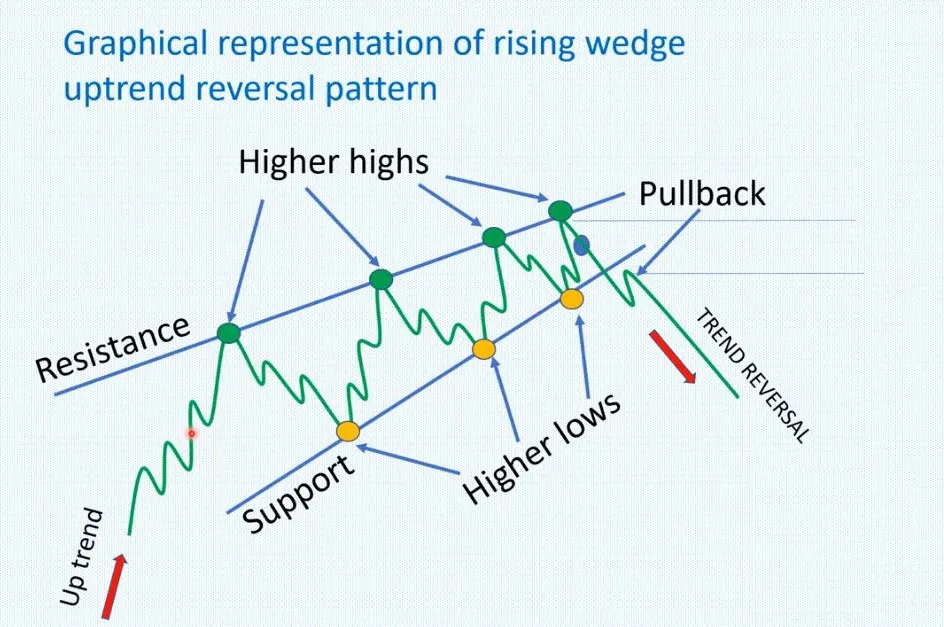
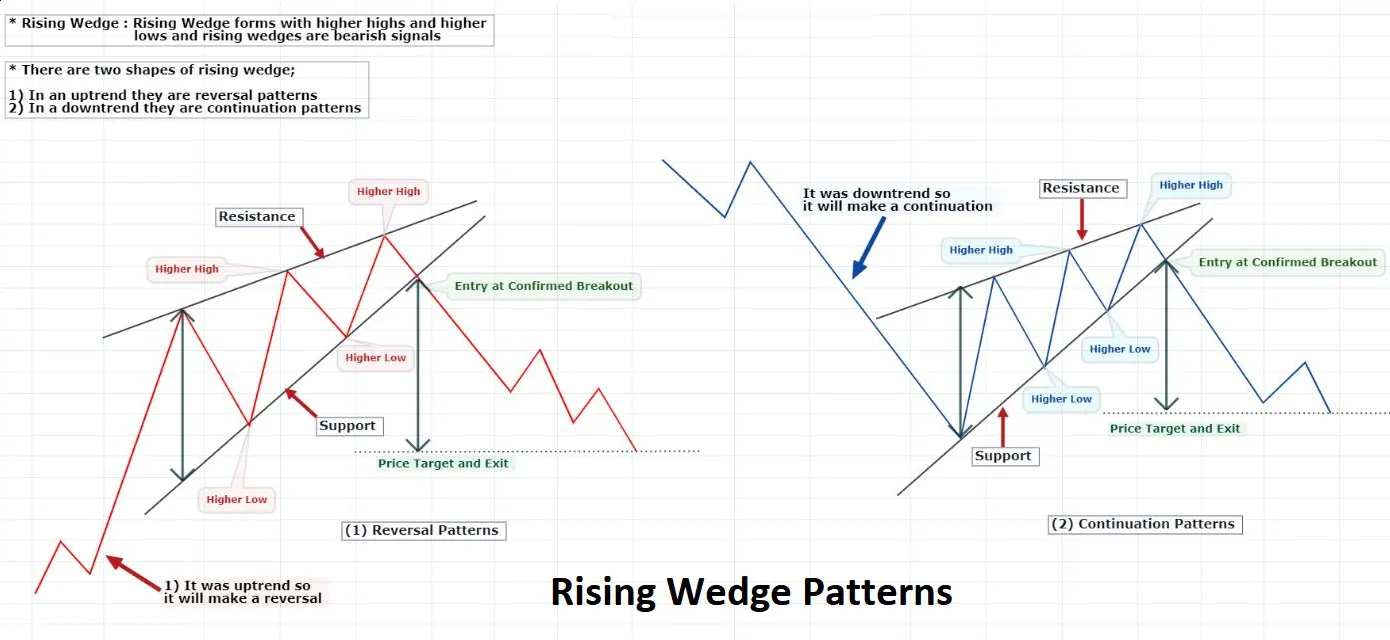
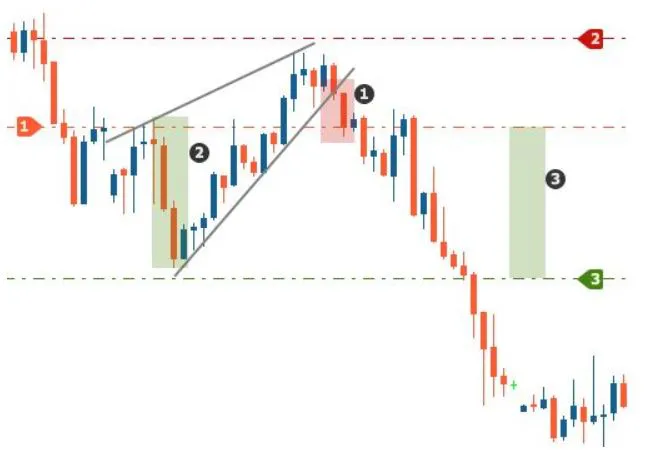
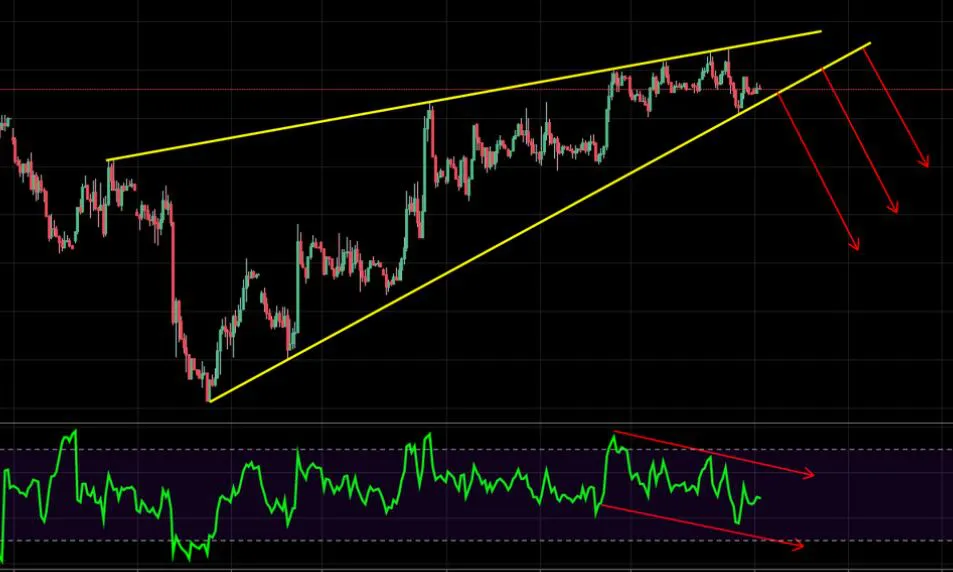
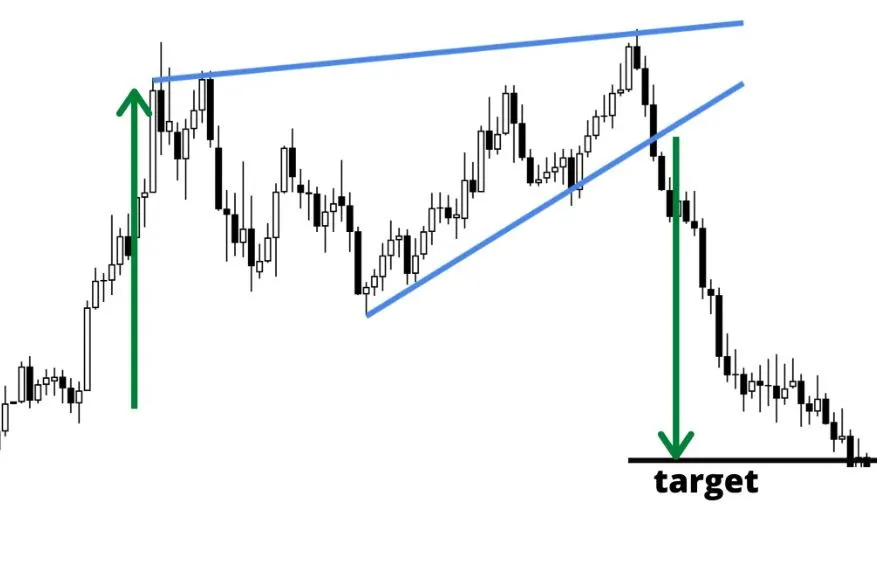
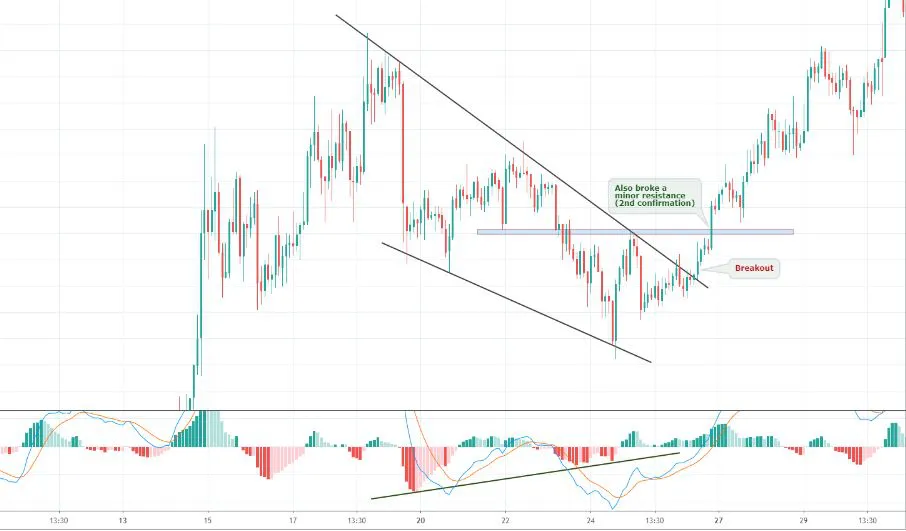
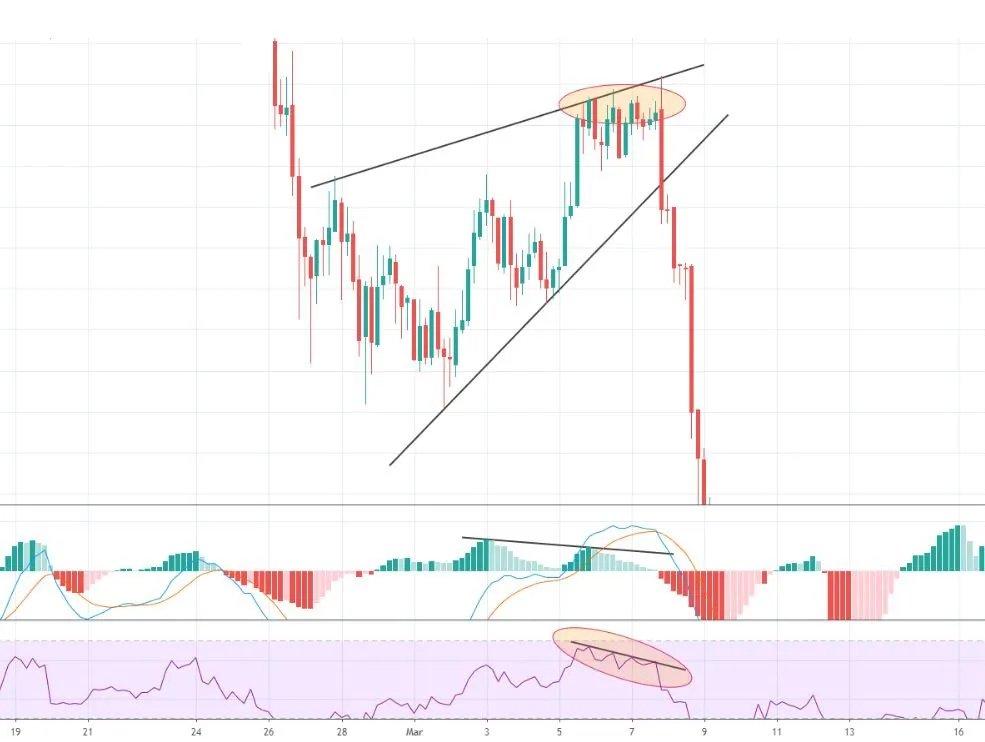
- Rising wedge
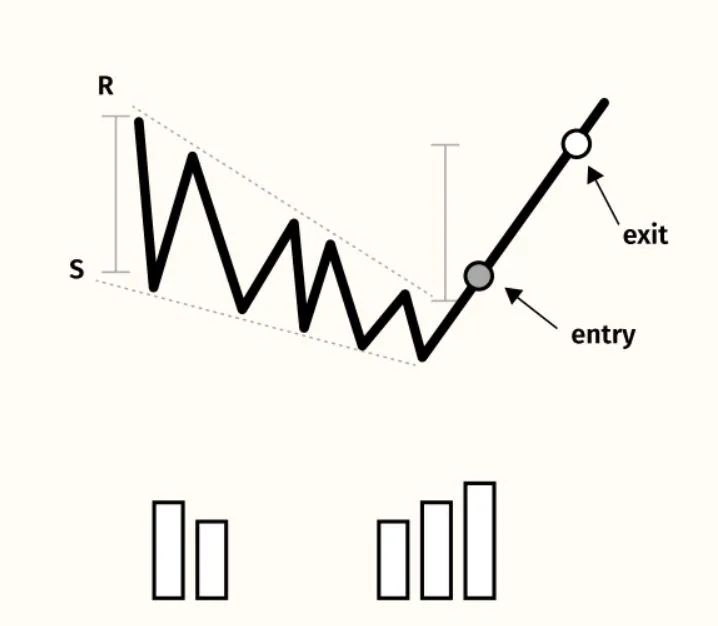
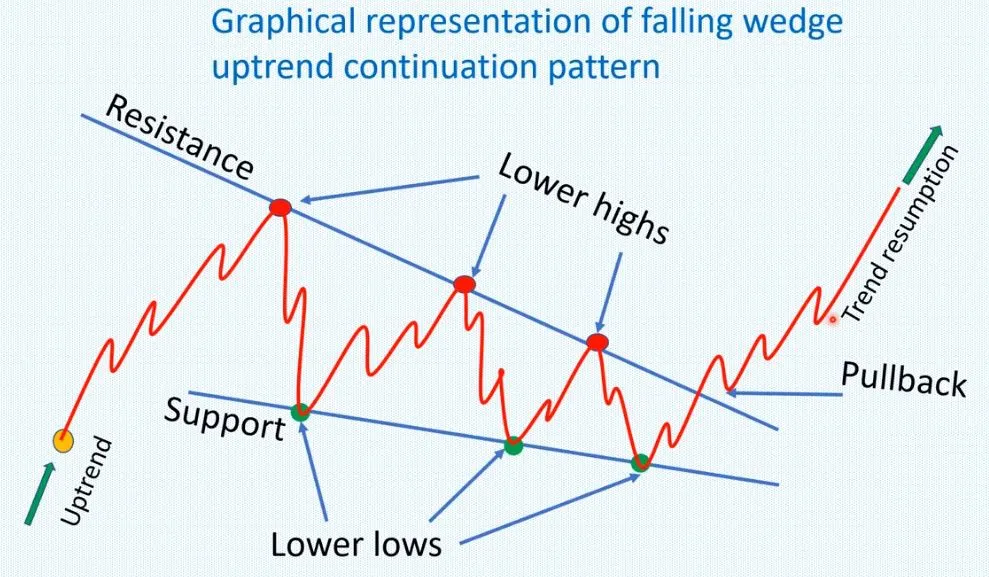
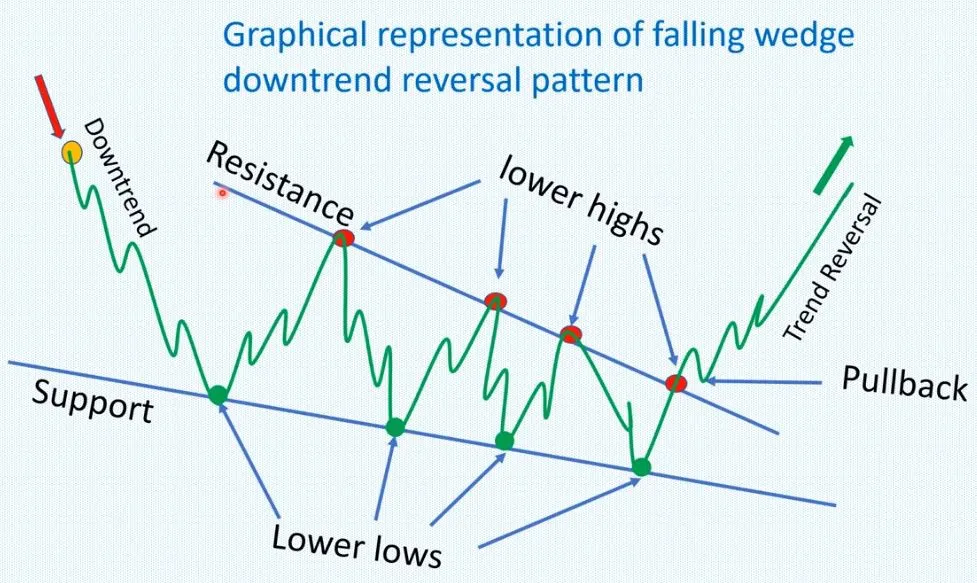
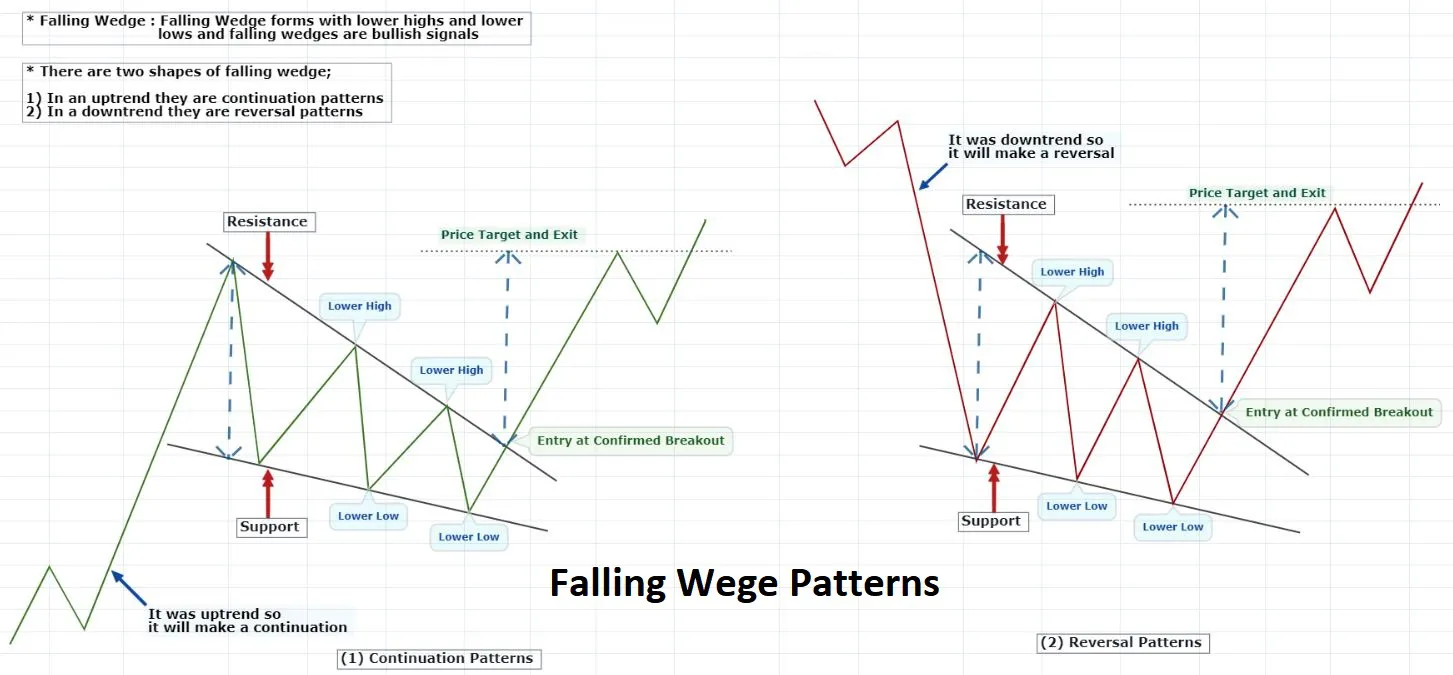
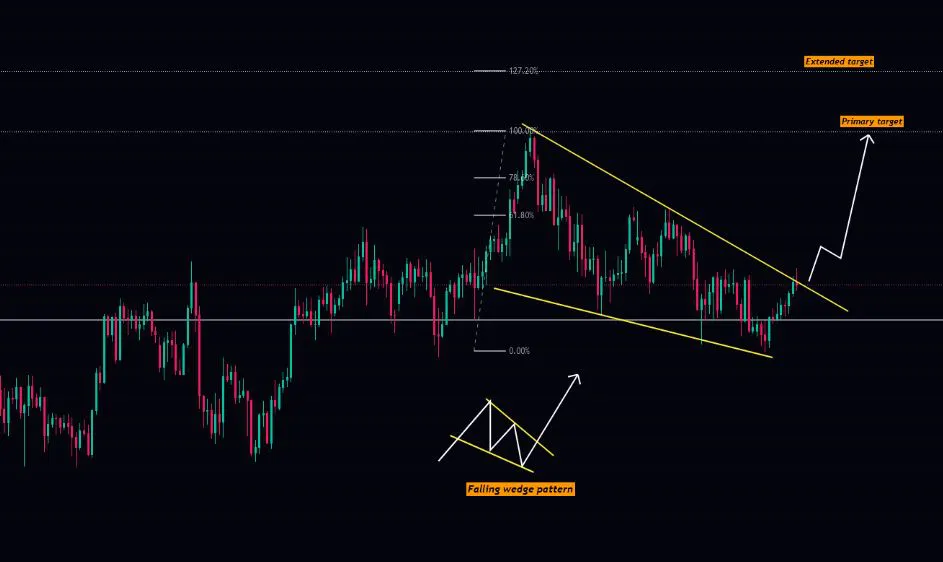
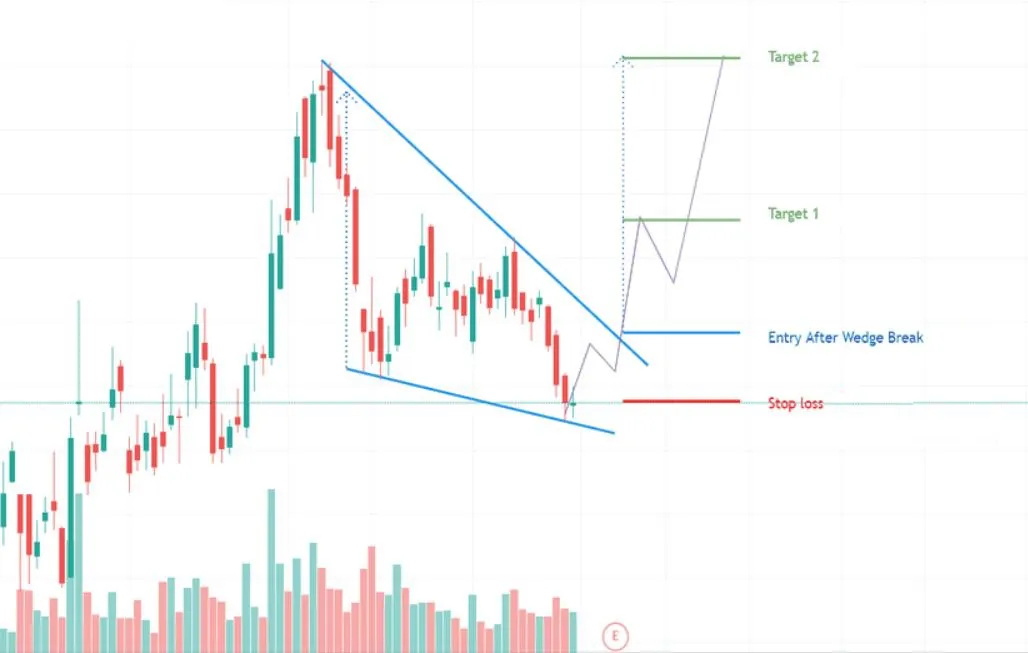
- Falling wedge
WEDGES
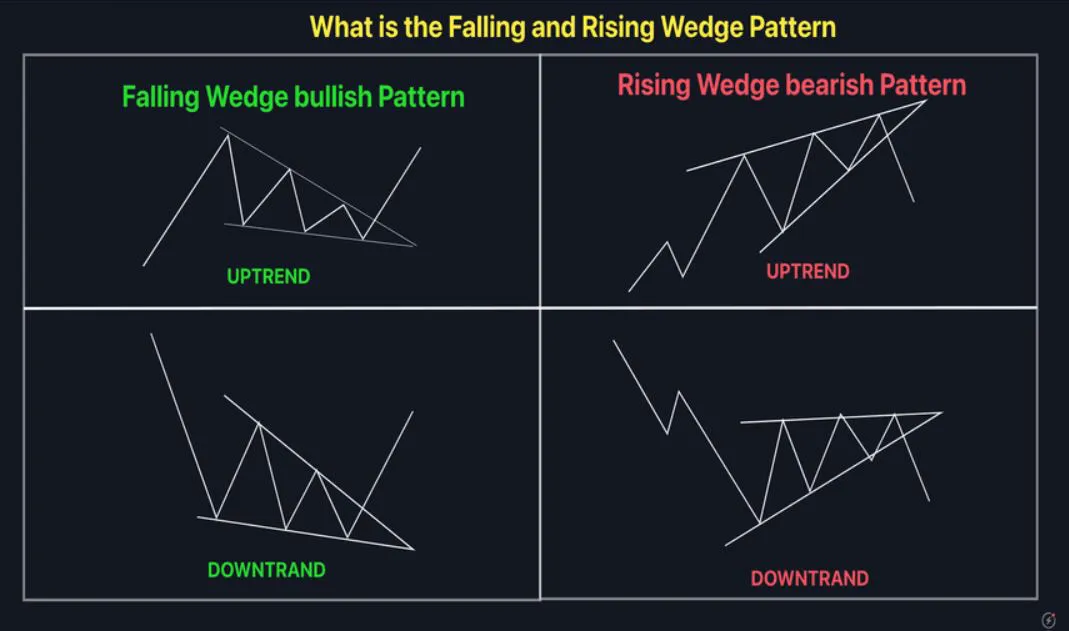
In technical analysis, a wedge is a price pattern that forms when the price of an asset moves in a narrowing range, forming a triangle or wedge shape.
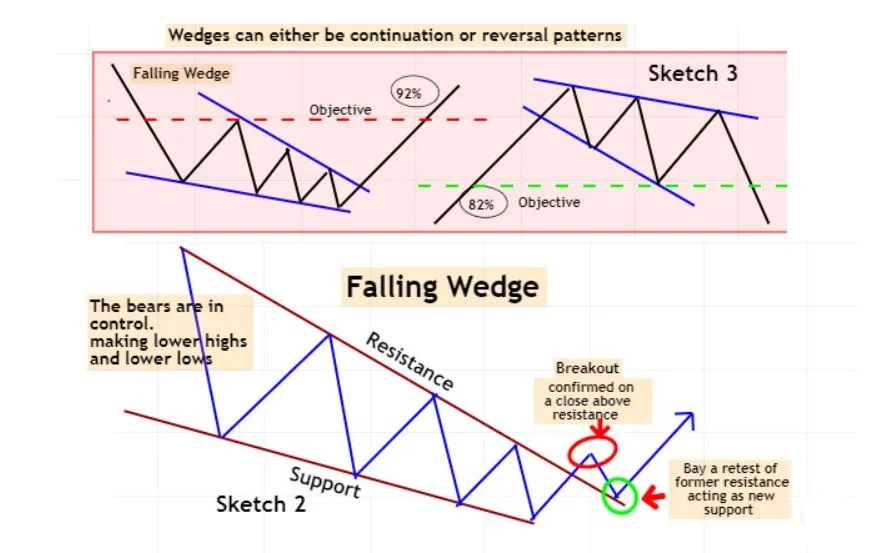
Wedges are chart patterns formed by converging two trend lines and can be both a continuation or reversal pattern.
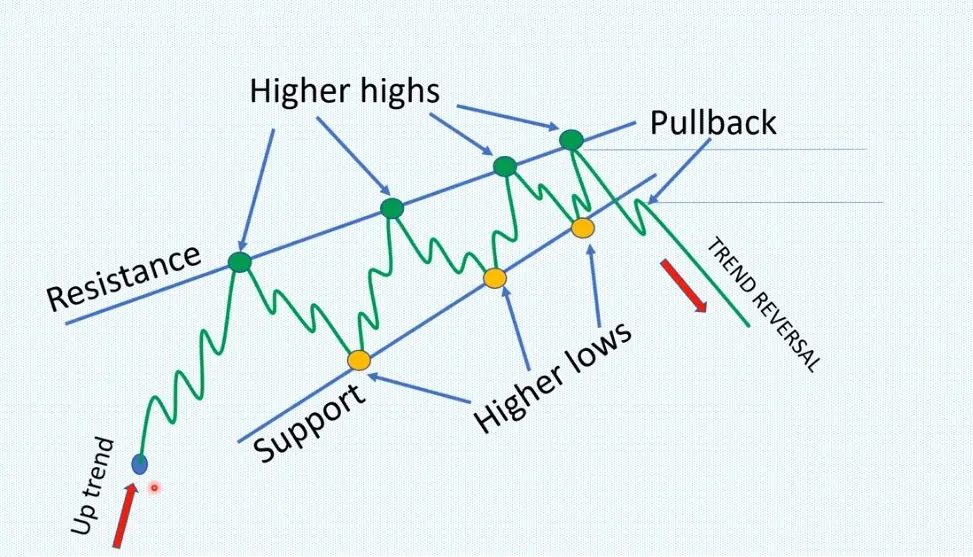
Wedges are often used as a signal for potential trend reversal. Traders typically look for the breakout of the pattern, which occurs when the price moves outside of the wedge formation, as a confirmation of the new trend direction.
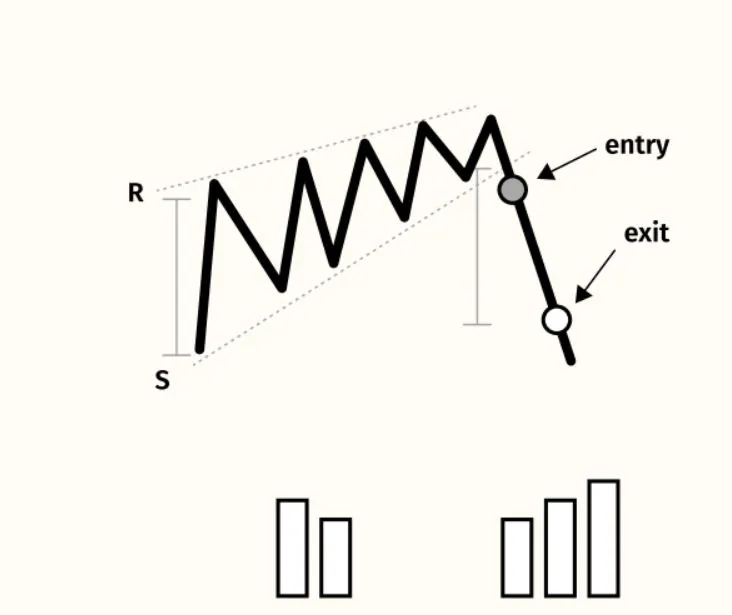
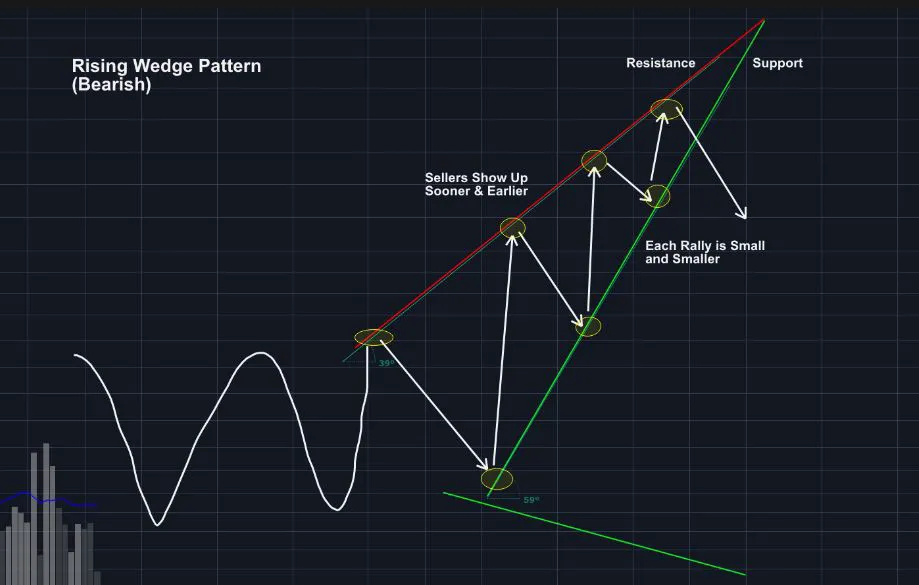
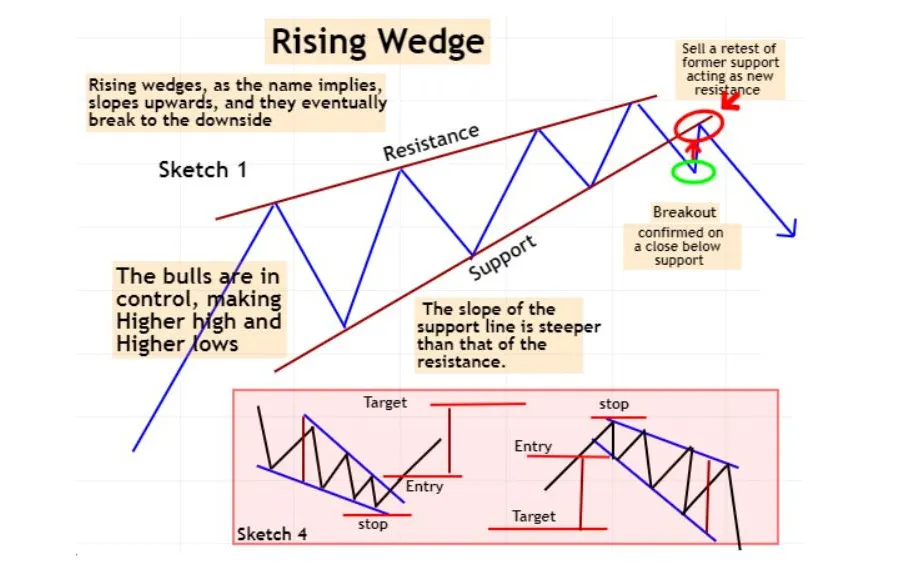
This pattern forms when the price of an asset makes higher highs and higher lows, but the angle of ascent becomes narrower and narrower over time.
The pattern is considered bearish because it suggests that the price is likely to break down and move lower.
Rising wedges always breakdown the support line
How to use Rising Wedge?
This pattern forms when the price of an asset makes lower lows and lower highs, but the angle of descent becomes narrower and narrower over time.
The pattern is considered bullish because it suggests that the price is likely to break up and move higher.
Falling wedges always breakouts the Resistance line
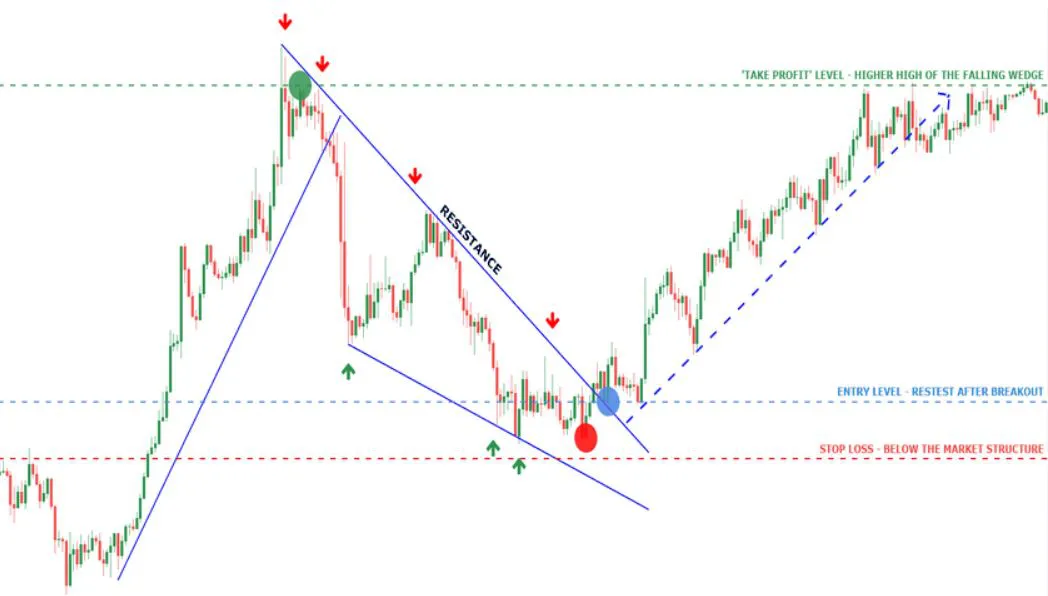
How to use Falling Wedge?
How to take position in the market?
- Depending on trading psychology and individual risk, some Traders follow below rules to enter into positions.
Caution
Sometimes market or stock might move in the opposite direction immediately after a breakout of a Wedge pattern, which is known as a False Breakout.
This can occur due to various factors such as market volatility, news events, or other technical indicators.
Always put a StopLoss to avoid Big loss.