Bollinger Bands

Bollinger Bands are the most popular trading indicator created by John Bollinger.

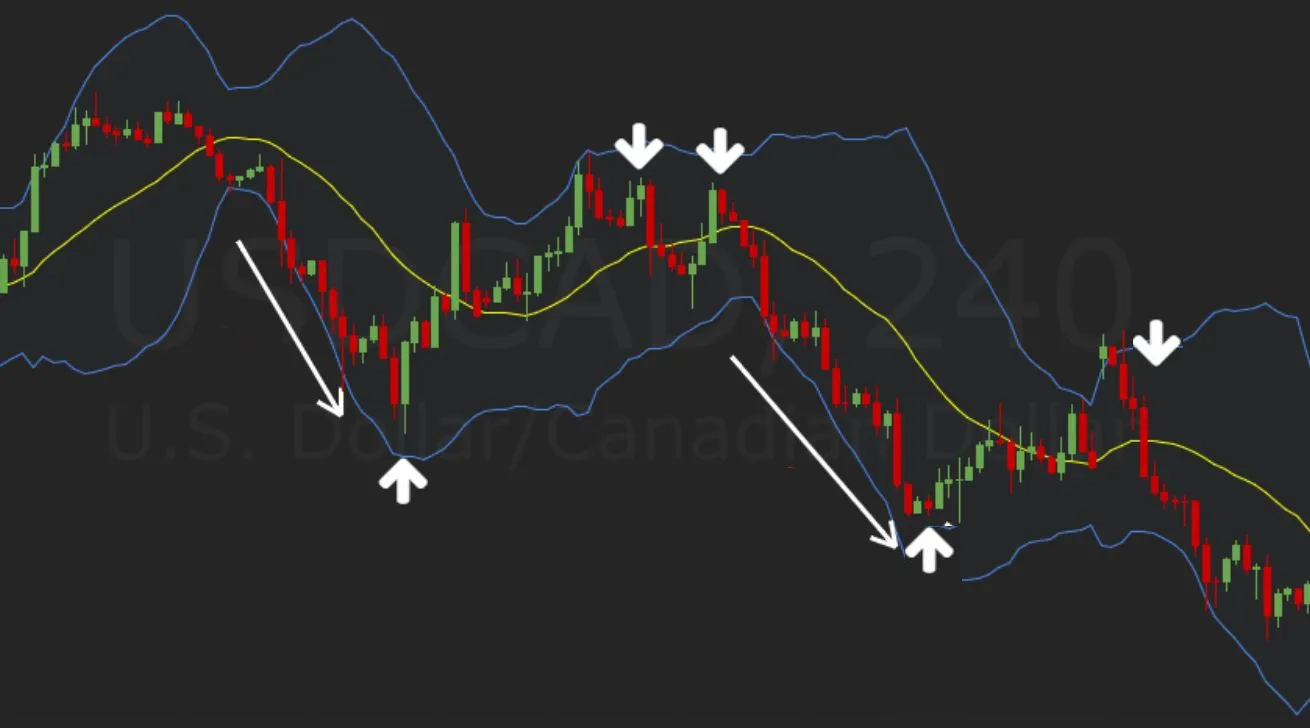
These bands are commonly used to identify market volatility and potential overbought or oversold conditions. They are created by drawing two lines that are a certain number of standard deviations away from a moving average.

In simple term, Standard deviation means how much something varies or far away from its average line.
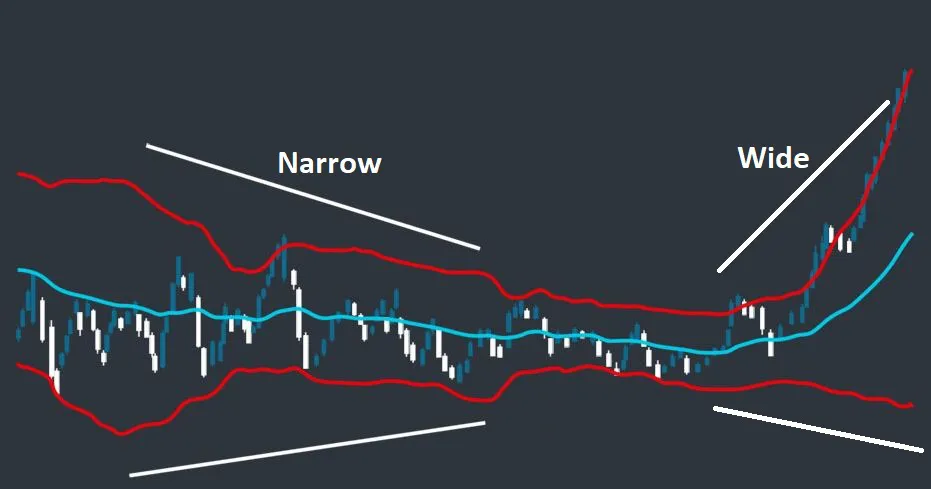


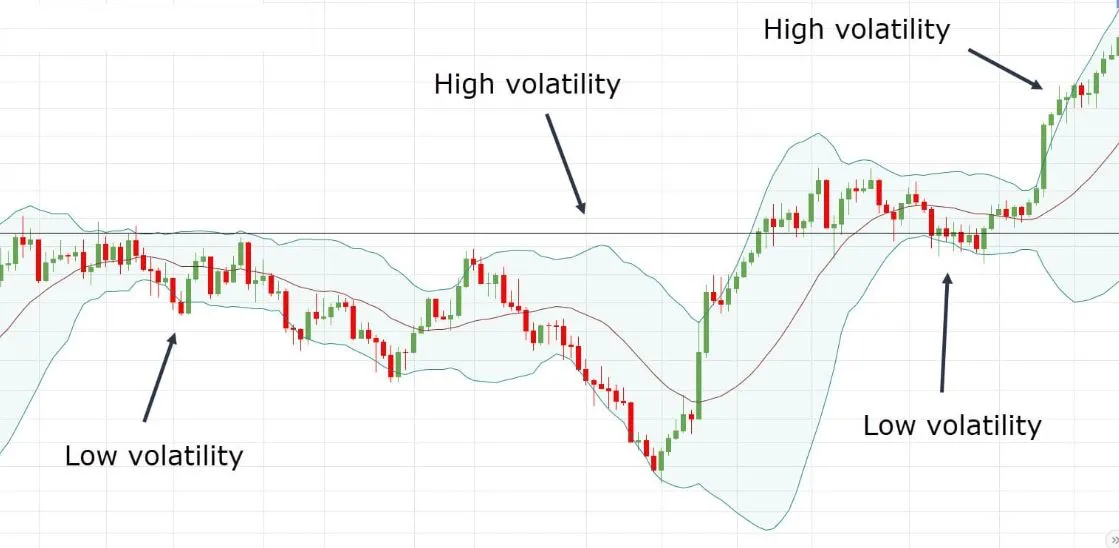
When the bands are narrow, it indicates that the market is experiencing low volatility.

When the bands are wide, it indicates that the market is experiencing high volatility.
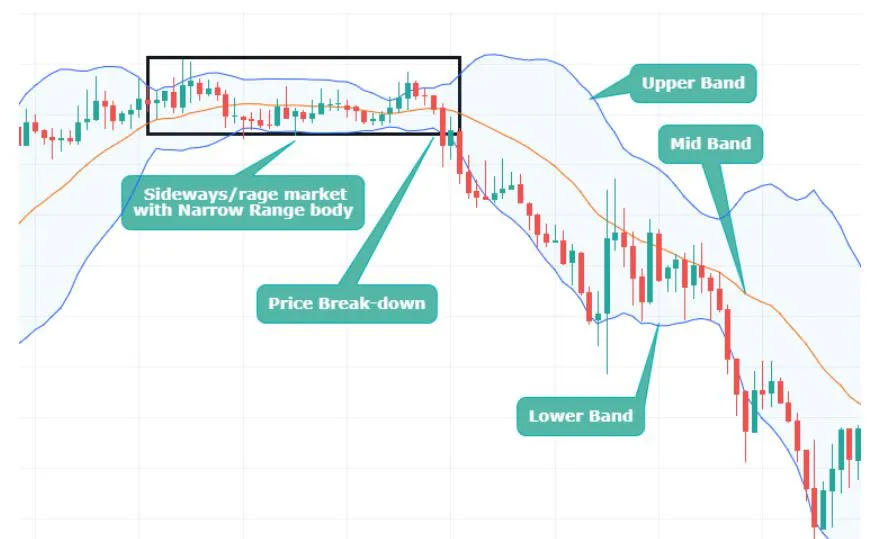


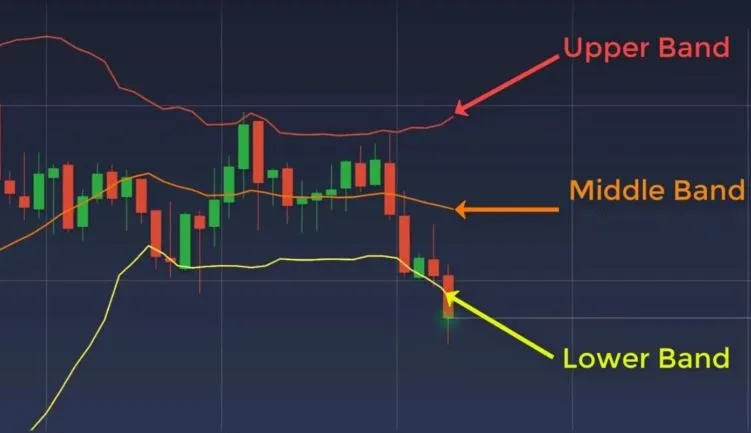
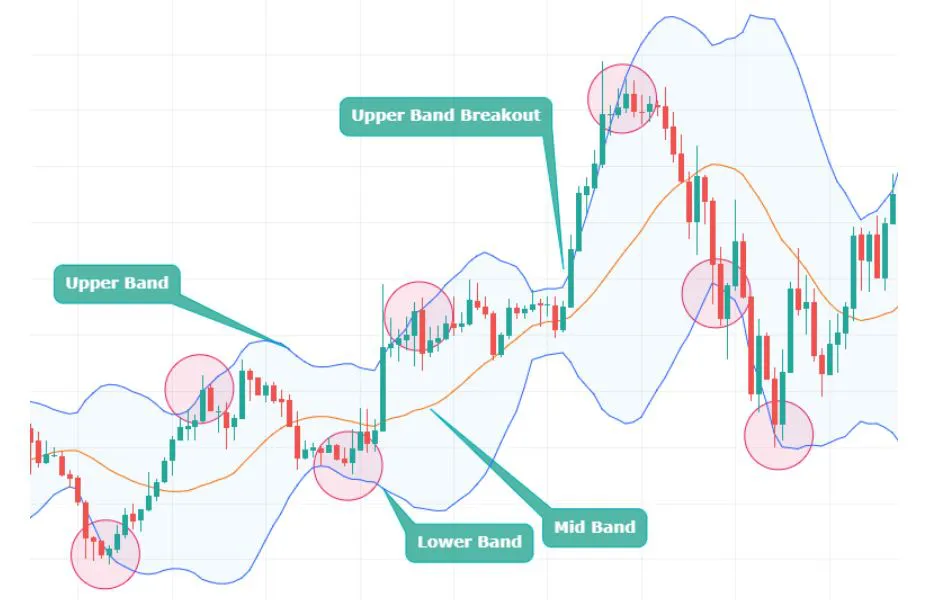
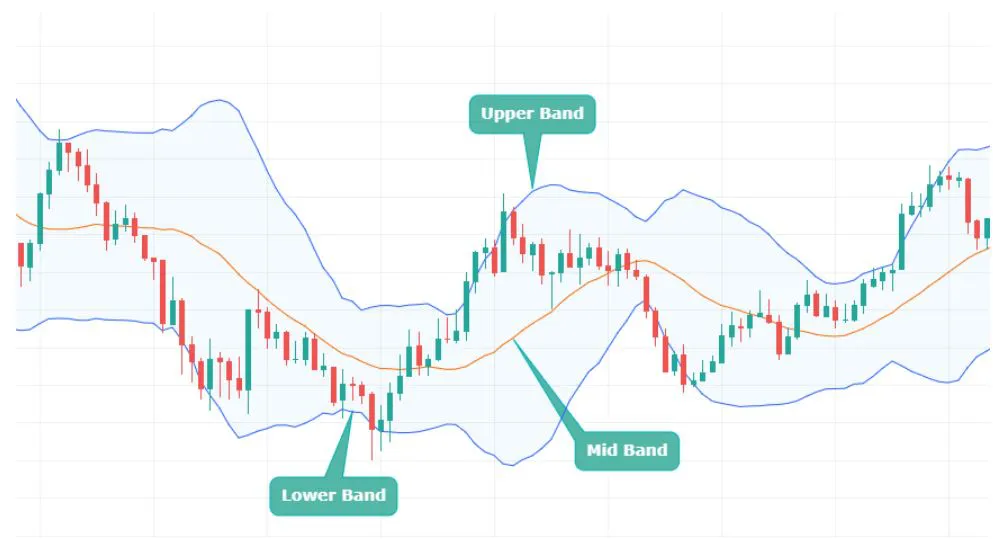
Bollinger Bands consists of 3 lines(Bands)


Bollinger Bands do not provide buy or sell signals. Rather, they provide information about where the price is relative to its average value and how volatile it is.

Enter trade only after familiar with it and use other technical indicator for confirmation.


How to use Bollinger Bands?
- There are multiple ways to use Bollinger Bands. Below are the few examples.

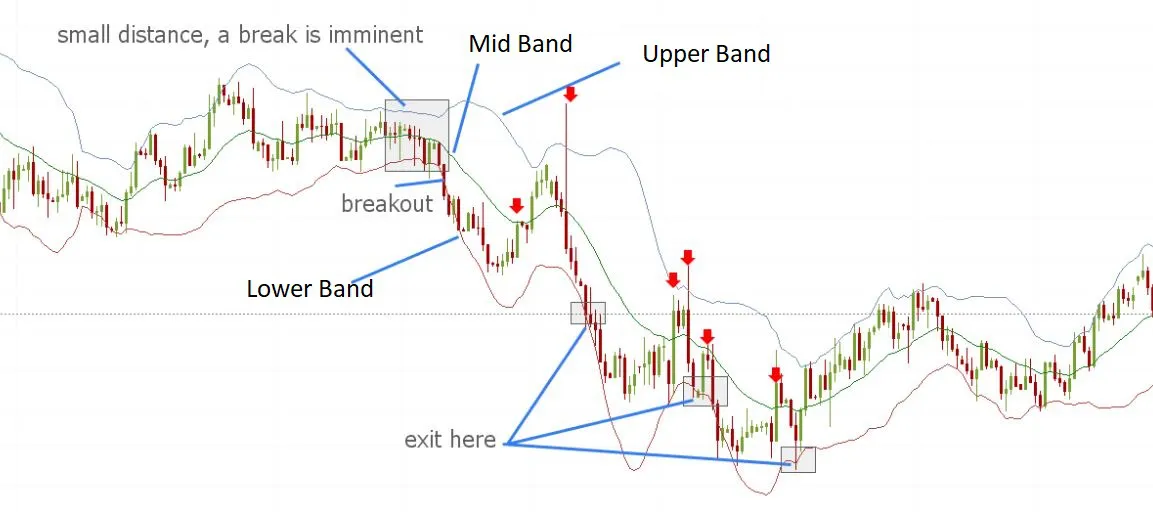
  1. Finding the volatility of the market using Breakout strategy

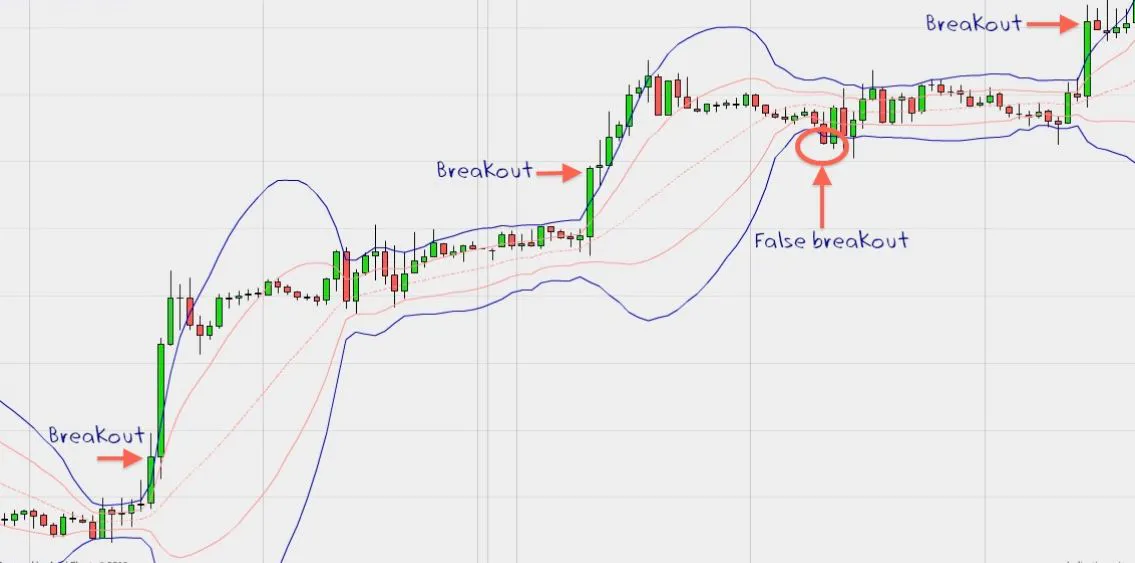
    Bollinger upper and a lower bands contract and expand based on the volatility of prices.

    Narrow bands indicate low volatility and suggest that the market is moving in a sideways range, which may present trading opportunities within that range.

    Wide or expanding bands indicate that volatility is returning to the market, which may be a signal of a potential trend developing.

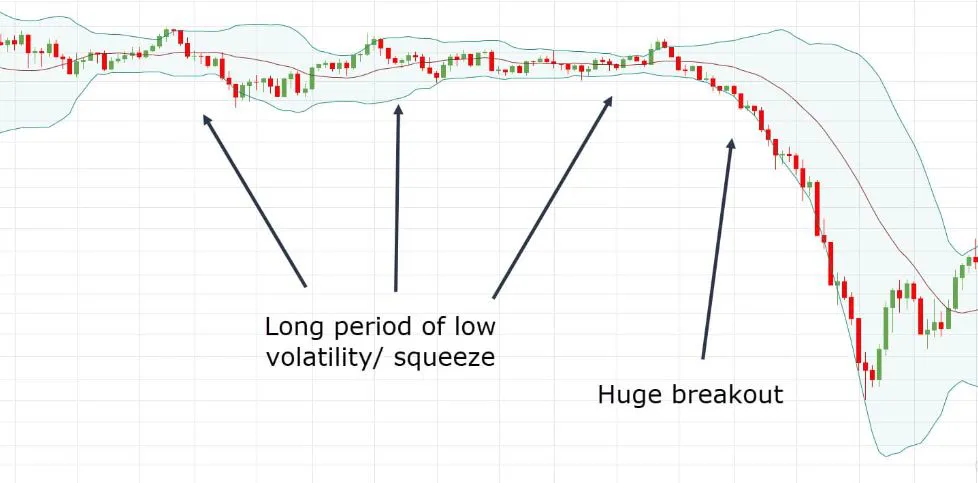
    Markets can either trend or range, and we can get big moves when price breaks out of a range or compression.

    Narrow bands suggest that volatility is absent from the market, which may indicate a low-risk environment for trading, but it is important to wait for a breakout before entering a trade.


    Here are the points to enter the trade using Bollinger Bands:

    • Identify the range-bound or narrow market conditions
    • Apply Bollinger Bands indicator and spot the Upper and Lower band lines
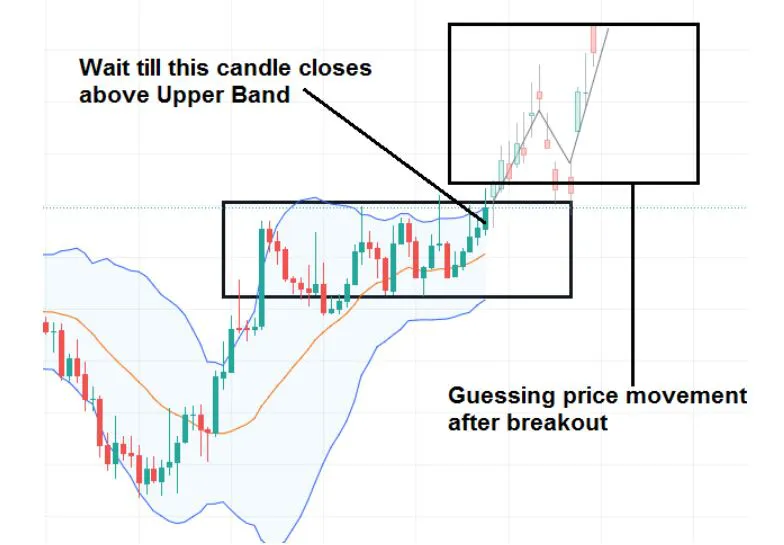
    • Wait for the price to break out above the Upper band or below the Lower band with a potential candlestick pattern
    • Take a trade in the direction of the breakout
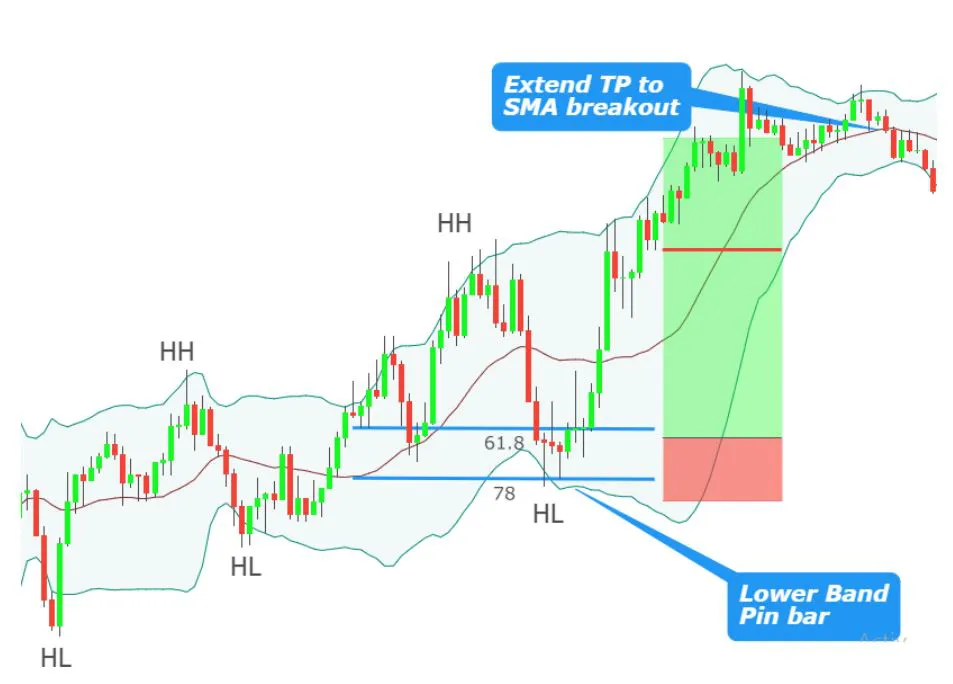
    • Set a minimum take profit target based on any reversal pattern or pullback, or by waiting for the price to cross the Upper or Lower band accordingly
    • Set a stop loss slightly above or below the breakout line, depending on whether you are going long or short.
  2. Multi Time-Frame

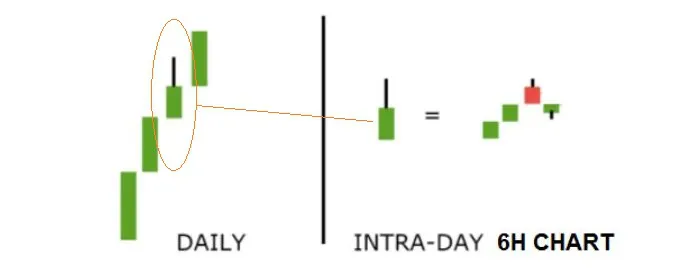
    The below image shows a bullish Daily chart, but on the 3rd candle, when we check the lower time frame, we see a red candle followed by a green candle with a Hammer pattern.

    From this we can assume that

    • The market is bullish in the higher time frame.
    • There is a reversal pattern forming in the lower time frame.
    • Always, higher time frame trend is more stronger than lower time frame, so wait for the confirmation from next candle
    • If the price breakout red candle, go long else go short.
    • Therefore, a trade can be taken based on the lower time frame with proper analysis
    • So Multi Time-Frame helps the trader enter the market at the exact price.

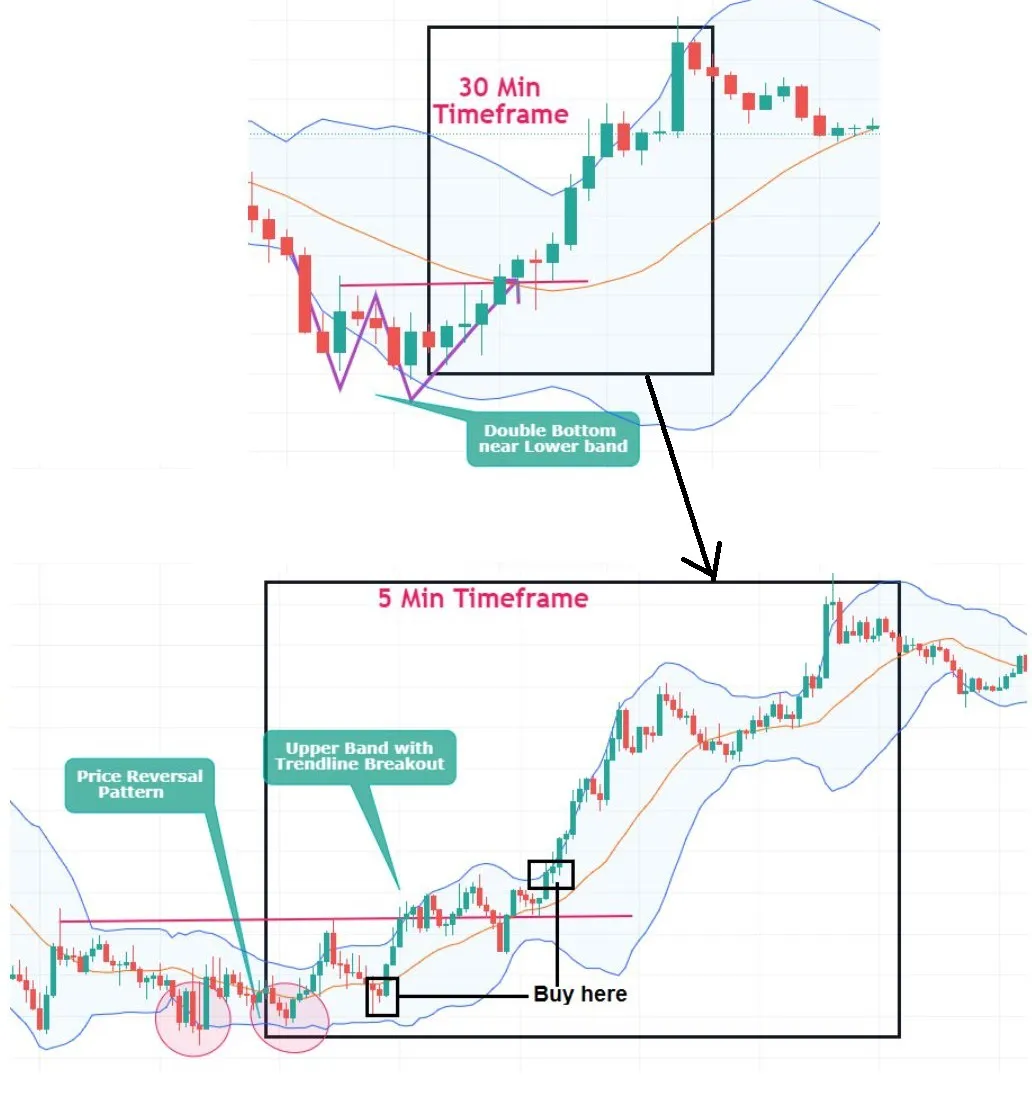
    Above image shows example for the Multi Time-Frame analysis using Bollinger Bands.

    • A double bottom pattern was formed near the lower band in the 30-minute time frame.
    • From this pattern, we can expect a potential price reversal and a bullish trend.
    • To enter a trade, we can use a lower time frame.
    • Observe in the 5-minute time frame, there are multiple opportunities to enter the trade.
    • One opportunity was the hammer pattern near the mid band.
    • Another opportunity was the price breaking out at the upper band.
  3. Range-bound strategy

    A range-bound strategy using Bollinger Bands is a method that traders use to identify and trade within a sideways or range-bound market.

    • Identify a sideways market for a period of time. This can be identified when the Bollinger Bands start to converge, indicating low volatility.
    • Look for the upper and lower Bollinger Bands to act as support and resistance levels. These levels can be used as entry and exit points for trades.
    • Once the support and resistance levels have been identified, traders can look to buy at the lower Bollinger Band (support) and sell at the upper Bollinger Band (resistance).
    • To minimize risk, traders can place stop loss orders just outside the Bollinger Bands.
    • Traders can take profit when the price reaches the opposite band. For example, if they bought at the lower Bollinger Band, they can take profit when the price reaches the upper Bollinger Band.

Range-bound markets can be unpredictable and may not always follow the strategy perfectly. Please do not trade without proper analysis.

Example-1 : Finding the Market volatility using Breakout Strategy. Fake-outs are Common in Bollinger Bands. Be careful.


Example- : Trade can be taken, if the last candle closes above Upper band.


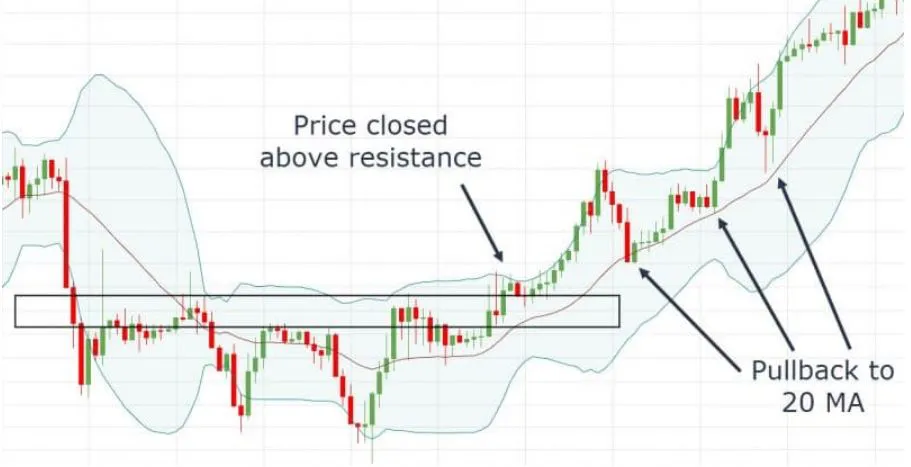
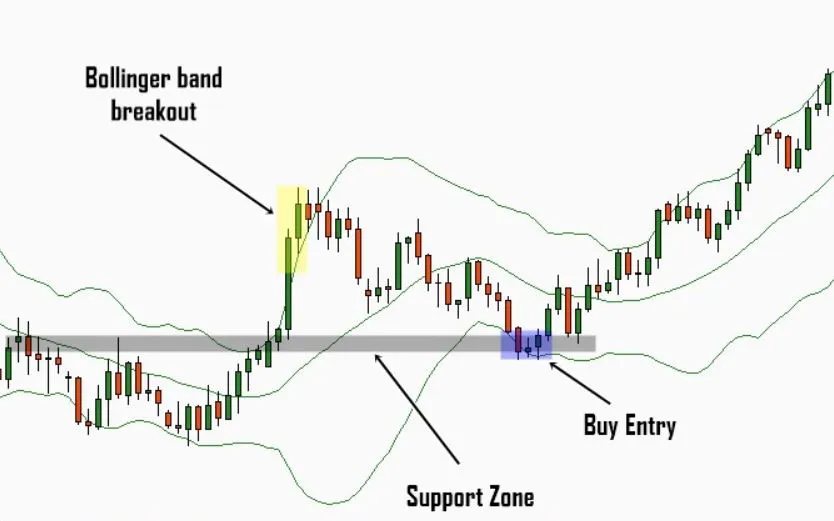
Example- : As Market broke the Resistance Zone, buyers started accumulating as the price reaches the Mid Band. This is called Opportunity seeking.


Example- : Trading based on Range strategy as the price touches to Lower Band and Upper Band. Please Note that, this strategy do not work most of the times. This type of strategy works for long term and sideways market.


Example- : This shows the best example to enter the trade with confirmation. After Breakout of upper band, market made a retest with the support Zone. Positing can be taken as the price crosses above Support Zone or Mid Band.


Example- : Finding Volatility of market using Bollinger Band.


Example- : This shows how Sellers entered into market as the lower band got Broken Down. This is how Volatility in the market occurs


Example- : Range strategy. (Do not work/apply in all the market condition)


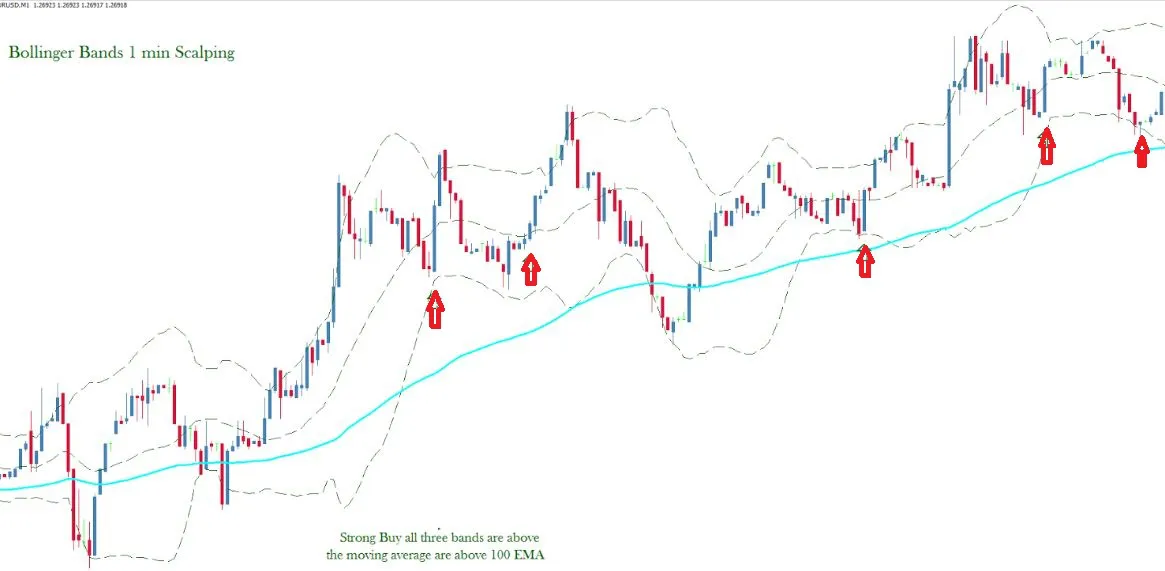
Example- : Taking Position only if price touches Upper Band, which is above 100 EMA line.


Share the App - Share Alpha