Relative Strength Index (RSI)

The RSI stands for Relative Strength Index, used by traders to measure how strong a price movement is. It looks at how much a price goes up compared to how much it goes down.

The RSI gives a number between 0 and 100, which helps traders figure out if the momentum is going up (bullish) or down (bearish).

If the price of an asset goes up quickly, the RSI number will be higher. If the price falls quickly, the RSI number will be lower.
The most common settings for RSI that traders use:


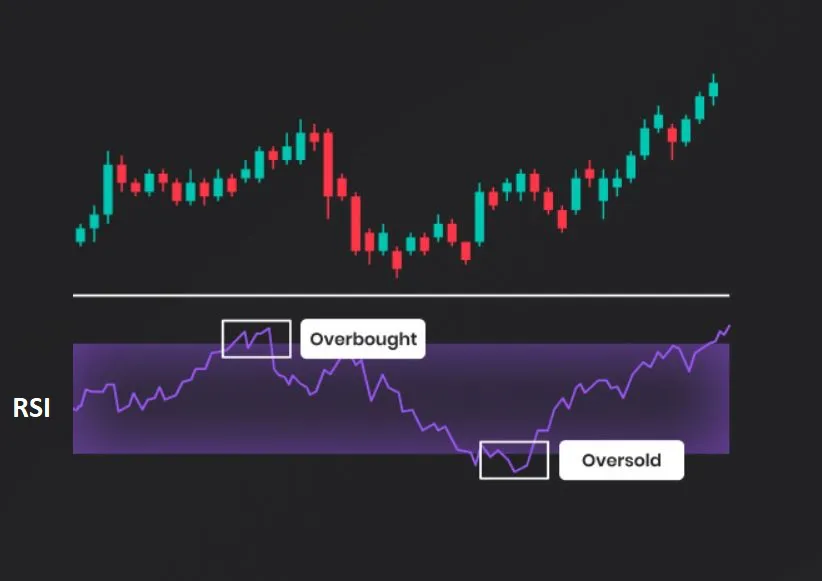
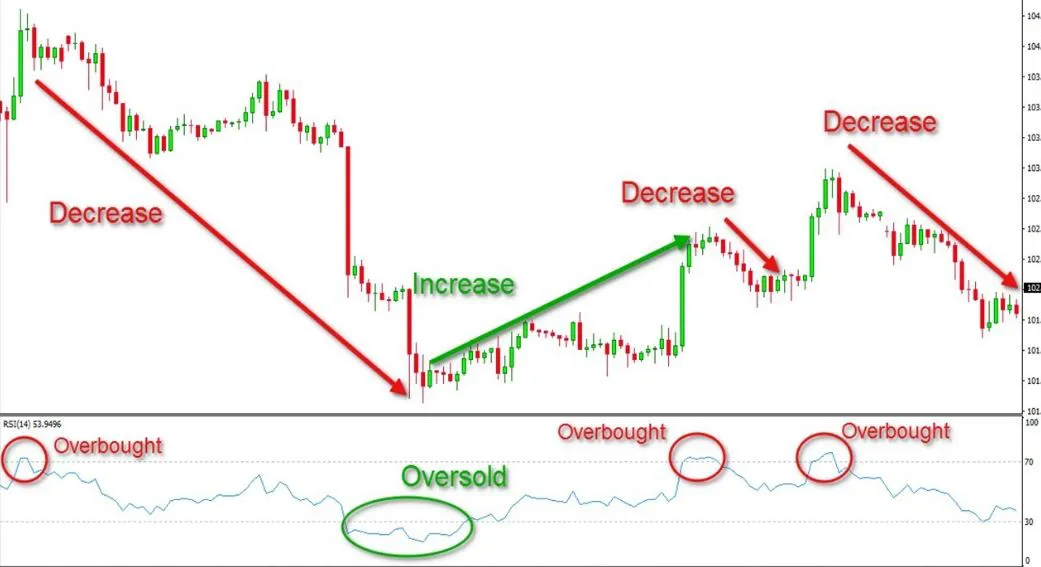
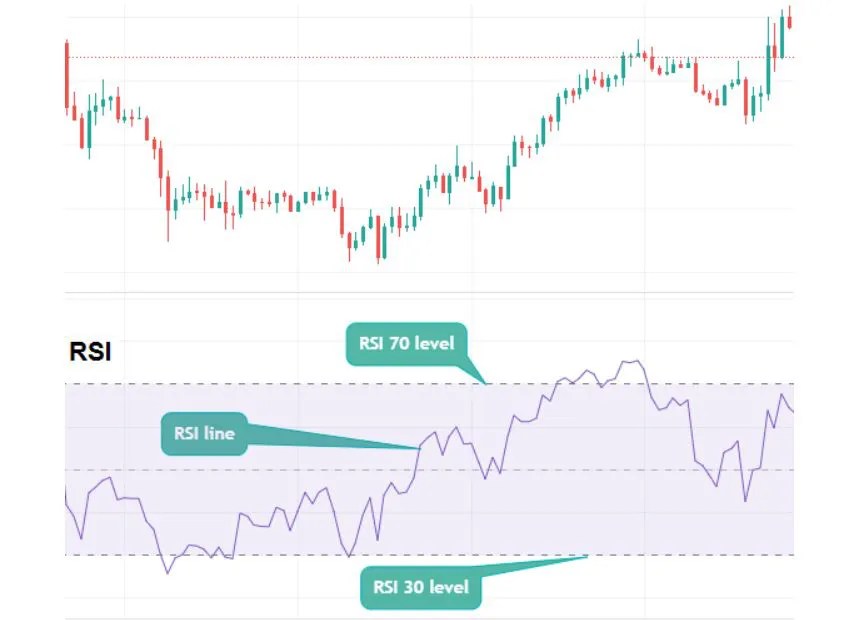
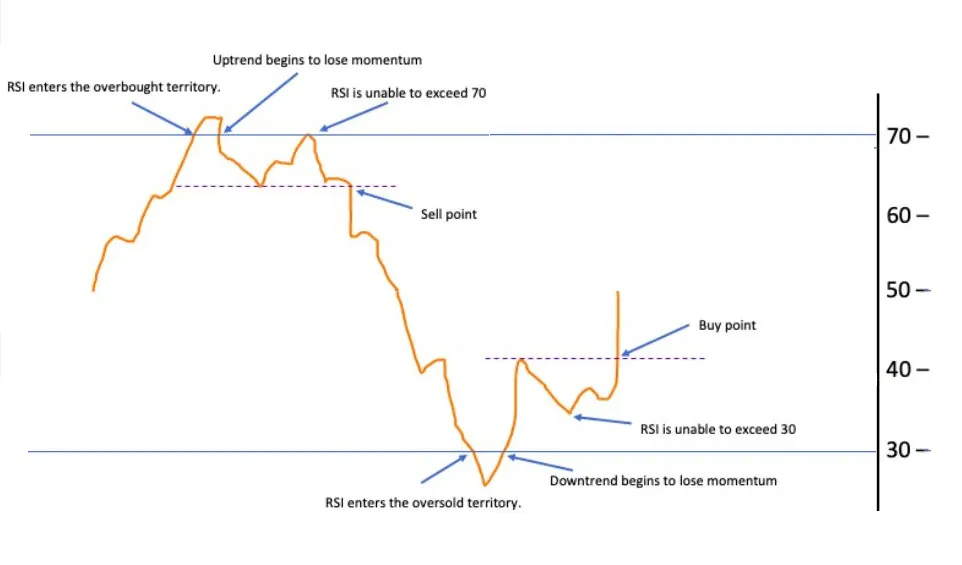
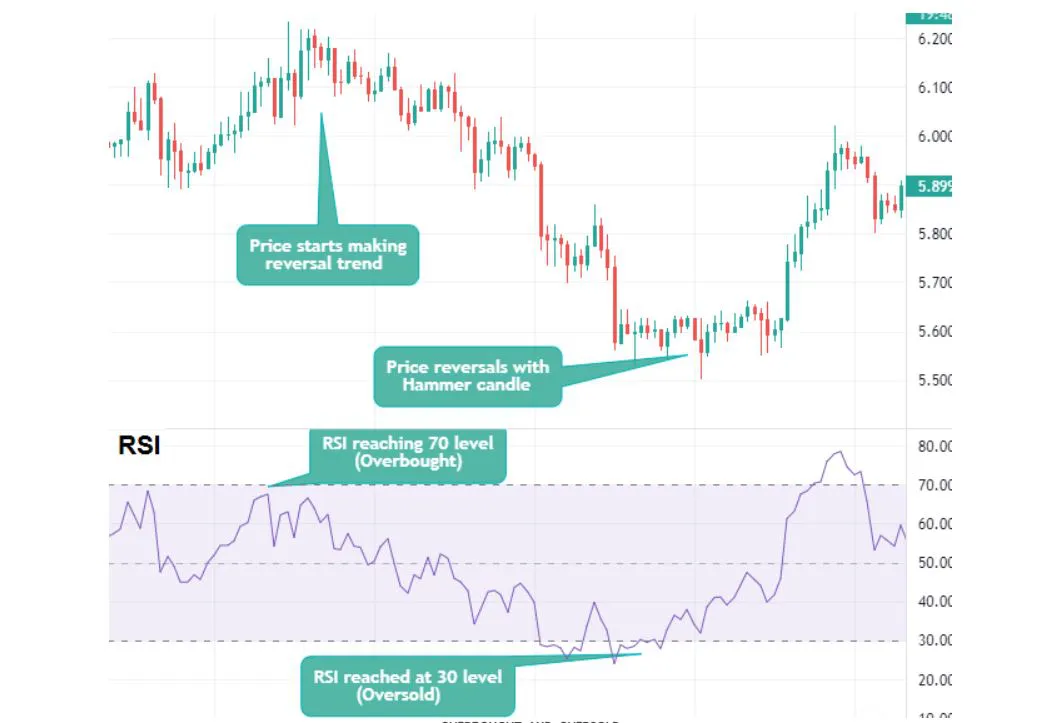
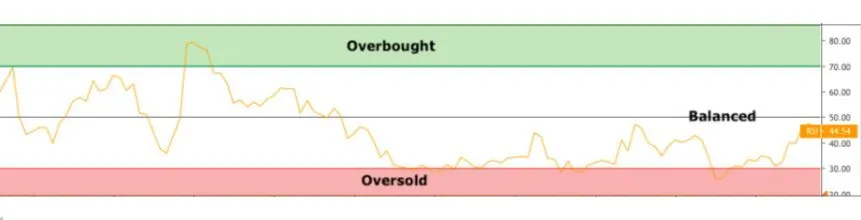
The RSI helps traders know when a stock is overbought or oversold. A level above 70 is overbought, which means it's bullish. A level below 30 is oversold, which means it's bearish.

RSI helps traders to predict rising momentum, demand, supply, market trends such as trend reversals and trend continuations.

Using price action, volume, and RSI, traders can make better predictions about where prices might be headed.


How to use RSI indicator.?
- Depending on trading psychology and individual risk, few traders follow below rules to enter into positions.

  1. Overbought and Oversold Level

    The Overbought and Oversold Levels in RSI are used by traders to identify whether a stock is overbought or oversold.

    • A level of 70 or 80 is considered overbought, which means that the stock may be due for a price reversal and become bearish.
    • Conversely, a level of 30 or 20 is considered oversold, which means that the stock may be undervalued and could be due for a price reversal and become bullish.
    • By identifying and paying attention to these levels, traders can make better decisions on when to buy or sell a stock.
    • Note: When the RSI goes above 70, it means the market is volatile and could make a strong sudden bullish move.
    • Note: When the RSI goes below 30, it means the market is volatile and could make a strong bearish move.
  2. The overbought and oversold levels in RSI are not a trading strategy on their own. Trades should not be taken based solely on RSI level reaches.

    A highly volatile market can experience sudden and rapid changes in price, even after crossing these levels.

    Most of the time traders will lose trade expecting a reversal at those level before consolidation or trend reversal.

  3. RSI Divergence

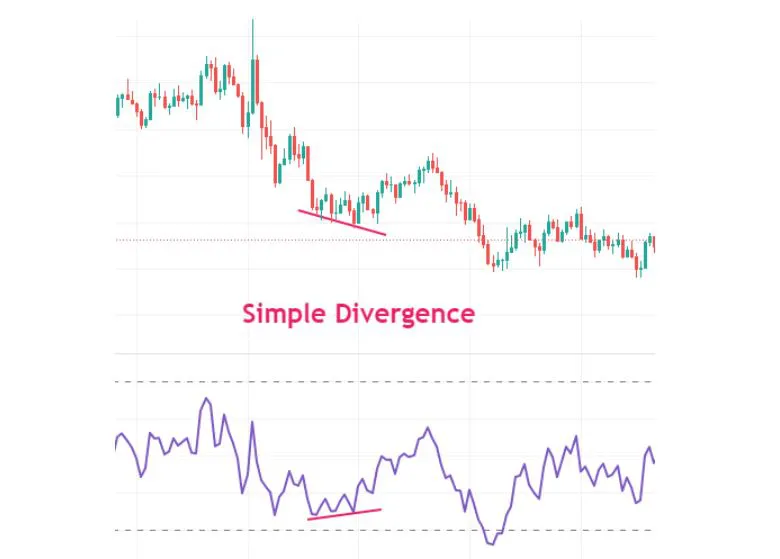
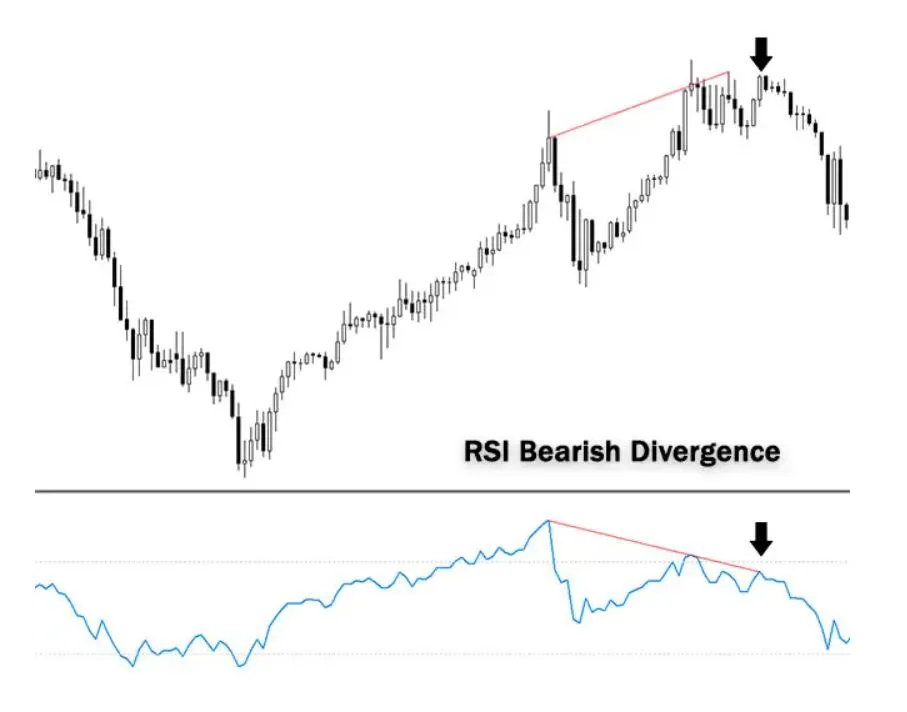
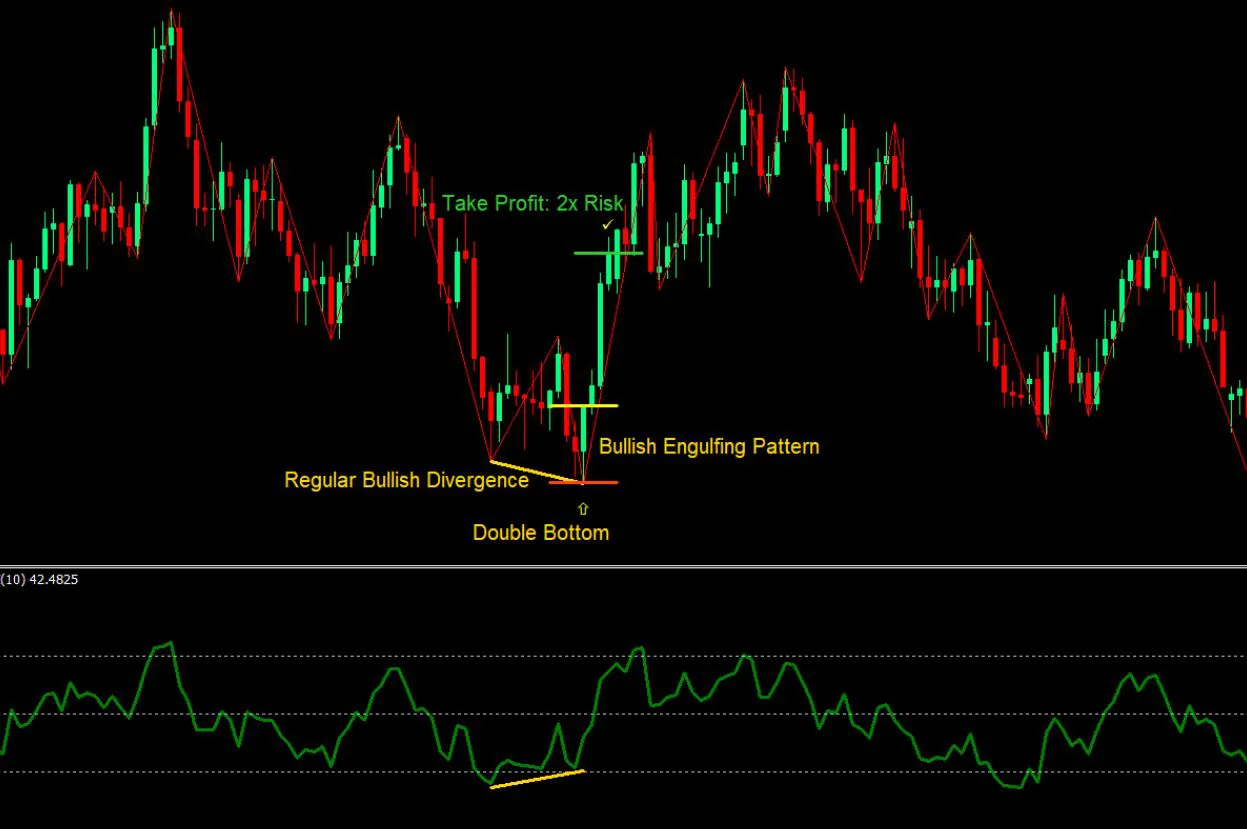
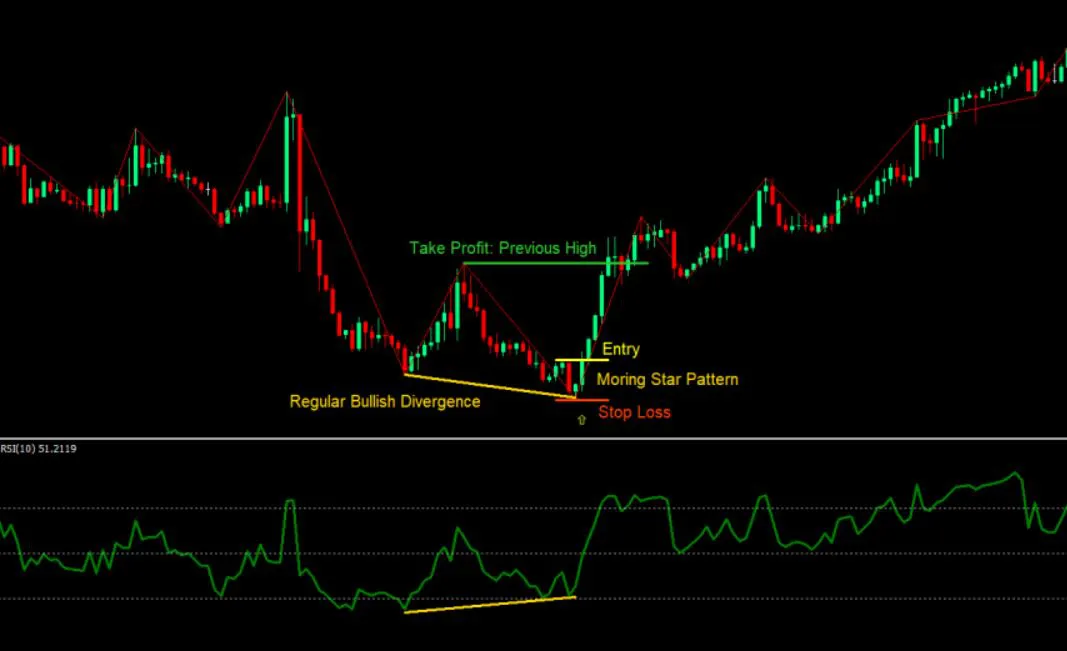
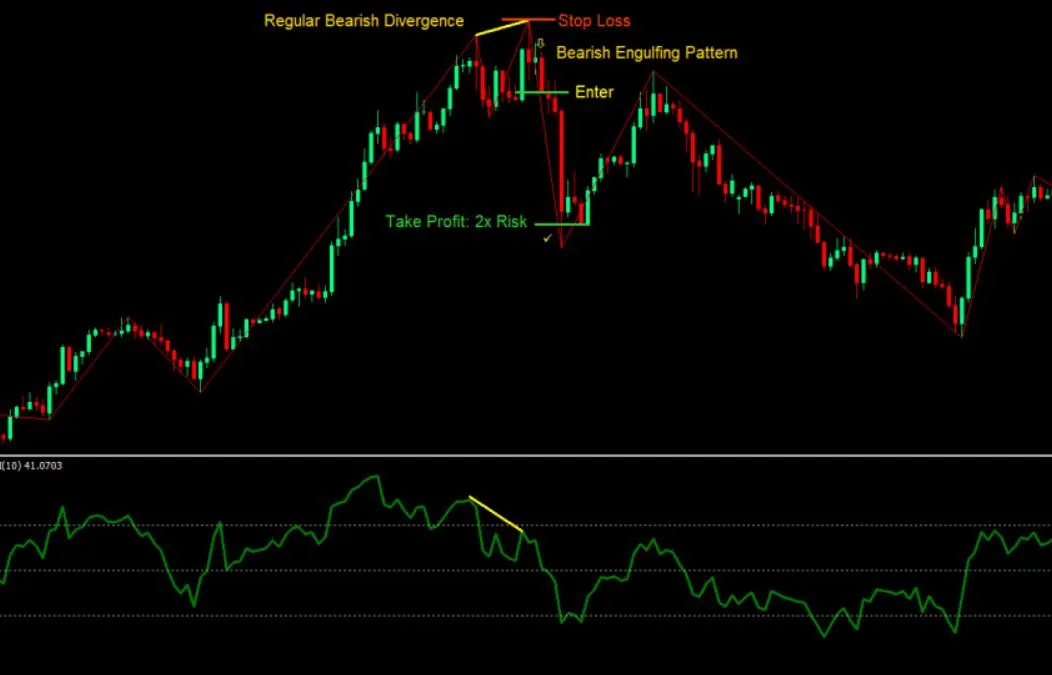
    Divergence in technical analysis is a situation where the price of an asset moves in a different direction from a technical indicator, such as the RSI.

    It occurs when there is a disagreement between the price trend and the indicator trend, which can indicate a potential change in the direction of the trend.

    In simple words, Divergence occurs when the price of an asset and its RSI indicator move in opposite directions. This can happen when there's a disagreement or misunderstanding between the price and RSI, causing them to move away from each other

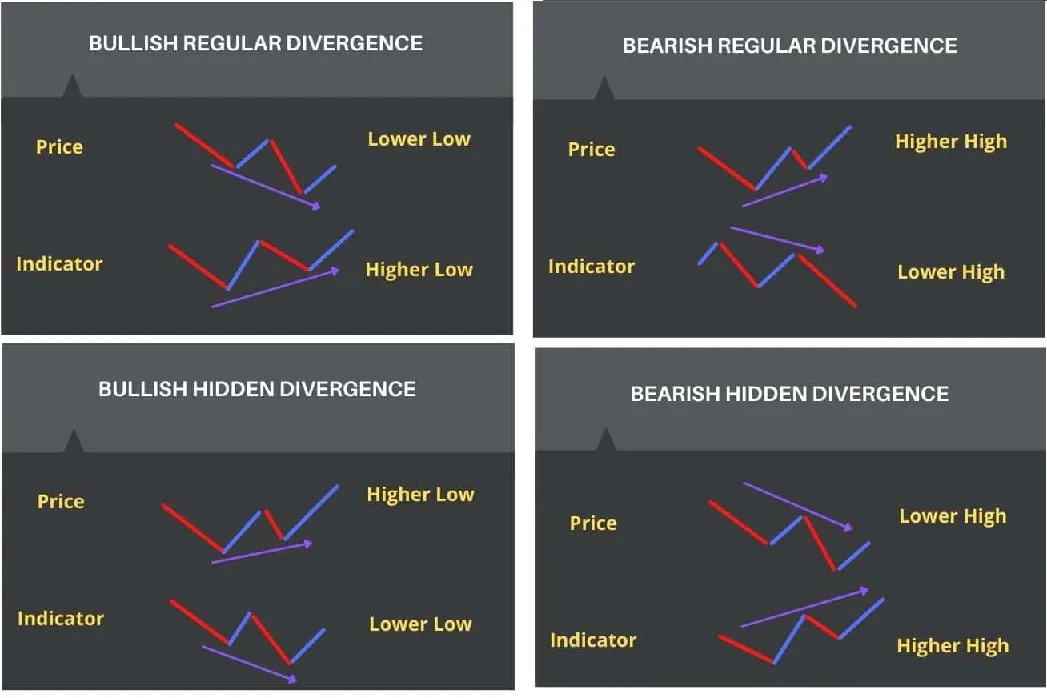
    There are two types of divergences in technical analysis trading:

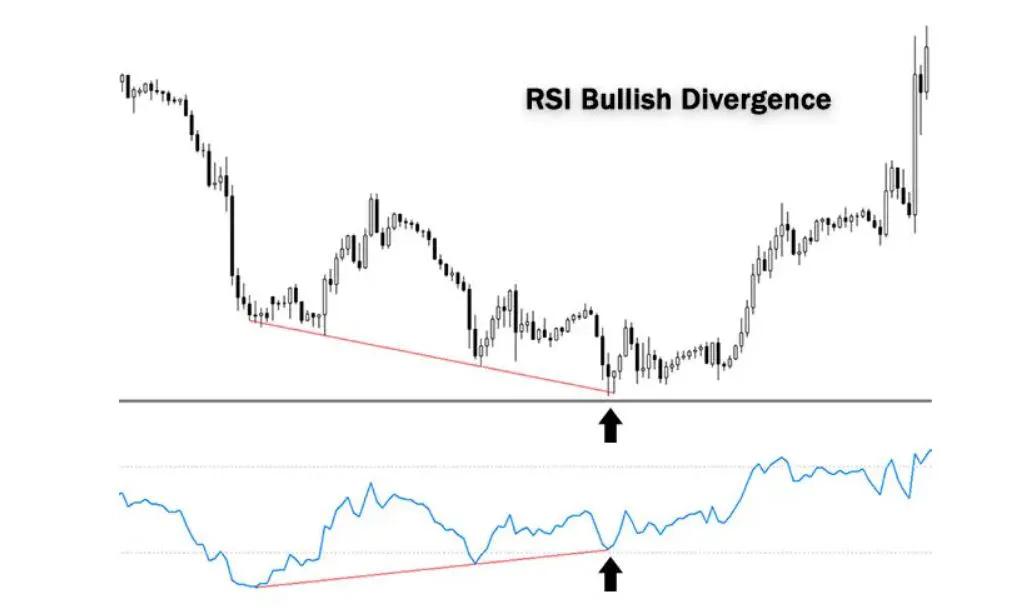
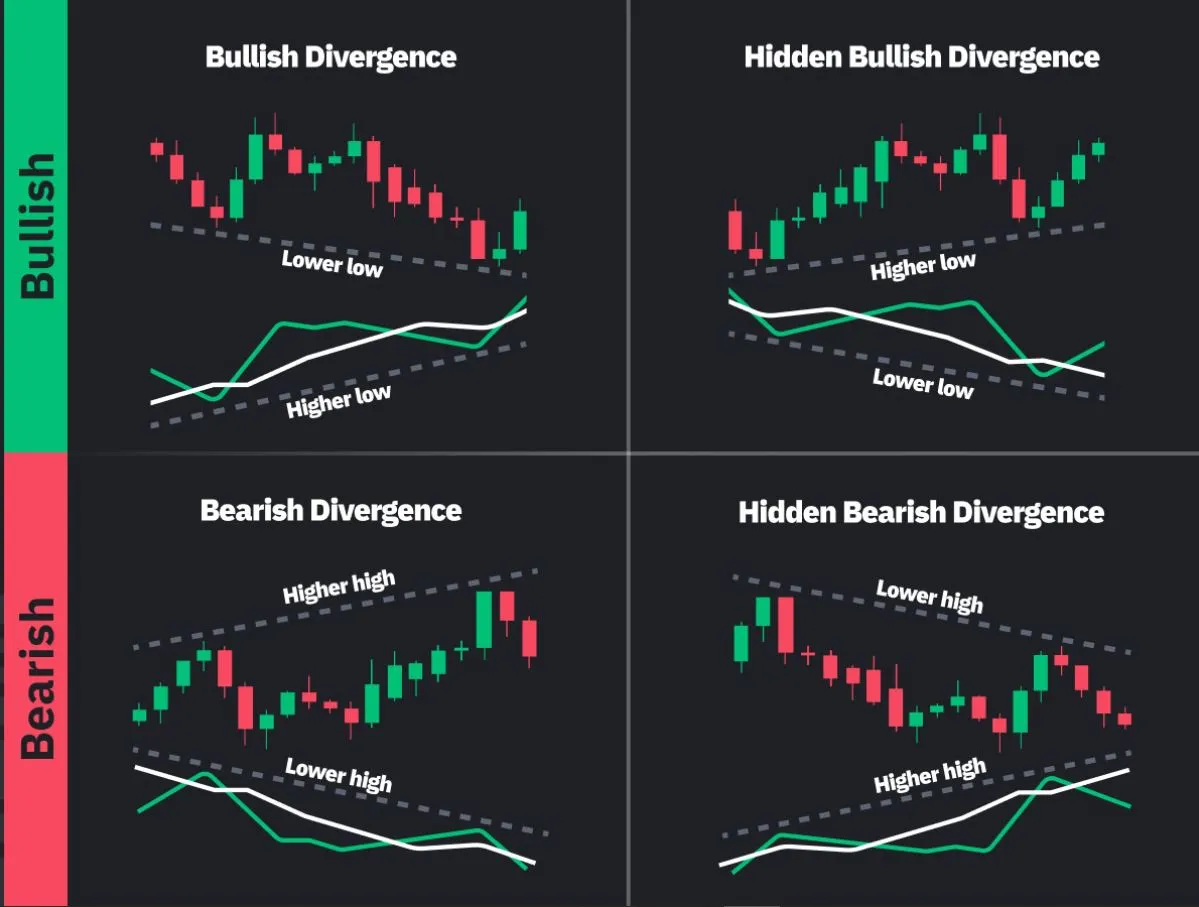
    • Bullish Divergence:It occurs when the price of an asset is making a series of lower lows, but the indicator is making a series of higher lows. This indicates that the momentum of the price decline is slowing down and the price may soon reverse to the upside.
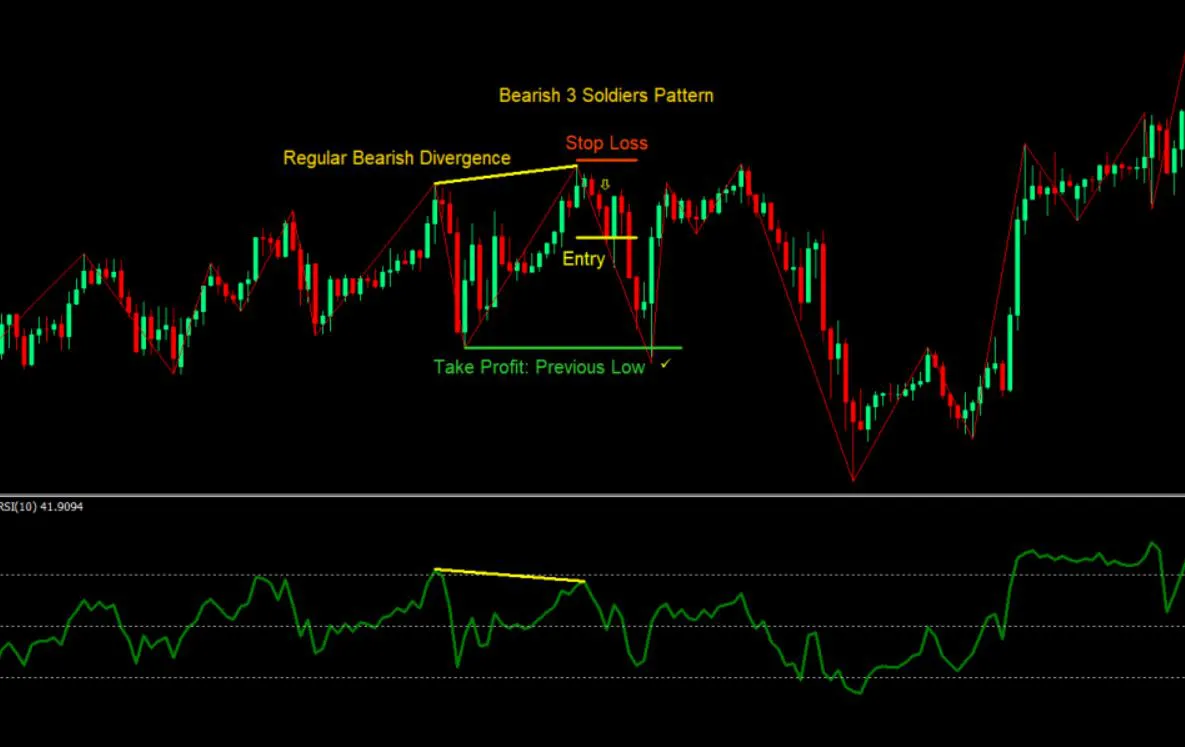
    • Bearish Divergence: It occurs when the price of an asset is making a series of higher highs, but the indicator is making a series of lower highs. This indicates that the momentum of the price rise is slowing down and the price may soon reverse to the downside.
  4. RSI Divergence plays a main role in trading and very crucial in trading and technical analysis. Check the app's other sections for a more detailed explanation.

  5. Determination Of Trend

    RSI can be used to determine the trend of a stock or market.

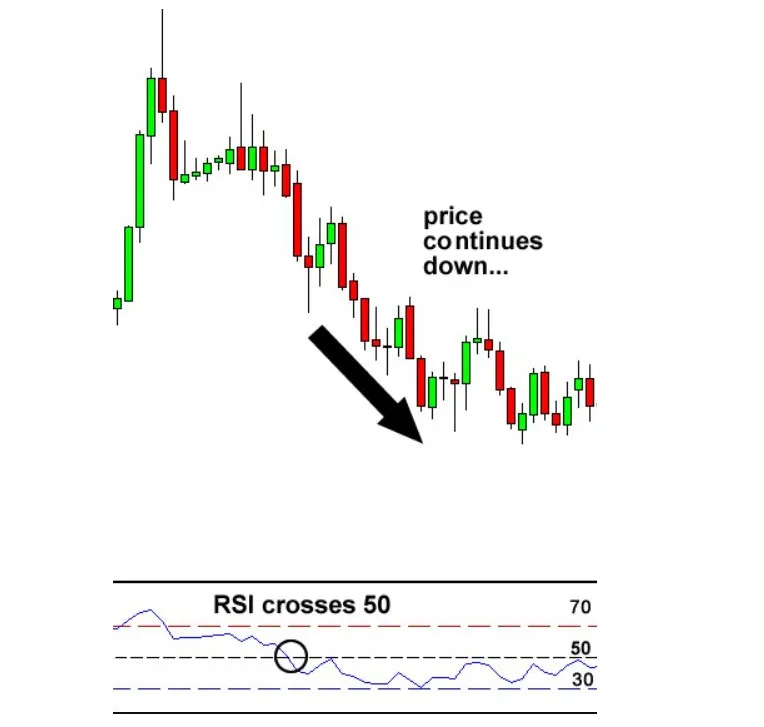
    When the RSI is above 50, it is generally considered a bullish trend, indicating that the buyers are in control.

    Conversely, when the RSI is below 50, it is generally considered a bearish trend, indicating that the sellers are in control. Traders can use this information along with other indicators to help them make trading decisions.

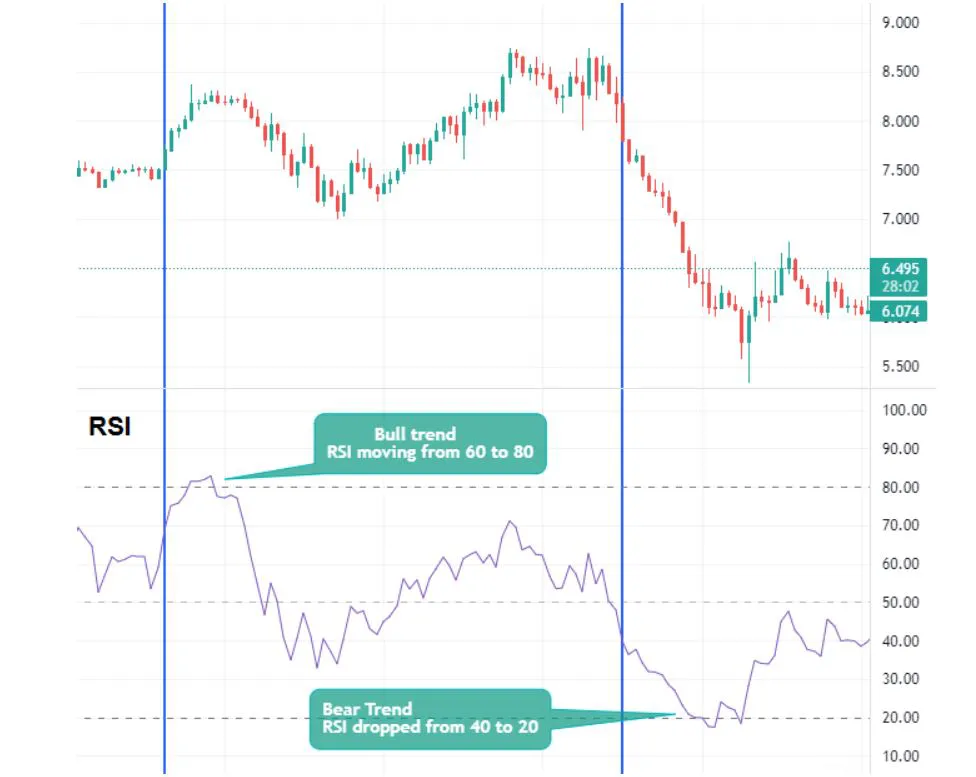
    • In a bull market, RSI tends to range between 40-80.
    • In a bear market, RSI tends to range between 60-20.
    • In a sideways market, RSI typically stays between 40-65.
    • In an extreme or very strong bull market, RSI can reach 60-90 levels.
    • In an extreme or very strong bear market, RSI can reach 40-10 levels.
    • RSI values above 95 or below 5 are very rare and changes in RSI are minute at these levels.
  6. RSI Patterns

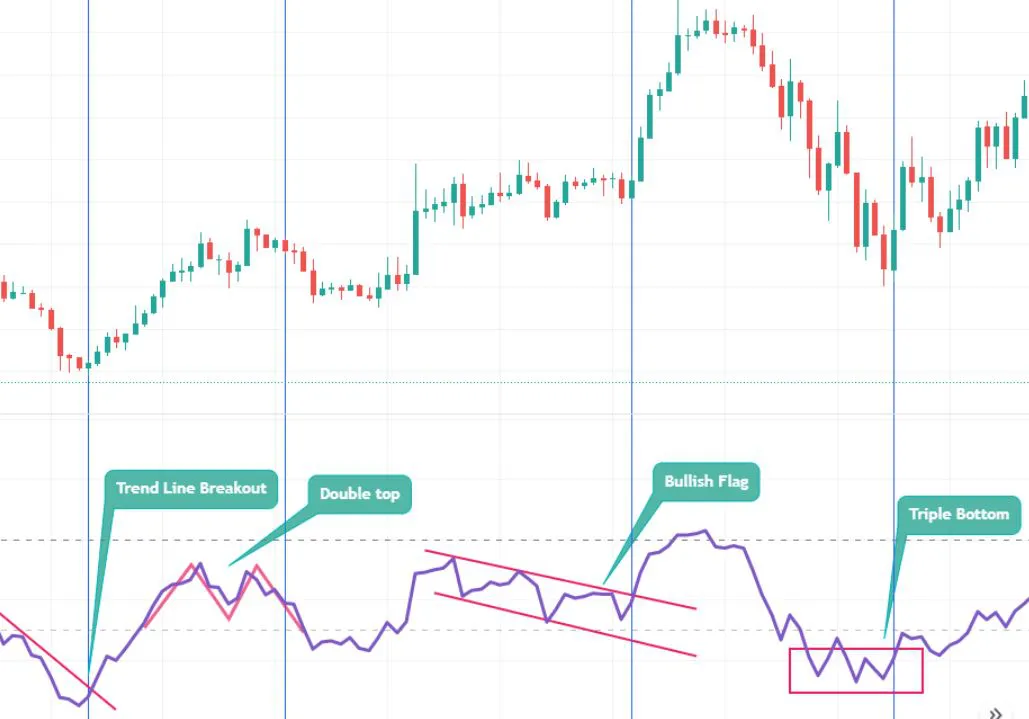
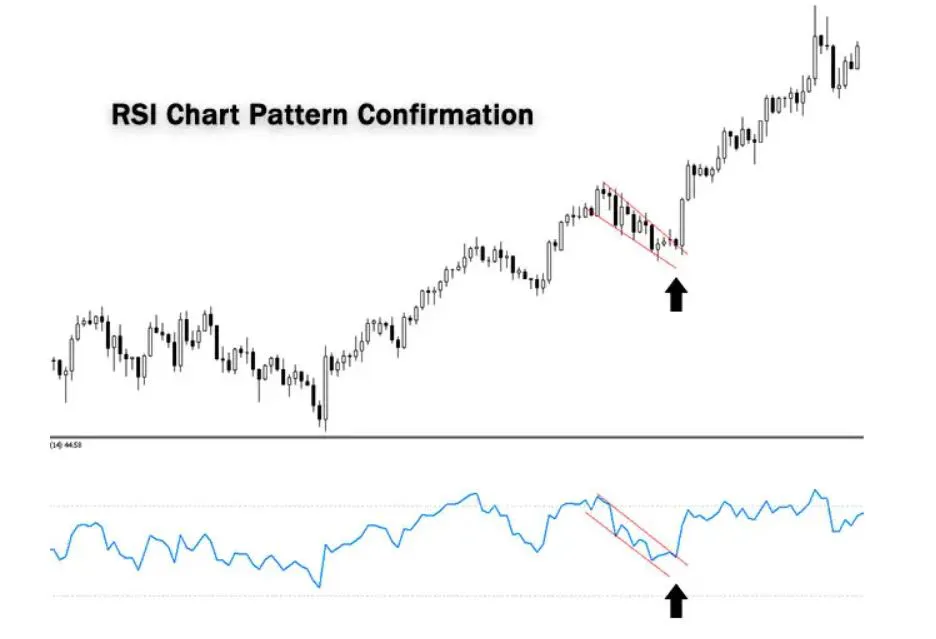
    Just like applying price action patterns on candlestick charts and using breakout strategies to trade, we can also apply patterns on RSI.

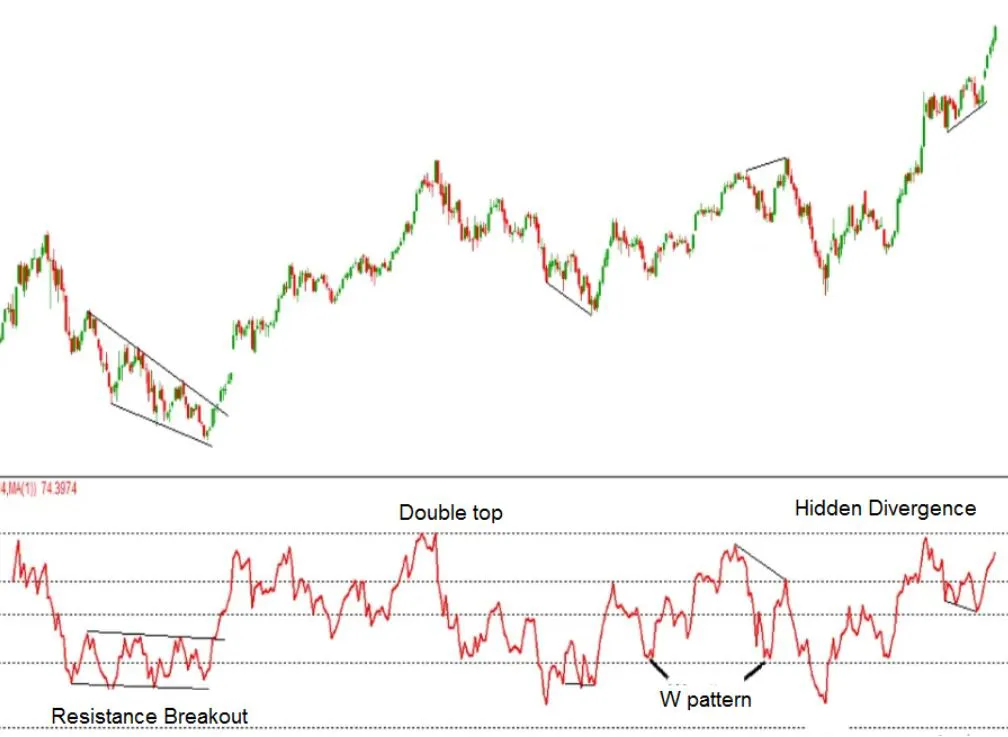
    Patterns such as double top and bottom(M & W), Flags, Triangles, Wedges, Head and Shoulders, and others can be applied on RSI just like candlestick charts. The rules for these pattern's breakouts remain the same.

    • Find the pattern on RSI and draw the support and resistance line.
    • Wait for breakout or breakdown
    • Follow the rules from price action patterns section to take a position
  7. To learn more about pattern structures and how they can be used, please explore the resources available in Price Action section this app

    This strategy is not effective for shorter time frames and requires a lot of personal experience to make informed decisions.

Example-1 : Types of Divergence


Example-2 : RSI having different types of Technical Patterns


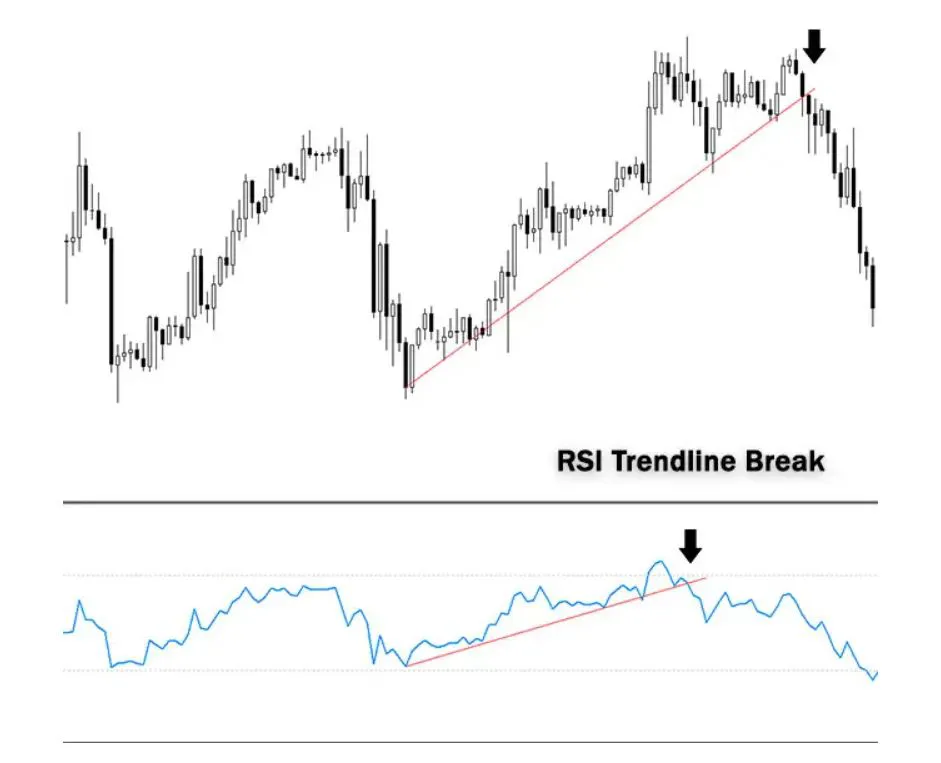
Example-3 : RSI Trend Line breakout


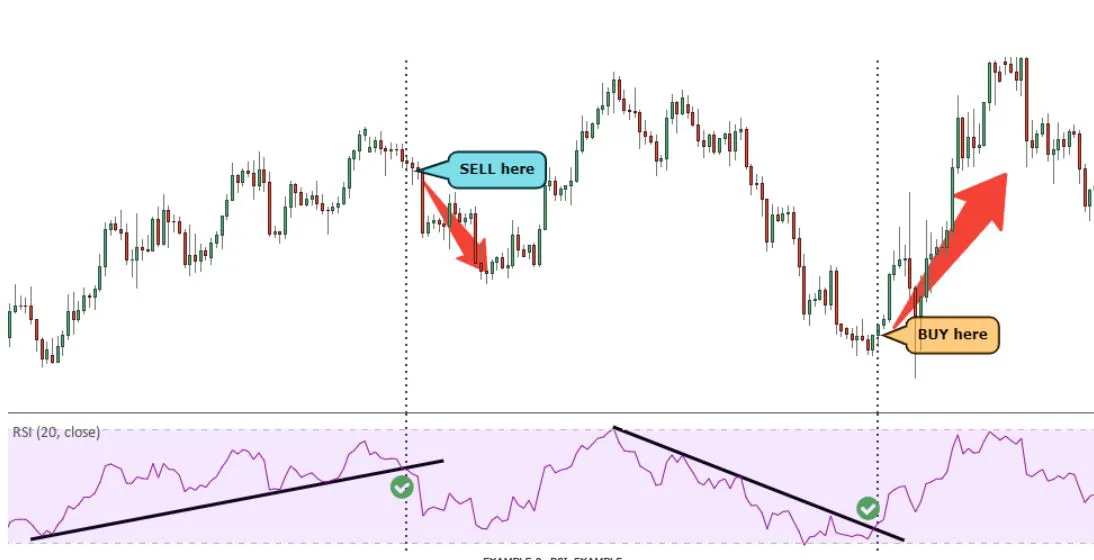
Example-4 : Determining RSI Oversold and Overbought Zone and respective Price movements


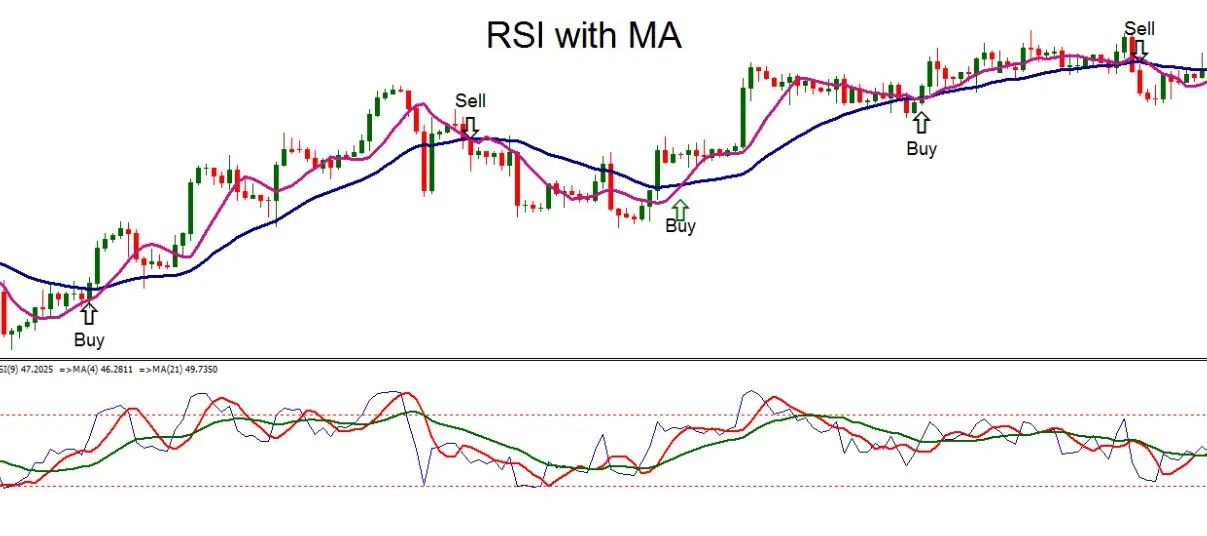
Example-5 : RSI with Moving Average


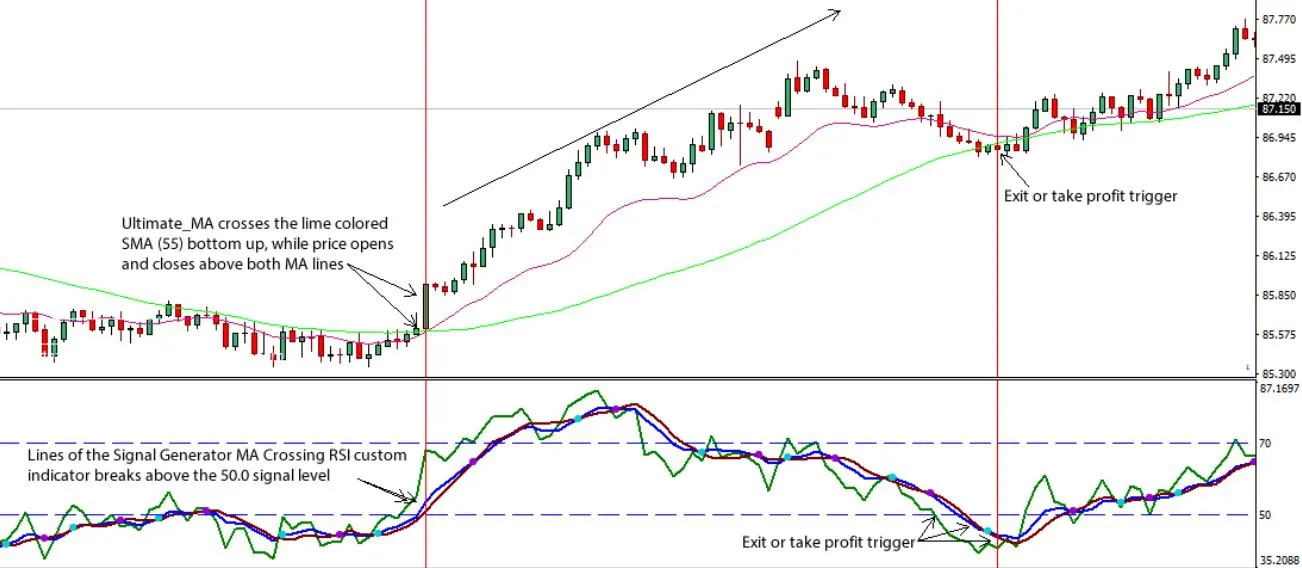
Example-6 : RSI with Moving Average


Example-7 : RSI Bearish Divergence


Example-8 : RSI Bullish Divergence


Example-9 : RSI Bullish Divergence


Example-10 : RSI Bearish Divergence


Example-11 : RSI making Pole like pattern


Share the App - Share Alpha