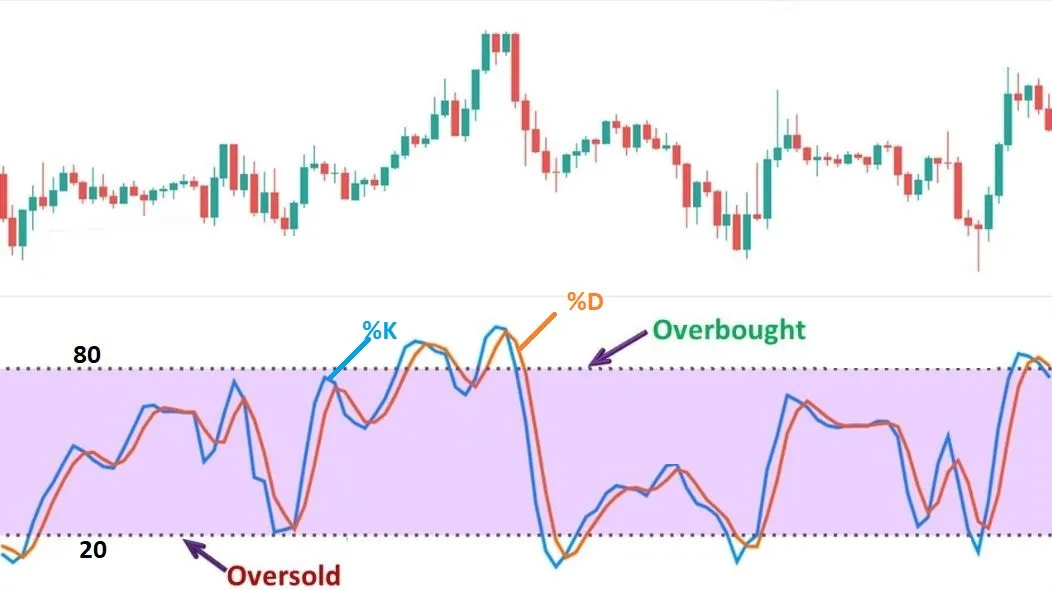
Stochastic Oscillator

The Stochastic Oscillator is one of most popular technical indicator that helps traders analyze price movements.

This oscillator helps to identify when a stock is overbought or oversold, which can give the trader an indication of whether it’s an excellent time to buy or sell a stock.

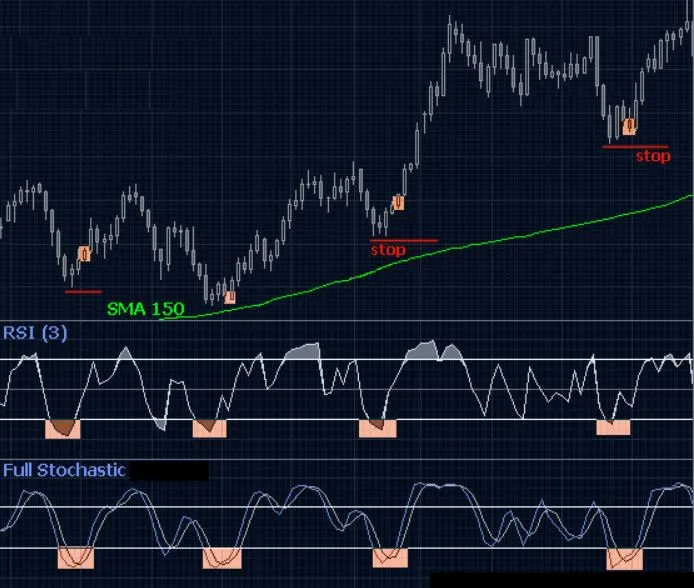
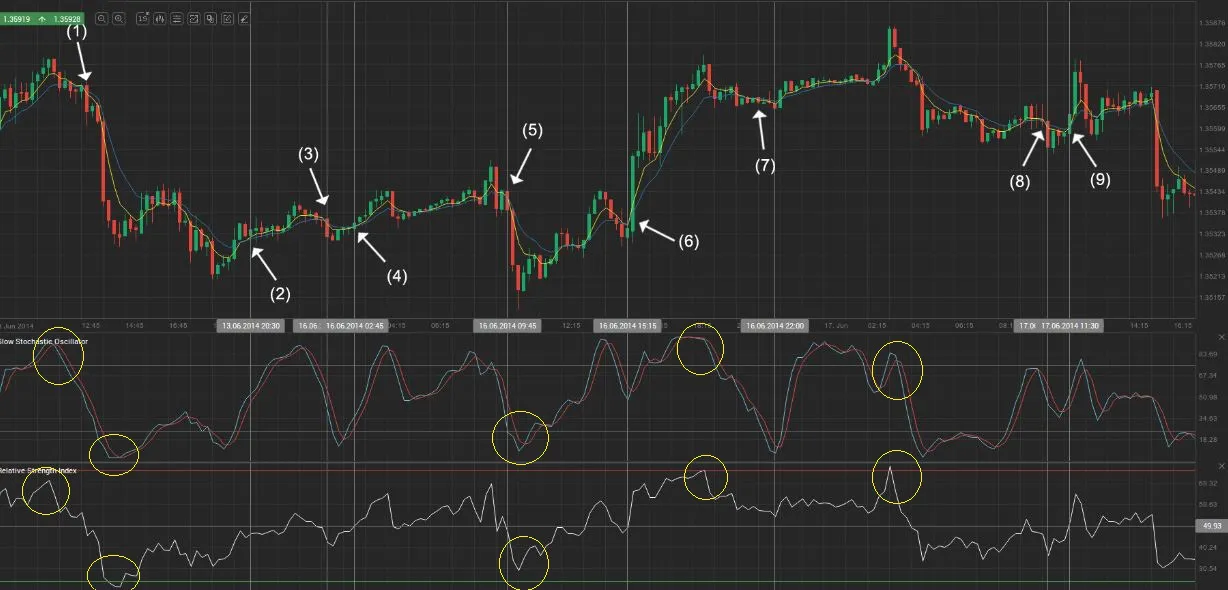
Actually, combination of RSI (Relative Strength Index) indicator and Stochastic Oscillator with a specific rules, traders can have a high winning rate.

The stochastic indicator doesn't predict future stock prices. Instead, it shows how the stock's momentum is behaving by looking at its extreme values. It helps traders understand whether the stock's momentum is strong or weak at a given time.


The stochastic oscillator is mainly used to highlight when the price may be overextended and could reverse.

In a stochastic oscillator, traders look at how the closing price relates to the high and low points for certain range of time period.

During an uptrend, the closing price is expected to be near the high point. If the closing price in an uptrend is near the low point, it suggests a possible loss of momentum and a potential reversal.

In a downtrend, the closing price is expected to be near the low point. If the closing price in a downtrend is close to the high point, it suggests a potential upward movement in prices.

Traders use these observations to predict possible changes in the market trend.

  1. Stochastic Oscillator components


    • Oscillator: Like RSI (Relative Strength Index) indicator, the stochastic indicator also uses a range of 0 to 100.
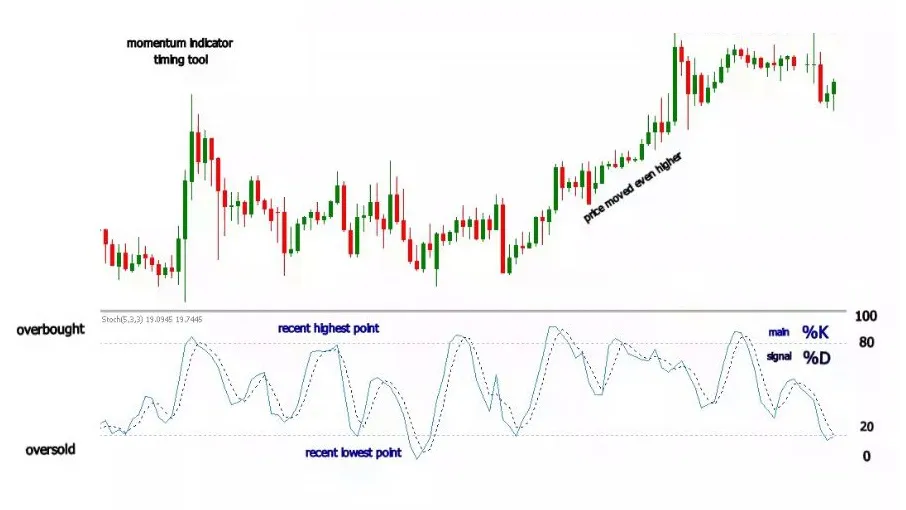
    • %K & %D : The stochastic indicator compares the closing price of an asset to its price range over a specific period of time. Usually %K & %D are set to value "3" and time to "14". It consists of two lines: %K and %D.
    • Formula: The %K line represents the current closing price relative to the highest high and lowest low of a specified lookback period. It is calculated using the following formula:
    • %K = (Current Close - Lowest Low) / (Highest High - Lowest Low) * 100
    • The %D line is a moving average of %K and is typically calculated using a 3-period simple moving average (SMA) of %K
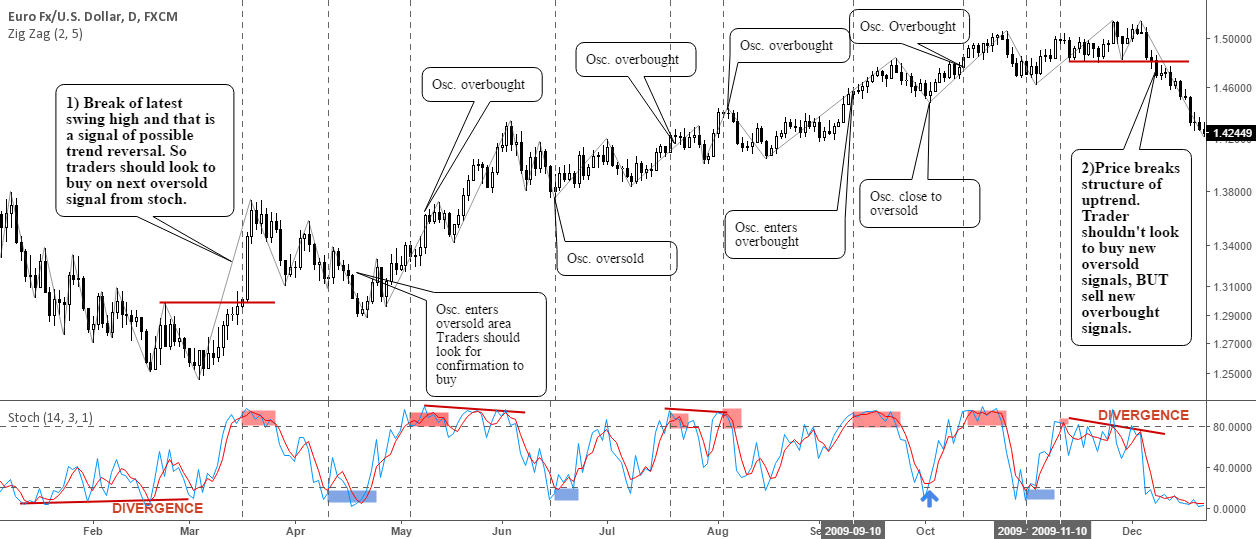
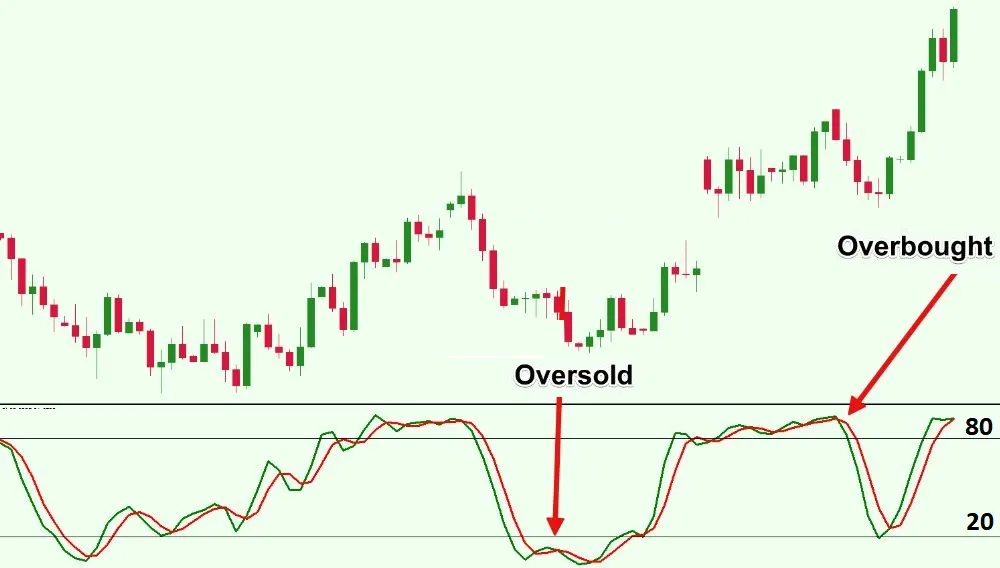
    • Overbought : Overbought stocks are typically identified when the stochastic oscillator %K value is above 80. In a stochastic oscillator, when a stock is overbought, it means that the stock is trading higher than its usual range. This can be a signal for traders to consider selling the stock.
    • Oversold : Oversold stocks are typically identified when the stochastic oscillator %K value is below 20. In a stochastic oscillator, an oversold stock means it is trading below its normal range. Traders need to be cautious about buying oversold stocks.

How to use Stochastic Oscillator?
- There are multiple ways to use the Stochastic Oscillator. Below are the few examples.

  1. Overbought & Oversold Strategy

    This is the most basic application of the stochastic indicator. Traders use the stochastic oscillator to determine if a stock is overbought or oversold.

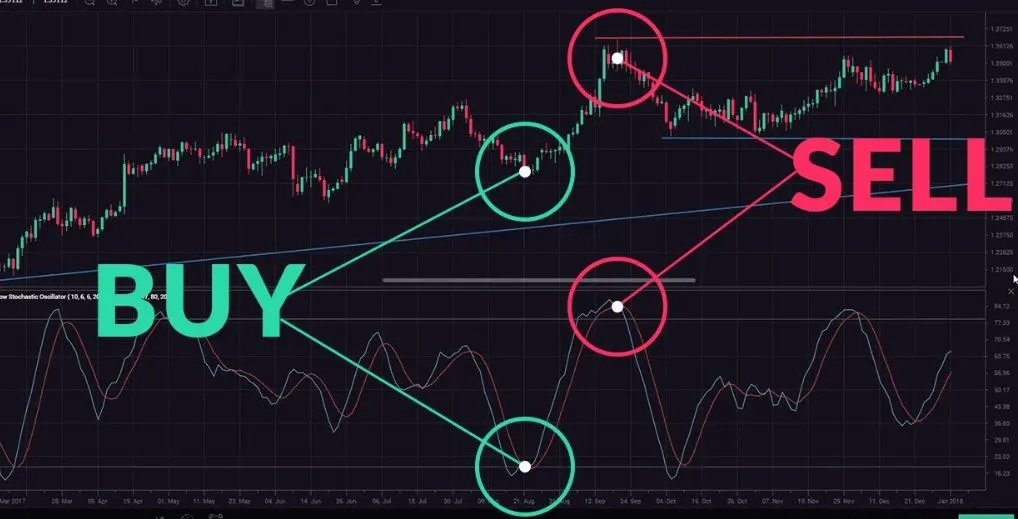
    Buy stocks when the market is oversold and sell stocks when the market is overbought.

    This strategy is known as mean reversion trading and is used by traders who aim to profit from short-term price fluctuations.

    • When the Stochastic Oscillator value is above 80, it could be a sign that it’s overbought
    • Consider selling or taking profit, as it suggests that the stock is trading above its normal range and may reverse downward shortly.
    • Similarly, when the Stochastic Oscillator value is below 20, it could indicate that it’s oversold.
    • Consider buying or entering a long position, as it suggests that the stock is trading below its normal range and may reverse upward shortly.
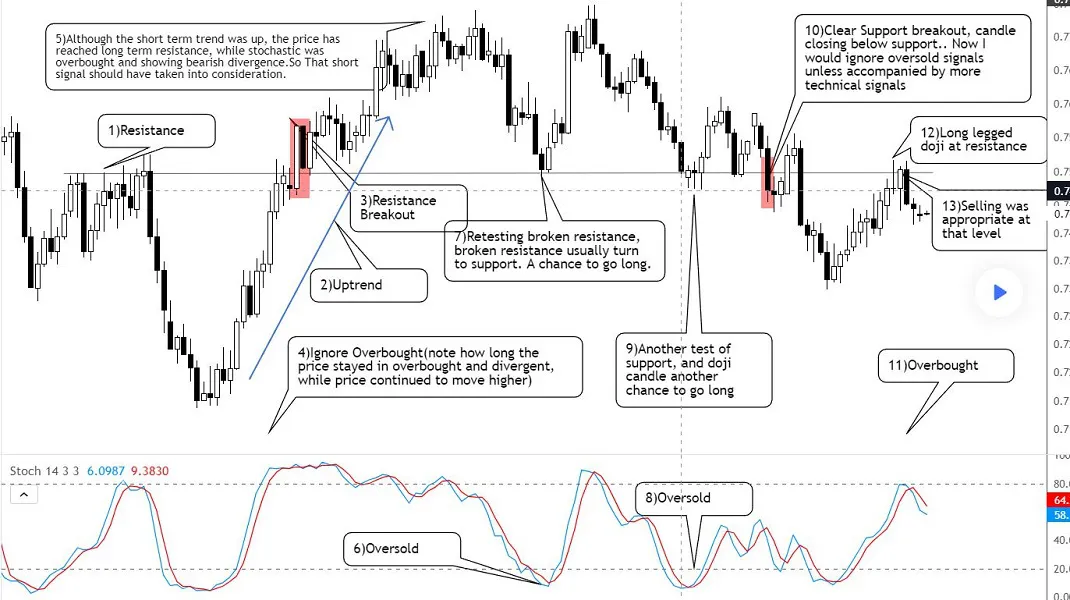
  2. Some times, market will get good momentum and raises or drops rapidly even after stochastic moves above 80 or below 20.

    Level 80-20 are just a reference line for considering overbought and oversold.

    Above 80 and below 20, market will be bit volatile and can expect sudden price movement. Low risk trader should aware of it.

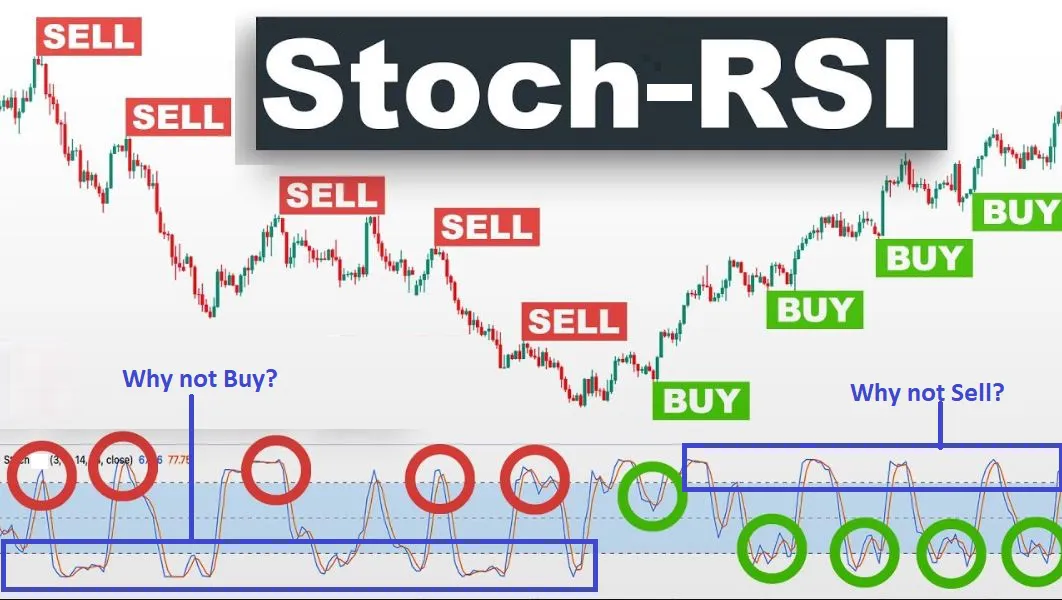
  3. Stochastic RSI strategy

    In below chart, Stochastic indicates Buy and Sell. But it does not apply on highlighted in Blue. Why?

    For this reason, we use other indicators for perfect entry. Here we use RSI indicator.

    Using Stochastic & RSI, can improve your trading winning rate. This fact can admit only by a experienced or researched traders.

    RSI is more useful in trending markets, and stochastic are more useful in sideways or choppy markets

    This strategy useful in performing swing trades is a combination of two technical indicators RSI and Stochastic.

    Buy Conditions:

    • Stochastic's %K (Blue Line) crosses %D line below 20 without intersecting, and %K is above %D.
    • RSI crosses above 50.
    • Maintain a minimum Risk Reward Ratio of 1:2 based on market conditions.

    Sell Conditions:

    • Stochastic's %K (Blue line) crosses %D line above 80 without intersecting, and %K is below %D.
    • RSI crosses below 50.
    • Maintain a minimum Risk Reward Ratio of 1:2 based on market conditions.

    Note: The StochasticRSI indicator is created by combining the RSI (Relative Strength Index) and the Stochastic indicator.

  4. Markets having Stochastic value below 2 and RSI below 20, will be the best ever opportunity to Long position.

    Markets having Stochastic value above 98 and RSI above 80, will be the best ever opportunity to go Short position.

  5. Bullish & Bearish Trend Confirmation

    You can use the stochastic oscillator to detect a bullish and a bearish market and enter or exit the market accordingly.

    • To detect a bullish market, check if the stochastic indicator is between 50 and 80.
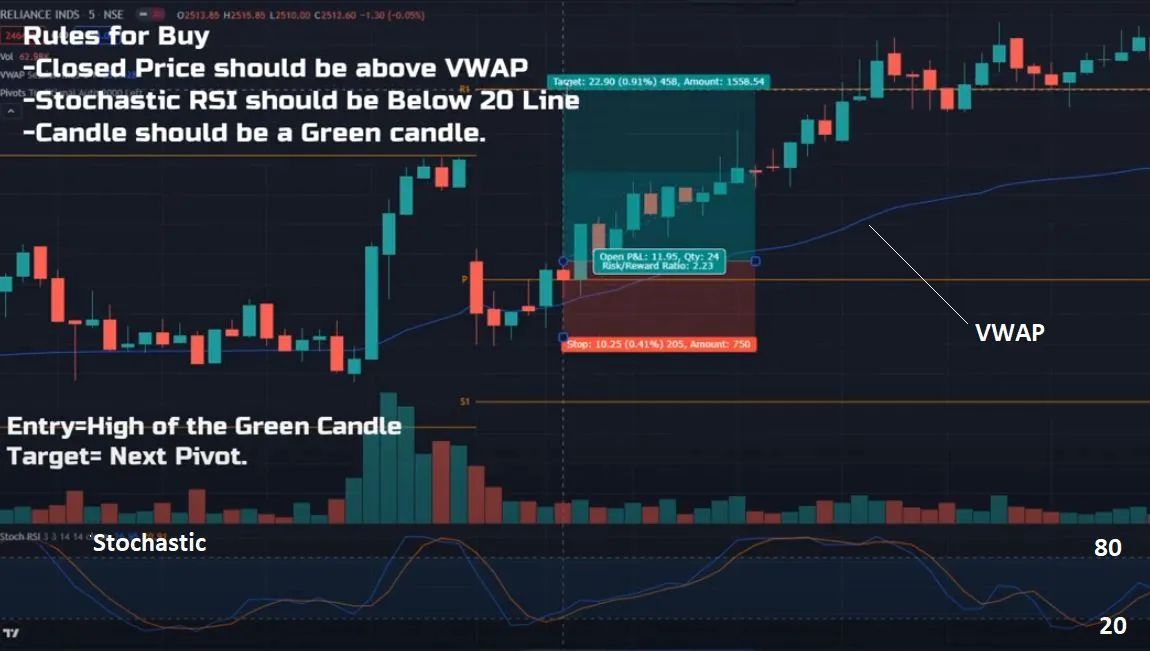
    • If the price is below VWAP, it may indicate a bearish sentiment, and traders may consider selling opportunities or short positions.
    • Conversely, to identify a bearish market, look for the stochastic indicator between 20 and 50.
    • If the indicator is in this range and continues to decline, it could indicate a bearish market with selling pressure.
  6. Avoid using Stochastic Oscillator for less Short term Time Frame.

    Stochastic Oscillator works better with mid term Time-Frame, such as 30 min to 1 day.

    Stochastic Oscillator between 40 to 60 level, most of the time market will be sideways or move slowly

  7. Divergence Strategy

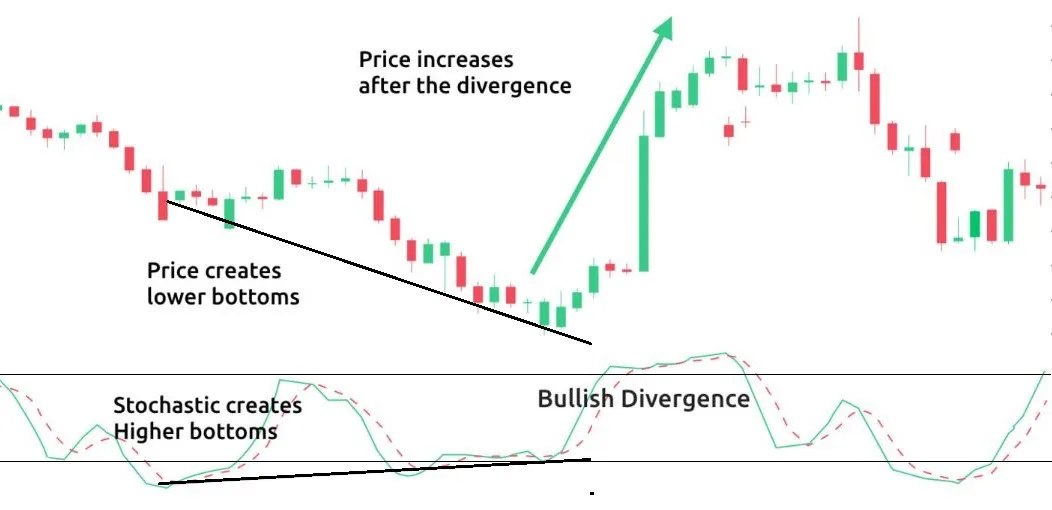
    Similar to other indicators, Stochastic divergence works same. Divergence occurs when the price of a stock or asset moves in the opposite direction of the Stochastic Oscillator.

    Divergence is explained in another section of this app.

    • Identify divergences between the Stochastic Oscillator and the price of the stock.
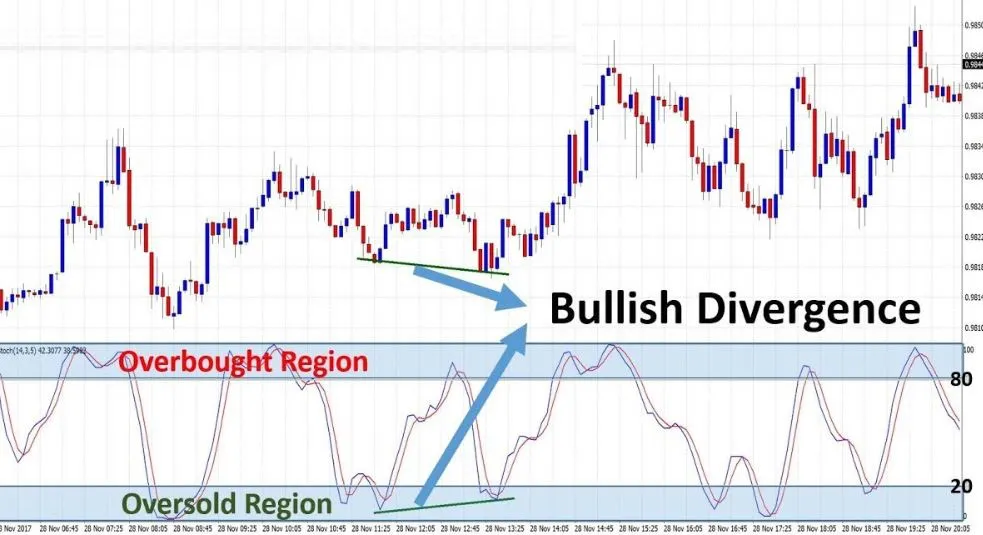
    • Bullish divergence occurs when the stock price makes lower lows, but the Stochastic Oscillator makes higher lows.
    • It indicates a potential trend reversal to the upside and can be a signal to buy or enter a long position.
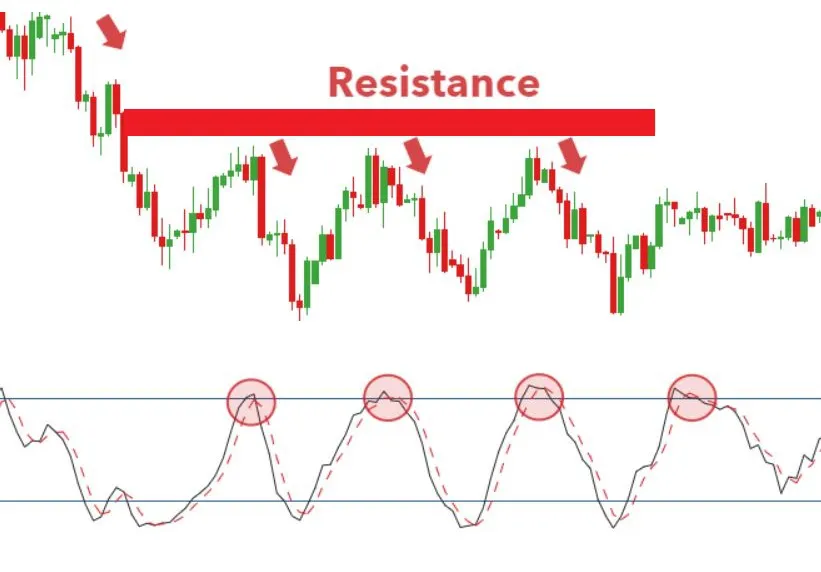
    • Bearish divergence occurs when the stock price makes higher highs, but the Stochastic Oscillator makes lower highs.
    • It suggests a potential trend reversal to the downside and can be a signal to sell or enter a short position.

Example-1 : Detailed explanation of Stochastic Oscillator.


Example-2 : Detailed explanation of Stochastic Oscillator.


Example-3 : Divergence strategy in Stochastic Oscillator.


Example-4 : Divergence strategy in Stochastic Oscillator.


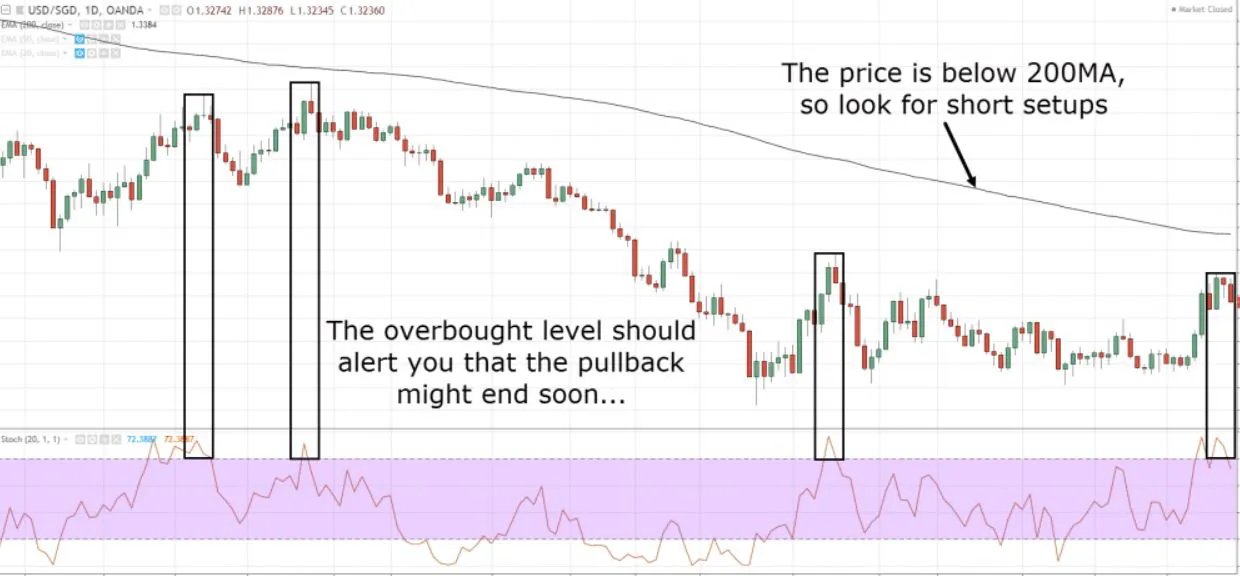
Example-5 : Over Bought indication by Stochastic Oscillator.


Example-6 : Price movements based on RSI and Stochastic indicator values below 20 and above 80 level.


Example-7 : As market is below 200 Moving Average(can be considered as bearish market), even if Stochastic Oscillator oversold it cant move the market as expected. But Overbought indicates perfectly.


Example-8 : Failure of Stochastic indicator. Sometimes market do not follow Stochastic indicator. To avoid Use multiple indicators before taking entry.


Example-9 : Simple Stochastic indicator with Oversold and Overbought.


Share the App - Share Alpha